Search Results For: "All"
Products Related to "All"
See All Products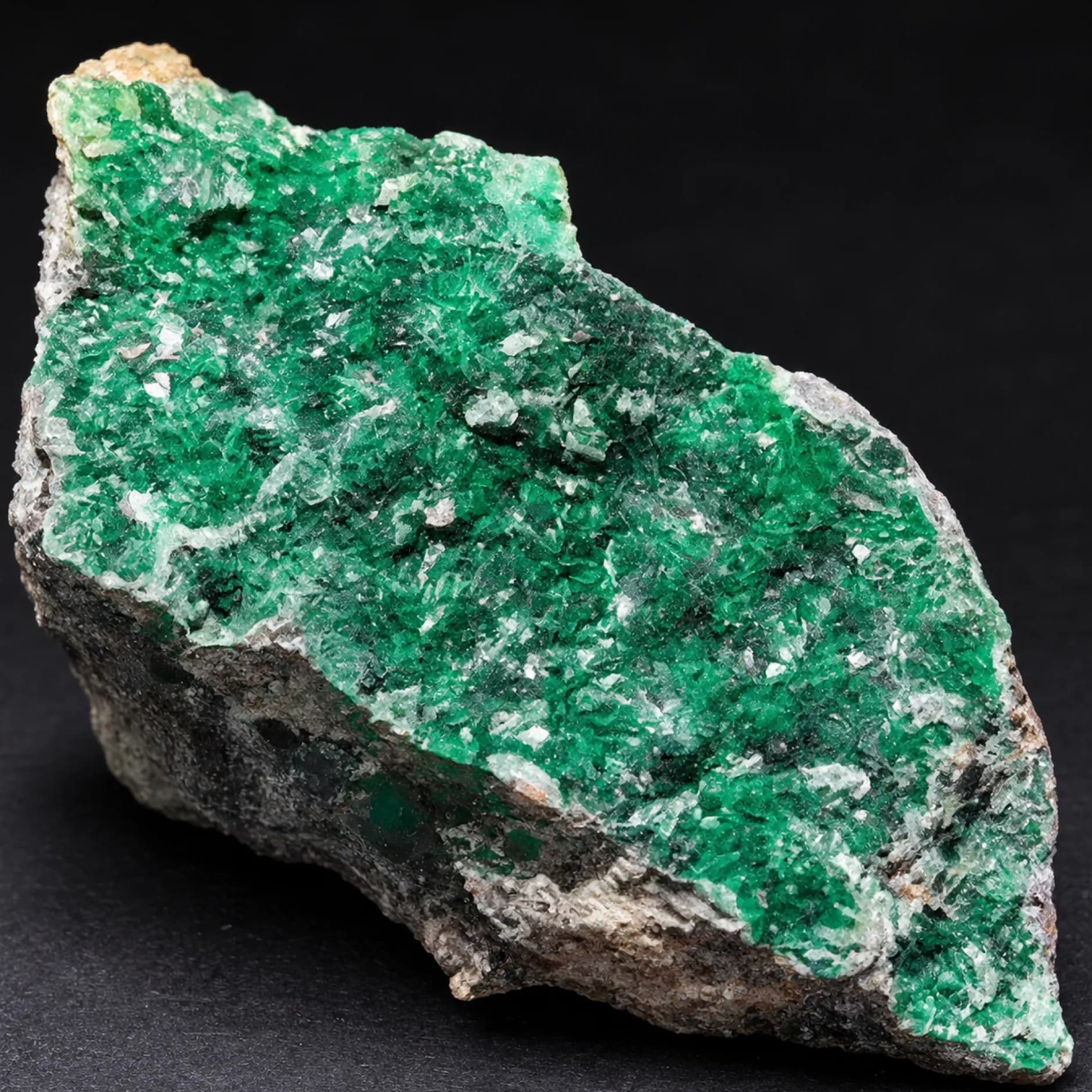
Atacamite Stone – Meaning, Benefits, Properties & Spiritual Uses
Atacamite is a distinctive green copper mineral valued by mineral collectors and people interested in crystals, meditation and metaphysical practices. Known for its vivid bright-green to deep emerald-green colour, Atacamite has an unusual appearance that makes it an attractive addition to a crystal or mineral collection. Scientifically, Atacamite is a copper chloride hydroxide mineral with the chemical formula Cu₂Cl(OH)₃ . It commonly forms as a secondary mineral through oxidation of copper minerals, particularly in dry and chloride-rich environments. The mineral takes its name from the Atacama Desert in northern Chile , its type locality and one of the driest environments on Earth. In modern crystal traditions, Atacamite stone is commonly associated with meditation, intuition, creativity, spiritual awareness, communication and emotional balance. What Is Atacamite? Atacamite is a naturally occurring copper mineral belonging to the halide mineral class. Its key mineral properties include: Mineral Name: Atacamite Chemical Formula: Cu₂Cl(OH)₃ Mineral Group: Atacamite Group Crystal System: Orthorhombic Mohs Hardness: Approximately 3–3.5 Specific Gravity: Approximately 3.745–3.776 Colour: Bright green, emerald green, dark green to blackish green Lustre: Vitreous to adamantine Original Locality: Atacama Desert, Chile These physical properties are documented by mineralogical references such as Mindat and Webmineral. How Is Atacamite Formed? Atacamite typically forms when existing copper minerals undergo oxidation in environments containing sufficient chloride. It is especially characteristic of arid or highly saline environments , which is why major occurrences are associated with the Atacama region of Chile. Its formation is geologically interesting because Atacamite can provide evidence about copper oxidation and the environmental conditions under which mineral deposits developed. Atacamite Stone Meaning Within modern crystal and metaphysical traditions, Atacamite meaning is commonly associated with transformation, intuition, spiritual awareness and personal development. Crystal practitioners may work with Atacamite while focusing on intentions involving: Spiritual awareness Intuition Creativity Confidence Communication Meditation Emotional balance Positive thinking Personal transformation Self-expression These properties belong to spiritual and metaphysical traditions rather than established scientific or medical effects. Atacamite Stone Benefits People interested in Atacamite crystal benefits commonly use the stone during meditation and intention-setting practices. Traditional metaphysical associations include: Supporting focused meditation Encouraging creativity Promoting self-expression Developing intuition Supporting spiritual exploration Encouraging confidence Creating positive intentions Supporting emotional awareness Encouraging personal independence Helping maintain focus on personal growth Some crystal traditions also describe Atacamite as a protective stone associated with releasing negative energy. These statements should be understood as traditional crystal beliefs and not guaranteed outcomes. Atacamite for Meditation One of the most common spiritual uses of Atacamite crystal is meditation. Modern crystal sources frequently associate Atacamite with concentration, spiritual awareness, visualization and connection with the subconscious mind. During meditation, Atacamite may be kept nearby while focusing on: Breathing Visualization Spiritual intentions Mindfulness Intuition Creativity Self-reflection Because the mineral itself is relatively soft, it should be handled carefully during regular use. Atacamite has a Mohs hardness of only around 3–3.5. Atacamite and the Third Eye Chakra One of the strongest themes surrounding Atacamite metaphysical properties is its association with the Third Eye Chakra . Several modern crystal traditions connect Atacamite with intuition, visualization, psychic awareness and spiritual perception. For this reason, people may incorporate an Atacamite stone into meditation focused on: Intuition Self-awareness Inner reflection Visualization Spiritual understanding Higher consciousness Chakra concepts belong to spiritual traditions and are not part of medical anatomy. Atacamite and Heart Chakra Atacamite is also associated with the Heart Chakra in several crystal traditions. In this context, the stone is used symbolically with intentions involving: Compassion Emotional awareness Harmony Relationships Self-confidence Positive emotional expression Some traditions connect Atacamite with both the Heart and Third Eye Chakras, while others also associate it with the Throat or Crown Chakra. This variation is important because there is no single standardized chakra classification for Atacamite. Atacamite for Communication and Creativity Modern metaphysical descriptions often connect Atacamite with communication, creativity and self-expression . A person may therefore keep an Atacamite crystal near a workspace, study table or meditation area while setting intentions involving: Creative thinking Clear communication Artistic inspiration Problem-solving Productivity Confidence Independent thinking It may appeal particularly to artists, writers, designers, professionals and others interested in using crystals as symbolic tools for creativity and personal development. Atacamite for Positive Energy and Protection Atacamite is also described in modern crystal traditions as a stone associated with spiritual protection and cleansing negative energy . People may keep it in a meditation or spiritual space while focusing on intentions connected with: Positivity Confidence Emotional stability Spiritual protection Personal boundaries Inner strength These should be understood as metaphysical concepts rather than scientifically measurable effects. Atacamite for Relationships Some crystal traditions connect Atacamite with greater emotional awareness and self-expression. Because communication and emotional understanding can play an important role in relationships, the stone may be used symbolically while focusing on: Honest communication Self-awareness Mutual understanding Emotional balance Respect Personal confidence However, a crystal should never be presented as a treatment for aggression, domestic violence or abusive behaviour. Such situations require appropriate professional, legal or safety support rather than gemstone treatment. Atacamite Mineral Colours Natural Atacamite is particularly recognised for its strong green colour. Documented colours include: Bright green Emerald green Dark emerald green Deep green Blackish green Mindat describes Atacamite as ranging from bright green through dark emerald-green to blackish green. The attractive green appearance is one of the major reasons Atacamite specimens are popular among mineral collectors. Where Is Atacamite Found? The type locality of Atacamite is the Atacama Desert of northern Chile . The mineral also occurs in other copper-rich locations worldwide. Mineralogical and crystal sources report occurrences in countries including Chile, Australia, Mexico, Russia, Peru, Namibia, Italy and the United States, among others. Exact locality information is especially valuable to mineral collectors, so the origin of an individual specimen should be provided whenever it is known. Is Atacamite a Birthstone? Atacamite is not a standard traditional monthly birthstone . Some crystal websites assign different zodiac associations to Atacamite, but these associations are inconsistent. One source lists no established astrological birthstone sign, while others associate it with different zodiac signs. Therefore, it is better not to describe Atacamite as belonging to one specific birth month unless that claim is clearly identified as part of a particular spiritual tradition. Which Planet Rules Atacamite? There is no widely standardized Vedic planetary association for Atacamite comparable with traditional Navagraha gemstones such as Ruby for the Sun or Red Coral for Mars. Claims that Atacamite is ruled specifically by Jupiter should therefore be presented as a particular astrological or spiritual interpretation rather than a universally accepted gemstone rule. If AstroKapoor recommends Atacamite in an individual horoscope, that recommendation can be based on personalized astrological analysis rather than treating Jupiter as an established mineral property. Can Atacamite Be Worn? Atacamite can appear in mineral specimens and may occasionally be incorporated into jewellery, but it is substantially softer than durable jewellery gemstones. With a Mohs hardness of only 3–3.5 , Atacamite can scratch or damage relatively easily. If incorporated into jewellery, a protected setting and careful handling are advisable. Because Atacamite is a copper chloride hydroxide compound, avoid grinding the mineral, inhaling dust or ingesting material from it. Chemical references for dicopper chloride trihydroxide identify handling hazards, so it should be treated as a mineral specimen rather than something intended for internal use. Atacamite Healing Properties: Important Information Many older crystal descriptions claim that Atacamite treats: Arthritis Muscle pain Menstrual pain Thyroid disorders Kidney problems Oedema Hormonal problems Reproductive disorders Immune-system problems These claims should not be presented as established medical benefits. Although such associations appear in crystal-healing literature, there is no reliable clinical basis for marketing Atacamite as a medical treatment. Atacamite should instead be described as a mineral and spiritual crystal used in meditation and metaphysical traditions . Anyone experiencing pain, thyroid problems, kidney disorders, reproductive health concerns or other medical symptoms should seek appropriate medical care. How to Use Atacamite Stone Depending on personal spiritual practice, Atacamite may be: Kept in a meditation space Displayed as a mineral specimen Used during visualization Held during intention-setting Kept near a creative workspace Added to a crystal collection Used in chakra-focused meditation Because natural Atacamite can occur as delicate crystals, handle the specimen carefully. Atacamite for Crystal Collectors Atacamite is especially appealing to mineral and crystal collectors because of its chemistry, formation environment and striking green crystals. Its connection with copper deposits and extremely arid environments makes it geologically distinctive. Atacamite also occurs as a copper corrosion product on historical copper and bronze materials. A well-formed Atacamite specimen can therefore have interest beyond metaphysical use. Frequently Asked Questions What is Atacamite? Atacamite is a natural green copper chloride hydroxide mineral with the chemical formula Cu₂Cl(OH)₃. It commonly forms through oxidation of copper minerals under arid, chloride-rich conditions. What are Atacamite stone benefits? In modern crystal traditions, Atacamite is associated with meditation, intuition, creativity, communication, confidence and spiritual awareness. These are metaphysical beliefs rather than scientifically proven effects. What is Atacamite used for? Atacamite may be collected as a mineral specimen or used in meditation, crystal practices, visualization and intention-setting. Which chakra is Atacamite associated with? Atacamite is most frequently associated with the Third Eye and Heart Chakras, although some traditions also connect it with the Throat and Crown Chakras. Is Atacamite a rare stone? Atacamite is a recognized mineral species that forms under particular copper-rich, arid or saline conditions. Its availability and specimen value depend heavily on crystal quality, size and locality. Where does Atacamite come from? Its type locality is the Atacama Desert in northern Chile, although Atacamite occurs in other copper deposits worldwide. What colour is Atacamite? Atacamite commonly occurs in bright green, emerald green, dark emerald-green and blackish-green shades. What is the hardness of Atacamite? Atacamite has a Mohs hardness of approximately 3–3.5. Is Atacamite associated with Jupiter? Jupiter is not a universally established ruling planet for Atacamite. Planetary associations vary among modern crystal traditions, so any Jupiter connection should be presented as a specific astrological interpretation. Can Atacamite cure pain or medical conditions? Atacamite should not be used or marketed as a treatment for arthritis, thyroid disorders, kidney disease, reproductive disorders or other medical conditions. Crystal-healing claims belong to complementary spiritual traditions and are not a substitute for medical care. Buy Atacamite Stone Online If you are looking to buy Atacamite stone online , consider the specimen's natural colour, crystal formation, size, origin and overall mineral quality. Natural Atacamite is particularly valued for its distinctive green appearance and unusual copper-based mineral composition. Whether you are interested in Atacamite crystal meaning, Atacamite benefits, meditation, chakra practices or mineral collecting , this unusual green mineral can make a distinctive addition to a carefully maintained crystal or mineral collection.
View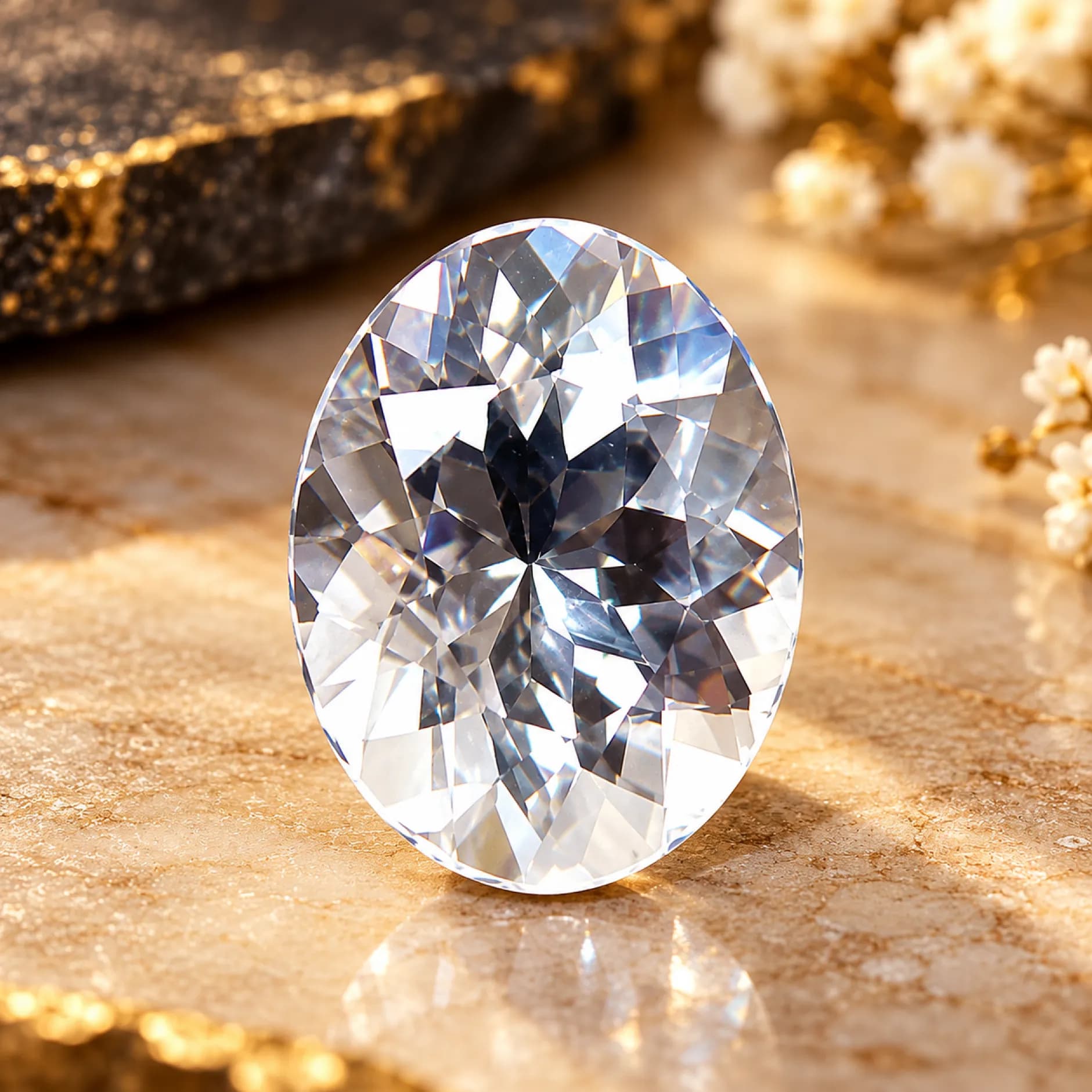
Petalite Stone – Meaning, Benefits, Properties & Spiritual Uses
Petalite Stone is an attractive lithium-bearing mineral known for its soft appearance, transparent to translucent quality and colours ranging from colourless and white to grey and delicate pink. Petalite is popular among mineral collectors, gemstone enthusiasts and people interested in meditation and crystal practices. In modern metaphysical traditions, Petalite Crystal is particularly associated with tranquility, spiritual awareness, clarity, protection and higher consciousness. Scientifically, Petalite is a lithium aluminium silicate mineral with the chemical formula LiAlSi₄O₁₀ . It commonly occurs in lithium-rich granite pegmatites and can sometimes produce transparent material suitable for faceting as a gemstone. What Is Petalite? Petalite is a naturally occurring lithium-bearing silicate mineral. Its principal mineral properties include: Mineral Name: Petalite Chemical Formula: LiAlSi₄O₁₀ Composition: Lithium aluminium silicate Crystal System: Monoclinic Mohs Hardness: Approximately 6–6.5 Specific Gravity: Approximately 2.41–2.42 Transparency: Transparent to translucent Lustre: Vitreous, sometimes pearly on cleavage surfaces Common Colours: Colourless, white, grey and pink Type Locality: Utö, Sweden The name Petalite comes from the Greek word petalon , meaning “leaf,” referring to the mineral's characteristic cleavage. Petalite Stone Meaning Within modern crystal traditions, Petalite meaning is closely connected with tranquility, spiritual awareness, inner peace and personal transformation. Petalite is often used symbolically by people seeking intentions related to: Peace Mental clarity Spiritual awareness Self-reflection Positive thinking Meditation Emotional balance Personal growth Protection Higher consciousness These associations belong to crystal and metaphysical traditions rather than scientifically established effects. Petalite Stone Benefits People interested in Petalite Stone benefits commonly use the crystal during meditation, mindfulness and other spiritual practices. Traditional metaphysical associations of Petalite include: Encouraging a peaceful state of mind Supporting meditation Promoting spiritual awareness Encouraging clear thinking Supporting positive intentions Promoting emotional reflection Encouraging calm decision-making Supporting personal transformation Promoting harmony Encouraging spiritual exploration Petalite should be regarded as a spiritual or symbolic crystal rather than as a medical treatment. Petalite Crystal for Peace and Tranquility One of the most frequently discussed Petalite Crystal benefits is its association with serenity. Modern crystal traditions describe Petalite as a stone that may be used symbolically when a person wants to create a peaceful environment for meditation or self-reflection. It may be kept near: A meditation space A prayer area A bedside table A study area A spiritual altar A quiet reading space Using a crystal can become part of a personal routine focused on mindfulness, contemplation and positive intentions. Petalite for Meditation Petalite for meditation is another important spiritual use of the mineral. People may hold or keep Petalite nearby while concentrating on breathing, visualization, affirmations or spiritual intentions. During meditation, Petalite may be used with intentions involving: Inner peace Spiritual clarity Mindfulness Self-awareness Intuition Calmness Personal transformation These concepts belong to complementary spiritual practices and are not guaranteed therapeutic outcomes. Petalite and Higher Consciousness Petalite is often described in metaphysical traditions as a high-vibration crystal . This term is spiritual rather than scientific. It generally refers to the belief that certain crystals can serve as symbolic aids during meditation and practices focused on higher awareness. People interested in spiritual development may use Petalite while focusing on: Conscious awareness Intuition Spiritual reflection Visualization Personal insight Inner stillness Petalite therefore has particular appeal among people interested in meditation and modern crystal spirituality. Petalite and the Crown Chakra Modern crystal traditions commonly associate Petalite with the Crown Chakra . The Crown Chakra, known as Sahasrara in chakra traditions, is symbolically connected with consciousness, spiritual awareness and higher understanding. Petalite may therefore be used during Crown Chakra meditation while concentrating on: Spiritual awareness Inner clarity Meditation Higher consciousness Peace Mindfulness Chakras are concepts from spiritual traditions and should not be confused with medical anatomy. Pink Petalite Meaning Pink Petalite is one of the most attractive varieties of this mineral. Its soft pink appearance makes it popular with gemstone and crystal enthusiasts. In metaphysical traditions, Pink Petalite is often associated symbolically with: Compassion Emotional harmony Self-love Peace Relationships Emotional awareness These associations are traditional crystal beliefs rather than scientifically proven effects. White Petalite Meaning White Petalite and colourless Petalite are particularly popular for meditation and spiritual practices because of their clean, transparent to translucent appearance. In crystal traditions, White Petalite may be associated with: Clarity Purification Spiritual awareness Meditation Peace Positive intentions Transparent gem-quality material can also be faceted into unusual collector gemstones. Petalite for Protection Petalite is frequently described as a protective crystal in modern metaphysical traditions. People may keep Petalite in their home or meditation space with intentions involving: Positive surroundings Spiritual protection Personal boundaries Emotional balance Peace Mindfulness Claims about removing “evil energy” or creating a measurable protective field should be understood symbolically rather than scientifically. Petalite for Emotional Balance Petalite may also be incorporated into mindfulness practices focused on emotional awareness. A person may use the stone symbolically while working toward: Greater patience Calm communication Self-awareness Thoughtful decision-making Emotional reflection Positive relationships The crystal itself should not be presented as a treatment for depression, anxiety or other mental-health conditions. Anyone experiencing persistent emotional or psychological difficulties should seek appropriate professional support. Petalite for Concentration and Clear Thinking Modern crystal traditions sometimes associate Petalite with clarity and simplified thinking. For this reason, a Petalite stone may be kept near a workspace or study area as a symbolic reminder to: Stay focused Think clearly Approach problems calmly Avoid unnecessary distraction Consider situations from different perspectives Actual improvements in concentration depend on many practical and personal factors rather than the presence of a gemstone alone. Petalite for Relationships Petalite is also associated with harmony and peaceful communication in some crystal traditions. It may be incorporated into personal meditation while focusing on: Mutual understanding Calm communication Compassion Patience Emotional maturity Healthy personal boundaries A gemstone cannot guarantee improvements in relationships, but it may serve as a symbolic object within a person's spiritual practice. Petalite and Financial Intentions Some metaphysical traditions connect Petalite with clarity, opportunity and positive decision-making. People interested in crystal intention-setting may therefore use it while focusing on goals involving: Career development Financial discipline Long-term planning Wise decision-making Personal growth Petalite should not be presented as something that directly creates wealth, increases income or guarantees successful investments. Financial results require informed decision-making and appropriate professional advice where necessary. Where Is Petalite Found? Petalite occurs primarily in lithium-rich granite pegmatites . Its type locality is the Utö Mines in Sweden . Petalite specimens and gem material have also been documented from other regions around the world. Brazil is particularly known for producing gem-quality Petalite specimens, including faceted examples represented in GIA's gemstone collections. Therefore, the origin of an individual Petalite should be stated according to the actual specimen rather than describing all Petalite as Brazilian. Petalite Colours Natural Petalite can occur in several subtle colours. Common varieties include: Colourless Petalite White Petalite Pink Petalite Grey Petalite Pale yellowish material Mineralogical references most consistently document colourless, white, grey and pink as characteristic colours. Petalite Mineral Properties Petalite has several distinctive physical properties. Formula: LiAlSi₄O₁₀ Hardness: Approximately 6–6.5 Mohs Crystal System: Monoclinic Specific Gravity: Approximately 2.41–2.42 Lustre: Vitreous Transparency: Transparent to translucent Cleavage: Perfect in one direction The perfect cleavage is particularly important when handling Petalite gemstones because a hard impact can cause damage even though its surface hardness is moderate. Is Petalite a Lithium Mineral? Yes. Petalite is a lithium-bearing mineral and can occur in lithium-rich pegmatite deposits. Its chemical composition includes lithium, aluminium, silicon and oxygen. Petalite also has industrial importance because lithium-bearing minerals can serve as sources of lithium and may be used in specialised ceramic and glass applications. Is Petalite a Birthstone? Petalite is not one of the standard traditional monthly birthstones . The claim that Petalite specifically corresponds to 22 June–22 July is better described as a zodiac-related interpretation found in some modern crystal traditions rather than an established birthstone month. Different crystal sources may assign different zodiac associations to Petalite. Therefore, it is better to describe Petalite as a spiritual crystal that can be used according to personal preference or individual astrological guidance. Which Planet Is Associated with Petalite? There is no universally standardized Vedic planetary ruler for Petalite comparable with traditional Navagraha gemstones such as Ruby for the Sun or Pearl for the Moon. Some modern crystal systems associate Petalite with the Moon , but this should be presented as a metaphysical tradition rather than a universally accepted Vedic astrology rule. For astrological use, personalized horoscope analysis is preferable. Which Day Should Petalite Be Worn? There is no universally established Vedic wearing day for Petalite. Some modern gemstone sources provide different recommendations, but these are not standardized. Therefore, if Petalite is being worn for a specific astrological purpose, the appropriate day, metal and wearing method should be determined according to personalized astrological guidance rather than using Wednesday automatically. Can Petalite Be Worn in Jewellery? Yes. Transparent Petalite can be faceted as a gemstone, while other material can be incorporated into pendants or other jewellery. With a Mohs hardness around 6–6.5 , Petalite has reasonable surface hardness but also has perfect cleavage, meaning it should still be protected from sharp impacts. Protective jewellery settings may therefore be preferable. How to Care for Petalite Petalite should be handled carefully to protect its surface and cleavage. For everyday care: Avoid strong impact Keep it away from harsh chemicals Store it separately from harder gemstones Avoid unnecessary scratching Use a soft cloth for gentle cleaning Handle faceted pieces carefully Proper care can help preserve the appearance of the gemstone. Petalite Healing Properties: Important Information Some crystal-healing sources make claims that Petalite can treat: HIV Cancer Tumours High blood pressure ADHD ADD Anxiety disorders Endocrine problems Lung disorders Digestive problems Muscle spasms Cellular damage Petalite should not be presented as a medical treatment for any of these conditions . There is no reliable clinical evidence that wearing or using Petalite can treat cancer, HIV, ADHD, blood-pressure disorders or other diseases. Petalite is better presented as a mineral, gemstone and spiritual crystal used in meditation and metaphysical traditions . Anyone experiencing physical or mental-health problems should seek appropriate professional medical care. How to Use Petalite Stone Depending on personal preference, Petalite may be: Held during meditation Kept in a spiritual space Used during mindfulness practice Incorporated into chakra meditation Worn as jewellery Displayed as a mineral specimen Used during intention-setting Added to a gemstone collection There is no requirement to use Petalite in only one particular way. Why Choose Natural Petalite Stone? A natural Petalite Crystal appeals to several different audiences. Mineral collectors value it because it is an unusual lithium-bearing mineral. Gemstone collectors appreciate transparent or coloured material that can be cut into attractive gems. Crystal enthusiasts may choose it for traditional associations involving tranquility, higher awareness and meditation. This makes Petalite relevant to people searching for: Petalite Stone, Petalite Crystal, Pink Petalite, White Petalite, Petalite Gemstone, Petalite Meaning, Petalite Benefits, Petalite Crystal Benefits, Petalite Chakra, Petalite Meditation, Petalite Metaphysical Properties and natural Petalite stone. Frequently Asked Questions What is Petalite? Petalite is a natural lithium aluminium silicate mineral with the chemical formula LiAlSi₄O₁₀. It commonly occurs in lithium-rich granite pegmatites. What are Petalite Stone benefits? In modern crystal traditions, Petalite is associated with tranquility, spiritual awareness, meditation, clarity and protection. These are metaphysical beliefs rather than medically proven effects. What is Petalite Crystal used for? Petalite may be collected as a mineral, cut as a gemstone or incorporated into meditation, mindfulness and spiritual practices. What does Petalite mean spiritually? Spiritually, Petalite is commonly associated with peace, higher awareness, protection, clarity and personal transformation. Which chakra is Petalite associated with? Modern crystal traditions most commonly associate Petalite with the Crown Chakra , representing spiritual awareness and higher consciousness. What is Pink Petalite? Pink Petalite is a naturally pink variety of Petalite. In crystal traditions, it is often associated with emotional harmony, compassion and peace. What is White Petalite? White Petalite is pale or colourless Petalite. It is commonly used in crystal practices associated with clarity, meditation and spiritual awareness. Is Petalite a lithium stone? Yes. Petalite is a lithium-bearing aluminium silicate mineral and occurs naturally in lithium-rich pegmatites. What is the hardness of Petalite? Petalite has a Mohs hardness of approximately 6–6.5 . Where does Petalite come from? Petalite was first described from the Utö Mines in Sweden and occurs in lithium-bearing pegmatites in various parts of the world. Is Petalite ruled by the Moon? Some modern metaphysical systems associate Petalite with the Moon. However, Petalite does not have a universally standardized planetary association in classical Vedic gemstone astrology. Is Petalite a Cancer zodiac stone? Some modern crystal traditions connect Petalite with Cancer or other zodiac signs, but this is not a standardized traditional birthstone association. Can Petalite treat cancer or HIV? No. Petalite should not be promoted as a treatment for cancer, HIV or any other medical condition. Such illnesses require qualified medical care. Can Petalite help ADHD? Petalite has no established medical role in treating ADHD or ADD. It may be used as part of a personal meditation or mindfulness practice, but it should not replace appropriate professional care. Can Petalite be worn every day? Petalite may be worn in suitable jewellery, but its perfect cleavage means it should be protected from sharp impacts and handled carefully. Buy Natural Petalite Stone Online If you are looking to buy Petalite Stone online , consider the gemstone's colour, transparency, clarity, size, origin and overall quality. Natural Petalite can occur as colourless, white, grey or pink material and may be purchased for gemstone jewellery, mineral collecting or spiritual practices. Whether you are interested in Petalite meaning, Petalite benefits, Petalite properties, Pink Petalite, White Petalite, meditation or Crown Chakra practices , this unusual lithium-bearing mineral offers both mineralogical interest and a long-established place in modern crystal traditions.
View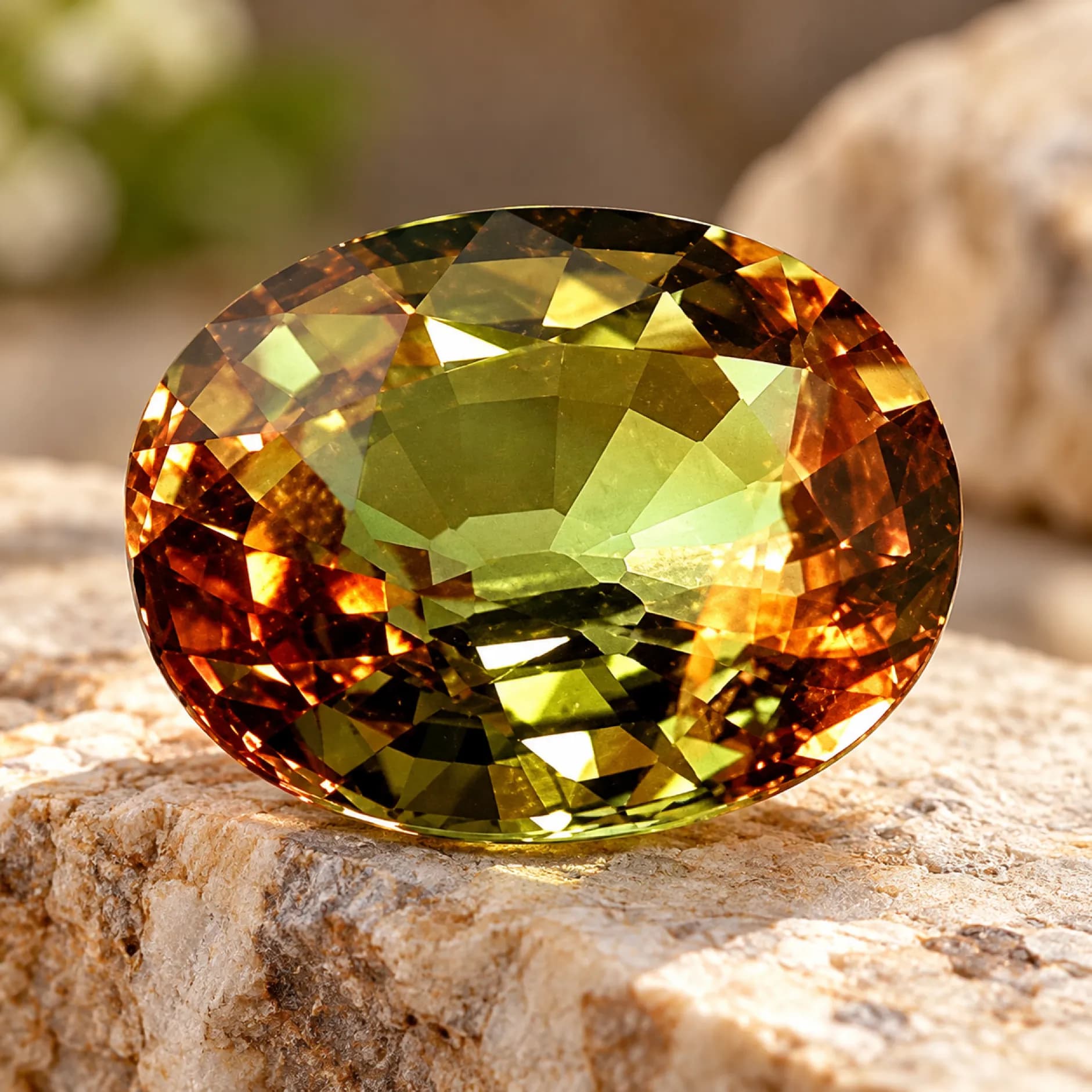
Natural Andalusite Stone – Meaning, Properties, Benefits & Spiritual Significance
Andalusite Stone is a distinctive natural gemstone known for showing different colours when viewed from different directions. This striking optical property is called pleochroism , and it is one of the most recognizable characteristics of Andalusite gemstones. Well-cut stones may reveal combinations of green, yellow, reddish, orange and brown tones within a single gem. Because of this unusual multicolour appearance, Natural Andalusite is appreciated by gemstone collectors, jewellery lovers and people interested in spiritual and crystal traditions. At AstroKapoor, Andalusite is also discussed from a traditional spiritual and astrological perspective, where it is associated with self-awareness, wisdom, balance and thoughtful decision-making. What Is Andalusite Stone? Andalusite is a naturally occurring aluminium silicate mineral with the chemical formula Al₂SiO₅ . It shares the same chemical composition with kyanite and sillimanite, although each has a different crystal structure and forms under different geological conditions. Gem-quality Andalusite can be transparent and suitable for faceting. Its strongest visual characteristic is its ability to show different colours depending on the direction from which the gemstone is viewed. This makes a well-cut Andalusite Gemstone particularly interesting because several colours may sometimes be visible together in the face-up stone. Why Does Andalusite Show Different Colours? The multicolour appearance of Andalusite is caused by pleochroism . Pleochroism occurs when a gemstone absorbs light differently along different crystallographic directions. Andalusite is particularly well known for strong pleochroism, and the effect can often be seen without specialist instruments. Depending on the individual stone and its orientation, Andalusite may display combinations including yellowish-green, brown, reddish-orange and reddish-brown tones. The cutter's choice of orientation is therefore especially important because the cut determines how these pleochroic colours appear when the gemstone is viewed from the top. Is Andalusite a Colour-Changing Gemstone? Andalusite is sometimes described online as a colour-changing Andalusite , but this can be misleading. Its famous colour effect is primarily pleochroism , meaning the stone displays different colours when viewed from different directions. This is different from true colour-change gemstones, where the apparent colour changes mainly because the lighting source changes. Therefore, “multicolour Andalusite” or “pleochroic Andalusite gemstone” is a more accurate description. Andalusite Stone Meaning In modern crystal and spiritual traditions, the Andalusite meaning is commonly associated with self-realization, perspective, inner balance and the ability to examine situations from more than one point of view. This symbolism fits naturally with the gemstone's physical appearance: just as Andalusite can reveal several colours from different viewing angles, it is traditionally used as a symbol of seeing different perspectives in life. People interested in crystal practices may therefore use Andalusite as a symbolic reminder to develop: wisdom, patience, objectivity, self-awareness, balanced thinking, personal responsibility and a calmer approach to difficult situations. These associations belong to spiritual and crystal traditions rather than scientifically established effects. Andalusite Stone Benefits The Andalusite Stone benefits commonly discussed in metaphysical traditions focus on emotional balance, personal insight and spiritual awareness. Andalusite is traditionally associated with helping a person reflect on situations more objectively rather than immediately reacting to them. It may be used symbolically during periods of change, self-reflection or important decision-making. Some crystal traditions also associate Andalusite with independence, confidence and the ability to recognise personal strengths and weaknesses. These benefits should be understood as traditional spiritual beliefs rather than guaranteed physical or psychological effects. Andalusite for Self-Realization One of the best-known spiritual themes connected with Andalusite is self-realization . In crystal traditions, the gemstone is sometimes used during practices intended to encourage honest self-reflection. This may involve examining: personal strengths, weaknesses, habits, emotional patterns, relationships, priorities and long-term goals. The gemstone can therefore serve as a symbolic focus during meditation or personal reflection. Andalusite for Wisdom and Perspective Andalusite's ability to show several colours from different angles makes it a meaningful symbol for considering several sides of an issue. Within spiritual traditions, an Andalusite Crystal may be used as a reminder to pause, evaluate a situation carefully and avoid unnecessary conflict. It is traditionally associated with developing a more practical and thoughtful approach to challenges. The gemstone does not automatically make someone wiser, but it can be incorporated into meditation or intention-setting practices centred on wisdom and balanced thinking. Andalusite Stone for Meditation An Andalusite Stone for meditation may be held, worn or placed nearby during personal meditation practice. People interested in crystal meditation traditionally associate Andalusite with self-awareness, clarity and spiritual reflection. During meditation, the stone may be used as a focal object while concentrating on themes such as: inner balance, self-understanding, personal growth, forgiveness, acceptance and perspective. These are spiritual uses rather than medically proven effects. Andalusite and Emotional Balance The original AstroKapoor description associates Andalusite with reducing unnecessary internal conflict and encouraging a more peaceful approach to life. This idea can be expressed more accurately as a traditional crystal belief. Rather than claiming that Andalusite medically treats stress or depression, it is better to say that the gemstone is traditionally associated with calm reflection, emotional awareness and balance. Someone may incorporate Andalusite into meditation or mindfulness practices when working toward a calmer and more thoughtful state of mind. Andalusite and Spiritual Protection Some metaphysical traditions describe Andalusite as a protective stone . In this context, protection refers to spiritual or symbolic beliefs surrounding personal boundaries, grounding and maintaining emotional stability during difficult circumstances. Andalusite may therefore be selected by people who appreciate gemstones associated with strength, independence and spiritual awareness. These ideas belong to traditional metaphysical practices and should not be interpreted as scientifically proven protective effects. Andalusite in Astrology Astrological interpretations of Andalusite are less standardized than those of traditional Navaratna gemstones such as Ruby, Pearl, Emerald or Blue Sapphire. AstroKapoor traditionally associates Andalusite with Venus , but this should be presented as an AstroKapoor or specific astrological interpretation rather than a universally accepted gemstone-planet association. If Andalusite is being selected specifically for astrological use, the individual's complete birth chart should ideally be considered before deciding how or whether the gemstone should be worn. Is Andalusite a Venus Stone? Some modern metaphysical and astrological sources give Andalusite different planetary or zodiac associations, and there is no single universally recognized Vedic planetary assignment for this gemstone. Therefore, if AstroKapoor recommends Andalusite for Venus , the page should clearly explain that this represents the astrological system or interpretation followed by AstroKapoor. This is more authoritative than presenting the planetary relationship as an undisputed gemological fact. Is Andalusite an August Birthstone? Andalusite should not be described as one of the standard August birthstones. GIA identifies Peridot, Spinel and Sardonyx as the three August birthstones. If Andalusite has an August association within a particular alternative crystal or astrological tradition, that tradition should be specifically named rather than presenting Andalusite as the standard August birthstone. Andalusite Gemstone Colours One of the most attractive features of a natural Andalusite gemstone is its range of earthy colours. Depending on the specimen, cut and viewing direction, colours may include green, yellow-green, reddish-brown, orange-brown, brown, pinkish or other related tones. GIA examples include transparent Andalusite specimens described as reddish-orange, greenish-yellow and other combinations. The combination of several colours within one gemstone is one reason Andalusite is particularly appealing to collectors. Natural Andalusite Gemstone A Natural Andalusite Gemstone may contain variations in colour, transparency and internal inclusions. Natural gemstone characteristics can differ considerably from one specimen to another. When choosing Andalusite, buyers should consider its colour combination, clarity, cut, carat weight, overall appearance and the strength of its pleochroic effect. Cut is especially important because a skilled cutter can orient the gemstone to display attractive colour combinations. Andalusite Stone Price The Andalusite Stone price can vary according to several quality factors. Current gemstone-market references commonly evaluate Andalusite according to factors such as colour, clarity, cut, carat weight and the attractiveness of its pleochroism. A stone that displays attractive contrasting colours, good transparency and an effective cut may be valued differently from material with dull colour, heavy inclusions or an unsuitable orientation. For this reason, buyers should compare individual gemstones rather than relying only on a general Andalusite price per carat. Andalusite Jewellery Natural Andalusite can be faceted and used in jewellery such as rings, pendants and other gemstone designs. Its warm mixtures of green, yellow, brown and reddish tones can work with both gold and silver-coloured jewellery styles. When Andalusite is intended for regular wear, the design should help protect the gemstone from unnecessary impact or abrasion. How to Choose an Andalusite Gemstone When buying an Andalusite Gemstone online , evaluate the complete stone rather than choosing only by carat weight. Important considerations include the natural status of the gemstone, visible colour combination, strength of pleochroism, transparency, clarity, quality of cut, carat weight, dimensions, treatment information where available, gemstone certification where available and clear product photographs. A video can also be particularly useful for Andalusite because movement allows buyers to see its different directional colours more clearly. How to Care for Andalusite Andalusite jewellery should be handled with reasonable care. Store the gemstone separately from other jewellery to reduce scratching and impact. For routine cleaning, gentle methods such as mild soapy water and careful drying may be preferable to harsh household chemicals. Avoid unnecessary impacts and store individual gemstones or jewellery pieces in a soft protective pouch when they are not being worn. Frequently Asked Questions What is Andalusite Stone? Andalusite is a natural aluminium silicate mineral with the chemical formula Al₂SiO₅. Gem-quality Andalusite is especially known for its strong pleochroism, which allows different colours to appear when the gemstone is viewed from different directions. What makes Andalusite special? The most distinctive feature of Andalusite is its strong pleochroism. A well-cut gemstone may show contrasting green, yellow, reddish or brown tones within the same stone. What are Andalusite Stone benefits? In crystal and spiritual traditions, Andalusite is associated with self-awareness, balanced thinking, personal insight, independence and meditation. These are traditional metaphysical beliefs rather than medically proven benefits. Does Andalusite change colour? Andalusite displays different colours mainly because of pleochroism. The colours change with the viewing direction, so this should not be confused with the conventional colour-change effect caused primarily by different lighting conditions. What colour is Andalusite? Natural Andalusite can display combinations of green, yellow, reddish-orange, reddish-brown and other earthy shades depending on the individual gemstone and viewing direction. Is Andalusite a natural gemstone? Yes. Andalusite is a naturally occurring aluminium silicate mineral. Transparent gem-quality material can be faceted for jewellery. Is Andalusite associated with Venus? AstroKapoor traditionally associates Andalusite with Venus. However, Andalusite does not have the same universally standardized Vedic planetary association as major Navaratna gemstones, so this should be understood according to the specific astrological system being followed. Is Andalusite an August birthstone? No. Andalusite is not one of the standard August birthstones recognized by GIA. The recognized August birthstones are Peridot, Spinel and Sardonyx. Can Andalusite be worn during meditation? Andalusite may be incorporated into personal meditation or spiritual practices according to individual crystal traditions. It is commonly associated symbolically with self-reflection, perspective and personal growth. What affects Andalusite price? Andalusite gemstone pricing can depend on colour, clarity, cut, carat weight and the attractiveness of its visible pleochroism. Why does Andalusite show several colours at once? Andalusite absorbs light differently along its different optical directions. When the gemstone is properly cut, these pleochroic colours can sometimes appear together when viewed face-up. Andalusite Stone from AstroKapoor Andalusite Stone is an unusual natural gemstone appreciated for its strong pleochroism, earthy multicolour appearance and distinctive character. Whether you are researching Andalusite Gemstone, Natural Andalusite, Andalusite Stone Benefits, Andalusite Meaning, Andalusite Properties, Andalusite Astrology or Andalusite Jewellery , the gemstone is best understood by separating its verifiable gemological properties from the spiritual beliefs traditionally associated with it. For astrological purposes, individual birth-chart guidance is recommended before selecting Andalusite as a planetary gemstone.
View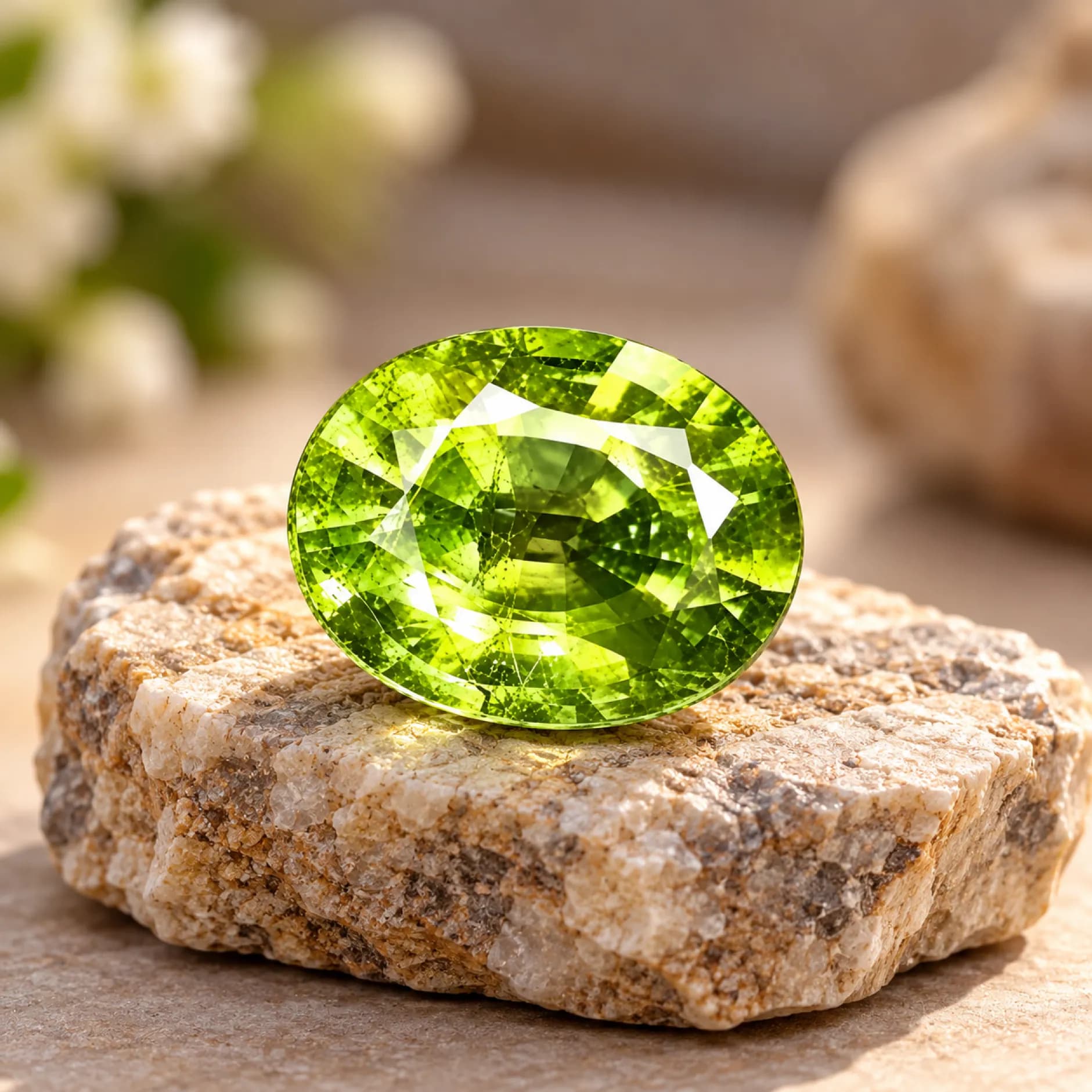
Idocrase Stone (Vesuvianite) – Meaning, Benefits, Properties and Uses
Idocrase Stone , also known as Vesuvianite , is an attractive and relatively uncommon gemstone valued for its beautiful green shades, interesting crystal structure and spiritual symbolism. It is most commonly seen in green, yellow-green and brown-green colours, although rare specimens can occur in blue, pink, purple, red, yellow, colourless and other shades. Idocrase is especially popular among gemstone collectors and people interested in crystals for meditation, emotional balance, personal growth and positive energy. What Is Idocrase Stone? Idocrase and Vesuvianite are two names for the same mineral. The name Vesuvianite comes from Mount Vesuvius in Italy, where notable crystals were identified during the eighteenth century. The name Idocrase originated from Greek words referring to a "mixed form", describing the varied crystal forms displayed by the mineral. Gemologists often use the name Idocrase when discussing gemstone-quality material, while Vesuvianite is more commonly used as the mineral name. Idocrase Stone Meaning In modern crystal and metaphysical traditions, Idocrase meaning is strongly connected with personal growth, emotional balance, confidence and moving beyond restrictive patterns. It is traditionally considered a gemstone that encourages a person to release unproductive thoughts, become more open to change and approach new opportunities with greater confidence. For this reason, Vesuvianite is often selected by people interested in meditation, self-development and spiritual practices. Idocrase Stone Benefits According to traditional crystal beliefs, Idocrase Stone benefits are associated with emotional clarity, positivity and personal transformation. Idocrase is traditionally believed to support: Emotional balance Positive thinking Confidence and determination Personal growth Creativity and self-expression Letting go of anger and restrictive thoughts Greater openness to new opportunities Motivation during periods of stagnation Meditation and spiritual awareness A greater sense of inner stability These are traditional metaphysical and spiritual associations rather than scientifically established medical benefits. Vesuvianite Benefits for Emotional Balance One of the most commonly discussed Vesuvianite benefits is its symbolic connection with emotional release. In crystal traditions, the stone is associated with letting go of suppressed anger, fear and repetitive emotional patterns. It may therefore be used during meditation or mindfulness practices focused on emotional awareness and positive change. Rather than treating a medical or psychological condition, Idocrase can be viewed as a symbolic aid for intention setting and personal reflection. Idocrase and the Heart Chakra Idocrase is commonly associated with the Heart Chakra in modern crystal traditions, particularly green varieties. The Heart Chakra, or Anahata Chakra, is traditionally connected with compassion, emotional openness, relationships and inner harmony. An Idocrase crystal may therefore be used during Heart Chakra meditation or other spiritual practices centred on forgiveness, emotional balance and positive relationships. Idocrase for Meditation Idocrase can be incorporated into meditation, mindfulness and intention-setting practices. People interested in crystal meditation may hold an Idocrase stone, keep it nearby or wear it as jewellery while focusing on intentions such as: Personal growth Confidence Emotional balance Creativity New beginnings Releasing negative thought patterns Greater openness to change Its spiritual significance depends on personal beliefs and practices. Idocrase Stone Properties Idocrase belongs to the silicate mineral group and usually forms through metamorphic processes involving carbonate-rich rocks such as limestone and marble. Its important gemological properties include: Mineral Name: Vesuvianite Gemstone Name: Idocrase / Vesuvianite Mineral Group: Silicate Crystal System: Tetragonal Mohs Hardness: Approximately 6.5 Specific Gravity: Approximately 3.3–3.5 Common Colours: Green, yellow-green and brown-green Other Colours: Blue, yellow, pink, purple, red, white, colourless and black Lustre: Usually vitreous to greasy Transparency: Opaque to translucent, with rare transparent material Idocrase Stone Colour Green Idocrase is one of the best-known varieties and can sometimes resemble jade or peridot. However, Vesuvianite occurs in several other colours. A rare blue variety is known as Cyprine , while massive green material from California has sometimes been called Californite. Because appearance can overlap with other gemstones, professional gemological testing is useful when authenticity is important. Where Is Idocrase Found? Although Vesuvianite was named after Mount Vesuvius in Italy, it is not found only in Italy. Gem-quality material has been reported from locations including: Italy Canada Kenya Tanzania Switzerland United States Russia Different deposits can produce different colours, clarity levels and appearances. Idocrase Jewellery Gem-quality Idocrase can be fashioned into: Pendants Earrings Rings Cabochons Beads Carvings Collector gemstones Because Idocrase has a hardness of around 6.5 and can be brittle, jewellery should be protected from hard knocks, abrasion and rough handling. Pendants and earrings are particularly practical options because they usually experience less impact than rings or bracelets. How to Care for Idocrase Stone To keep an Idocrase gemstone in good condition: Keep it away from hard impacts. Avoid abrasive cleaning. Store it separately from harder gemstones. Clean gently using a soft cloth. Keep jewellery settings free from accumulated dirt. Protect polished surfaces from scratches. For valuable stones, professional gemstone identification and cleaning are preferable. Who May Consider Idocrase? Idocrase may appeal to: Gemstone collectors Crystal enthusiasts Meditation practitioners People interested in Heart Chakra practices Collectors of unusual green gemstones People interested in Vesuvianite jewellery Those exploring crystals associated with personal growth and emotional balance Anyone purchasing Idocrase specifically for astrological purposes should obtain personalised guidance rather than relying on universal wearing rules. Why Is Idocrase Also Called Vesuvianite? The two names originated independently. Vesuvianite was named after Mount Vesuvius, where important specimens were discovered. Idocrase was introduced shortly afterward and comes from Greek terminology referring to the mineral's mixed crystal forms. Today, both names remain in use, making it useful to search for both Idocrase gemstone and Vesuvianite gemstone when researching the stone. Frequently Asked Questions About Idocrase What is Idocrase Stone? Idocrase is a gemstone variety of the mineral commonly known as Vesuvianite. It is a silicate mineral that occurs most frequently in green, yellow-green and brown shades. Is Idocrase the same as Vesuvianite? Yes. Idocrase and Vesuvianite refer to the same mineral. Vesuvianite is commonly used as the mineralogical name, while Idocrase is often used in gemstone terminology. What are the benefits of Idocrase Stone? In crystal traditions, Idocrase is associated with emotional balance, personal growth, confidence, creativity, positive thinking and releasing restrictive emotional patterns. These are traditional spiritual beliefs rather than scientifically proven health effects. Which chakra is Idocrase associated with? Green Idocrase is commonly associated in crystal traditions with the Heart Chakra , representing compassion, emotional openness and harmony. What colour is Idocrase? Idocrase is most commonly green, yellow-green or brown-green. It may also occur in yellow, blue, pink, purple, red, white, colourless and black varieties. Where was Idocrase discovered? Vesuvianite was named after Mount Vesuvius in Italy , where notable crystals were found. The mineral has since been identified in numerous countries worldwide. Is Idocrase a birthstone? Idocrase is not generally recognised as one of the traditional modern birthstones. Some metaphysical systems associate Vesuvianite with particular zodiac signs, but these associations vary between traditions. Is Idocrase good for jewellery? Yes. Attractive Idocrase can be cut into cabochons, faceted gemstones, beads and carvings. With a Mohs hardness of around 6.5, it should be protected against scratching and strong impacts.
View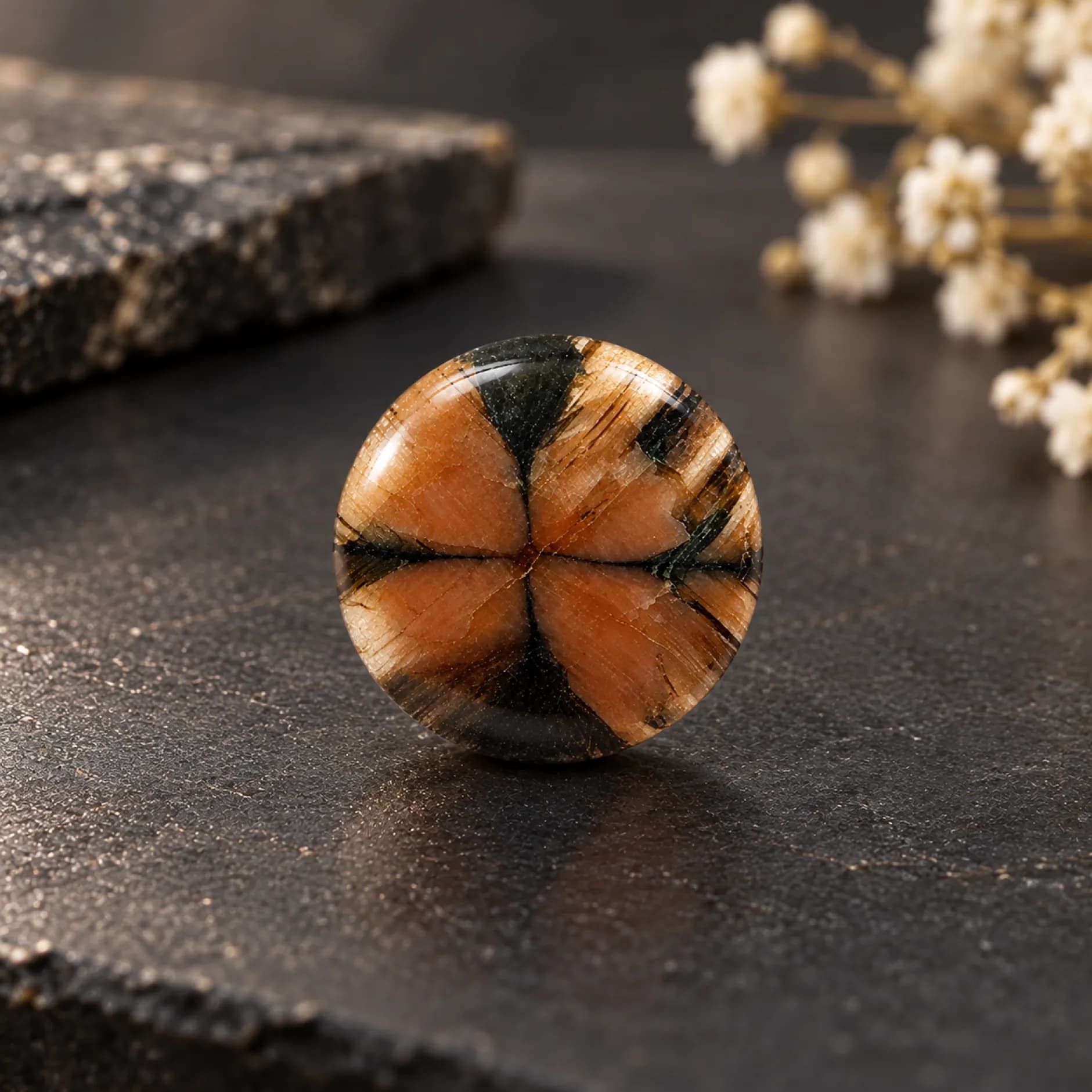
Natural Chiastolite Cross Stone – Meaning, Benefits, Properties & Spiritual Uses
Chiastolite is a distinctive natural stone recognized by the cross-shaped pattern that appears inside the crystal. It is a variety of Andalusite and is commonly known as Cross Stone or Cross Andalusite. The characteristic cross is formed by dark carbon-rich inclusions within the Andalusite crystal. This unusual natural pattern makes Chiastolite popular among gemstone collectors and people interested in meditation, spiritual symbolism and crystal traditions. Chiastolite is traditionally associated with protection, grounding, balance, strength and the ability to remain calm during periods of change. These meanings belong to metaphysical and crystal traditions rather than scientifically proven effects. What Is Chiastolite Stone? Chiastolite is a variety of the mineral Andalusite. Its chemical composition is Al₂SiO₅, the same basic composition as Andalusite. What makes Chiastolite especially recognizable is the dark cross-shaped pattern visible when suitable crystals are cut across their length. The cross pattern is produced by carbon-rich, commonly graphite, inclusions arranged within the growing crystal. Because of this distinctive feature, Chiastolite has long been called: Cross Stone Cross Andalusite Chiastolite Andalusite Andalusite Cross Stone Why Does Chiastolite Have a Cross? The natural cross is the most important identifying feature of Chiastolite. As the Andalusite crystal develops, carbon-rich impurities can become concentrated in a characteristic arrangement. When the crystal is cut in the appropriate direction, these dark inclusions form a cross-like pattern. The cross is therefore not normally painted, engraved or added to the gemstone. In genuine Chiastolite, it is part of the stone's internal structure. This natural feature is one reason Chiastolite is also widely referred to as Cross Stone. What Colour Is Chiastolite? Chiastolite is commonly seen with a brown or brownish body colour and a darker cross. Other specimens may show cream, pinkish, grey or greenish-grey shades. The cross itself is generally dark brown, grey or black rather than green. Because Chiastolite is a natural mineral, individual stones can vary significantly in: Colour Cross shape Cross thickness Pattern Transparency Inclusions Size Overall appearance These natural variations make every Chiastolite stone visually different. Chiastolite Meaning The Chiastolite meaning in modern crystal traditions is strongly connected with protection, grounding, balance and transition. Its naturally occurring cross has also given the stone symbolic importance in different spiritual traditions. Chiastolite is often used as a symbolic reminder to remain centred when circumstances are uncertain or changing. Traditional crystal practices associate it with: Protection Grounding Balance Stability Courage Perseverance Adaptability Calm thinking Spiritual reflection These associations are metaphysical beliefs and should not be interpreted as scientifically established effects. Chiastolite Stone Benefits The Chiastolite Stone benefits commonly discussed in crystal traditions focus on emotional stability, protection and maintaining perspective during difficult situations. It is traditionally associated with helping a person remain grounded rather than becoming overwhelmed by changing circumstances. People interested in crystal practices may use Chiastolite with intentions connected to: Inner strength Emotional balance Personal boundaries Clear thinking Confidence during change Peaceful reflection Problem-solving Spiritual awareness Meditation Positive intention These are traditional spiritual associations, not guaranteed physical or psychological results. Chiastolite as a Protection Stone Chiastolite is particularly well known in metaphysical traditions as a protection stone. Within these belief systems, it is used symbolically for creating stronger personal boundaries and remaining grounded around stressful or challenging situations. Some practitioners describe Chiastolite as a stone that helps them feel centred and secure during meditation or personal reflection. Protection, grounding and balance are among the most frequently described metaphysical themes associated with the stone. This should be understood as spiritual symbolism rather than a scientifically measurable protective effect. Chiastolite for Grounding and Balance Balance is another important part of Chiastolite symbolism. The cross pattern itself is sometimes interpreted as representing the meeting or balancing of different directions or opposing forces. For this reason, Chiastolite may be incorporated into meditation practices focused on: Finding balance Accepting change Staying grounded Developing patience Evaluating problems calmly Maintaining personal stability The stone can act as a physical reminder of these intentions during meditation or daily reflection. Chiastolite Stone for Meditation A Chiastolite Stone may be held or placed nearby during meditation. Traditional crystal practices associate Chiastolite with grounding, concentration and spiritual reflection. Some practitioners use the stone while trying to quiet distractions and remain focused on the present moment. During meditation, Chiastolite may be used while focusing on themes such as: Stability Courage Personal growth Acceptance Protection Balance Change Inner peace The gemstone itself should not be presented as a medical treatment for anxiety, depression or other mental-health conditions. Chiastolite and Change Change can bring uncertainty, which is why Chiastolite is traditionally associated with perseverance and adaptability. Within metaphysical traditions, the stone represents the ability to remain stable while circumstances around you are changing. People may choose Cross Stone during periods involving: A new career Relocation Relationship changes Personal development New responsibilities Major life decisions Spiritual growth Rather than claiming that the gemstone changes circumstances directly, it is more appropriate to view it as a symbolic tool for reflection and intention. Chiastolite and Problem-Solving Chiastolite is also traditionally associated with practical thinking and viewing a situation from different perspectives. A person may use the stone during reflection when trying to separate emotions from practical considerations. This makes the traditional symbolism of Chiastolite relevant to themes such as: Decision-making Creative thinking Patience Perspective Personal responsibility Adaptability Crystal traditions sometimes describe the stone as helping create a calmer mindset for examining complicated situations. Chiastolite, Love and Relationships In relationship-focused crystal practices, Chiastolite is associated with balance, patience and thoughtful communication. When disagreements arise, the stone may be used symbolically as a reminder to: Consider both sides of an issue Avoid impulsive reactions Communicate calmly Recognize emotional patterns Respect personal boundaries Search for practical solutions It should not be claimed that Chiastolite can prevent arguments or repair a relationship automatically. Instead, its traditional value can be presented as supporting personal reflection, patience and balanced thinking. Chiastolite and Emotional Strength Chiastolite is traditionally associated with perseverance and remaining centred during emotionally challenging periods. This can make it a meaningful crystal for people practicing meditation, journaling or other forms of personal reflection. However, Chiastolite should not be promoted as a treatment for depression, anxiety or another psychological condition. A more accurate description is that it may be used within spiritual practices intended to encourage: Hope Reflection Positive intention Self-awareness Emotional resilience Acceptance of change Chiastolite and Spiritual Protection Cross Stone has historically attracted attention because of its distinctive natural cruciform pattern. In modern metaphysical traditions, this pattern contributes to Chiastolite's reputation as a spiritual protection stone. Protection, grounding and balance remain recurring themes across current crystal references. Some people carry, wear or keep Chiastolite nearby as a personal spiritual symbol. The meaning attached to the stone depends on the individual's beliefs and traditions. Chiastolite and the Root Chakra In modern chakra and crystal traditions, Chiastolite is frequently associated with the Root Chakra. The Root Chakra is symbolically connected with grounding, security and stability within these spiritual systems. Because Chiastolite is traditionally described as a grounding stone, it is sometimes incorporated into meditation practices focused on feeling stable, present and connected with one's surroundings. Chakra associations are spiritual concepts rather than scientifically established properties of gemstones. Cross Stone Meaning The name Cross Stone refers to the dark natural cross visible within many Chiastolite specimens. This cross has contributed significantly to the gemstone's historical and spiritual symbolism. Chiastolite was historically known by names connected with the cross, including forms of “lapis crucifer,” and specimens have been valued for their distinctive cruciform appearance for centuries. Today, Cross Stone remains one of the most useful alternative names for Chiastolite in gemstone searches. Chiastolite vs Andalusite Chiastolite and Andalusite are closely related because Chiastolite is a variety of Andalusite. The key difference is appearance. Regular gem-quality Andalusite may be transparent and strongly pleochroic, displaying different colours from different viewing directions. Chiastolite is typically more opaque and is recognized by its characteristic cross-shaped carbon inclusions. Therefore: Chiastolite = a distinctive variety of Andalusite. Andalusite = the broader mineral species. Is Chiastolite a Natural Stone? Yes. Chiastolite is a naturally occurring variety of Andalusite found in metamorphic geological environments. Its cross pattern develops naturally from inclusions within the crystal. Because every natural crystal grows under slightly different conditions, no two Chiastolite specimens need to display an identical cross. This variation is an important part of the stone's appeal. Chiastolite Properties Some useful gemological details for Chiastolite include: Mineral family: Andalusite Variety: Chiastolite Chemical composition: Al₂SiO₅ Common appearance: Brown to reddish-brown, cream, grey or greenish-grey Distinctive feature: Dark cross-shaped carbon or graphite inclusions Mineral type: Aluminium silicate Formation: Metamorphic environments Chiastolite inherits the basic mineralogical characteristics of Andalusite. Andalusite generally falls around 6.5–7.5 on the Mohs hardness scale. Natural Chiastolite Stone A Natural Chiastolite Stone may show irregularities that are normal for naturally formed mineral material. These can include: Uneven cross shapes Differences in body colour Natural inclusions Surface variations Changes in pattern Small differences in transparency These characteristics should not automatically be treated as defects. For collectors, the clarity and symmetry of the cross can contribute strongly to the visual appeal of an individual specimen. Chiastolite Stone Price The Chiastolite Stone price can vary according to factors such as: Size Weight Colour Cross visibility Cross symmetry Pattern Polish Cut Overall appearance Natural quality A clear and well-positioned cross can make an individual stone particularly attractive. When selling Chiastolite online, displaying actual photographs of the individual specimen is especially useful because the cross pattern can vary considerably from stone to stone. How to Choose Chiastolite Stone When buying Chiastolite Stone, consider both its natural characteristics and its intended use. Check: Whether the stone is natural Cross visibility Cross shape Body colour Size and weight Surface finish Cut or polish Product photographs Treatment information, if applicable Gemstone authenticity information, where available If the stone is being selected for spiritual or astrological purposes, the buyer may also consider guidance appropriate to their own tradition. How to Use Chiastolite Stone Chiastolite can be used in several non-medical ways. For Meditation Hold the stone during meditation and use its cross pattern as a visual or physical point of focus. For Personal Reflection Keep it nearby while journaling or thinking through important decisions. As a Spiritual Symbol The natural cross makes Chiastolite meaningful to people attracted to protective or grounding symbolism. As a Collectible Gemstone Its unusual natural inclusions make Cross Stone interesting to mineral and gemstone collectors. In Jewellery Suitable pieces may be polished or incorporated into pendants and other jewellery designs. How to Care for Chiastolite Handle Chiastolite carefully to maintain its finish and appearance. For routine care: Store it separately from other gemstones. Avoid unnecessary impacts. Keep it away from harsh household chemicals. Use mild soapy water for gentle cleaning where appropriate. Wipe the stone carefully with a soft cloth. Store polished stones in a soft pouch or jewellery box. Good storage is particularly helpful for maintaining polished surfaces. Frequently Asked Questions What is Chiastolite Stone? Chiastolite is a variety of Andalusite recognized by distinctive cross-shaped carbon inclusions visible in the crystal. It is commonly known as Cross Stone or Cross Andalusite. Why does Chiastolite have a cross? The cross is produced by dark carbon-rich, commonly graphite, inclusions that become arranged within the Andalusite crystal during growth. Is Chiastolite the same as Andalusite? Chiastolite is a variety of Andalusite rather than a completely separate mineral species. What is another name for Chiastolite? Chiastolite is commonly known as Cross Stone and Cross Andalusite because of its characteristic internal cross. What are Chiastolite Stone benefits? In crystal traditions, Chiastolite is associated with protection, grounding, balance, perseverance, meditation and stability during periods of change. These are traditional spiritual beliefs rather than scientifically proven effects. Is Chiastolite a protection stone? Chiastolite is widely described as a protection and grounding stone within modern metaphysical traditions. This is a spiritual association rather than a scientifically demonstrated protective property. Can Chiastolite be used for meditation? Yes. People interested in crystal practices may hold or keep Chiastolite nearby during meditation, particularly in practices focused on grounding, reflection and balance. What chakra is Chiastolite associated with? Modern crystal traditions commonly associate Chiastolite with the Root Chakra because of its symbolic connection with grounding and stability. What colour is Chiastolite? The most common appearance is a brown body with a dark cross, although cream, pinkish, grey and greenish-grey body colours can also occur. Is the cross in Chiastolite natural? Yes. In genuine Chiastolite, the cross is formed naturally by inclusions within the Andalusite crystal. Does Chiastolite treat depression or physical diseases? Chiastolite should not be used or marketed as a treatment for depression, blood-pressure problems, circulatory disorders, gout, rheumatism, nerve damage or other medical conditions. Its commonly described benefits belong to crystal and spiritual traditions. Explore Natural Chiastolite Cross Stone at AstroKapoor Chiastolite is an unusual natural Andalusite variety distinguished by its remarkable cross-shaped inclusions. Whether you are researching Chiastolite Stone, Cross Stone, Cross Andalusite, Chiastolite Meaning, Chiastolite Stone Benefits, Chiastolite Properties or Chiastolite for Meditation, its strongest identifying feature is the naturally formed dark cross inside the stone. For spiritual use, Chiastolite is traditionally associated with grounding, protection, balance, perseverance and self-reflection. For gemstone or collector use, buyers should focus on natural origin, cross visibility, pattern, polish and overall quality.
View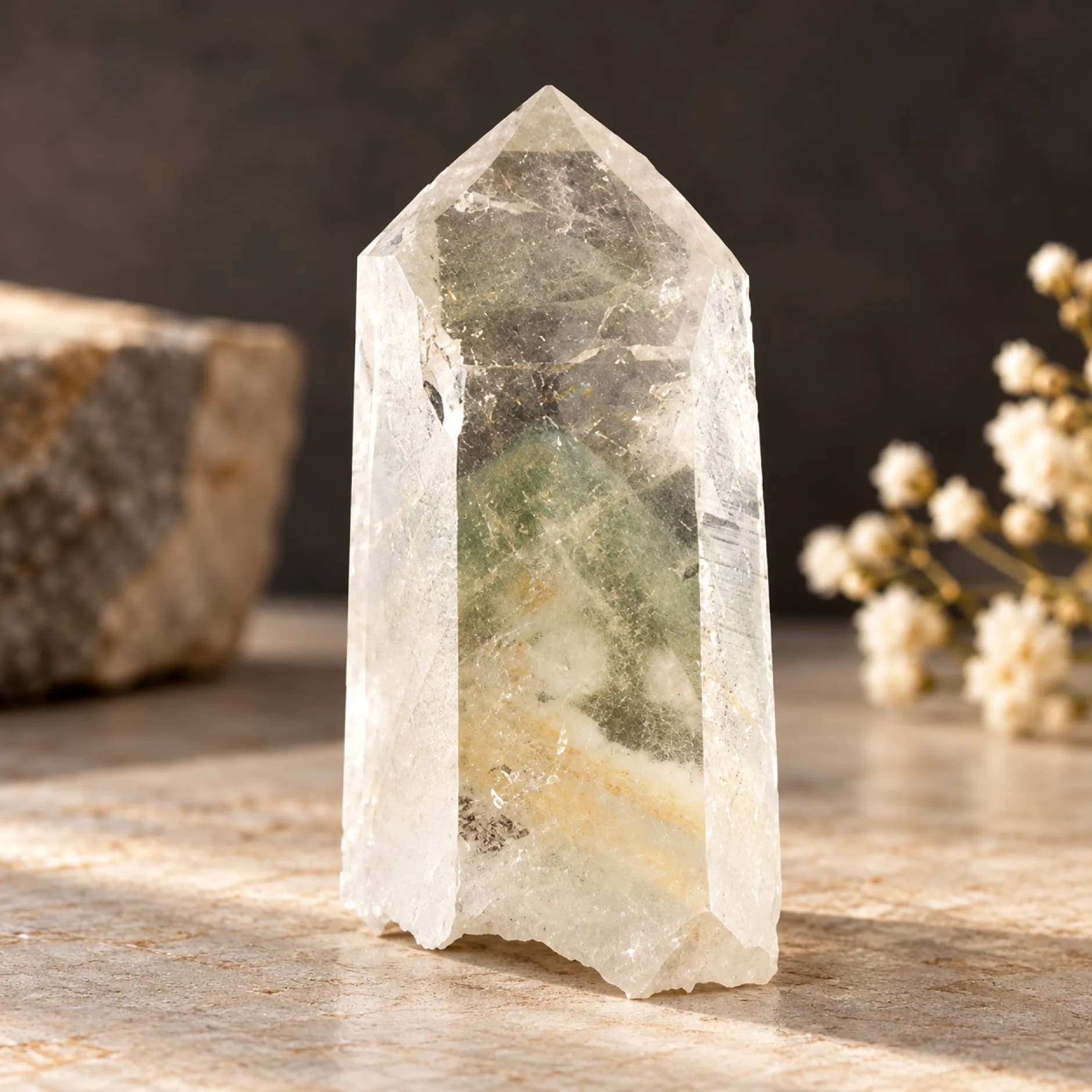
Natural Phantom Quartz Crystal – Meaning, Properties, Benefits & Green Phantom Varieties
Phantom Quartz is a fascinating form of quartz recognized by ghost-like outlines or layers visible inside the crystal. These internal formations record earlier stages in the crystal's natural growth, giving every Phantom Quartz Crystal a distinctive layered appearance. The word “phantom” refers to an earlier crystal-growth outline preserved inside a later stage of growth. Mineral deposits or changes in growth conditions can mark the surface of a developing quartz crystal. When quartz begins growing again, that earlier outline becomes enclosed inside the larger crystal. Because of these unusual natural formations, Phantom Quartz is valued by mineral collectors and people interested in meditation, crystal symbolism and spiritual practices. What Is Phantom Quartz? Phantom Quartz is quartz containing visible outlines that represent previous stages of crystal growth. Quartz itself has the chemical composition SiO₂ and a Mohs hardness of about 7. Phantom Quartz is therefore not a completely separate mineral species. The term describes quartz displaying characteristic internal phantom-growth structures. A phantom may look like: A smaller crystal trapped inside a larger crystal A triangular or pyramidal outline Several overlapping crystal layers Cloud-like internal formations Green, red, brown, grey or dark mineral layers Repeated growth zones inside transparent quartz Some specimens contain a single phantom, while others contain several visible growth stages. How Is Phantom Quartz Formed? The unusual appearance of a Phantom Quartz Crystal develops during crystal growth. Quartz begins growing under suitable geological conditions. At some stage, growth may slow or pause. During this period, another mineral or material can become deposited on the crystal's existing surfaces. When quartz growth resumes, new transparent quartz can grow over that earlier layer. The result is a preserved outline of the earlier crystal inside the newer crystal. This earlier growth outline is known as the phantom. GIA has documented different minerals forming phantom structures inside quartz, demonstrating that not every Phantom Quartz contains the same inclusion material. Why Is It Called Phantom Quartz? The name comes from the ghost-like image visible within the quartz. When viewed through the transparent or translucent outer crystal, the earlier growth stage can resemble the outline or “ghost” of another crystal enclosed within it. This makes Phantom Quartz easy to distinguish visually from ordinary transparent quartz when the phantom formation is clearly visible. Phantom Quartz Meaning Within modern crystal traditions, Phantom Quartz meaning is commonly associated with growth, transformation, reflection and moving through different stages of life. The gemstone's physical formation provides much of this symbolism. A Phantom Quartz Crystal contains a visible record of an earlier stage that was eventually covered by new crystal growth. Because of this, people interested in metaphysical practices often use it as a symbolic reminder that past experiences can remain part of a person's story without preventing further growth. Traditional Phantom Quartz symbolism includes: Personal transformation Acceptance of change Self-reflection Spiritual development Learning from experience New beginnings Personal growth Meditation Awareness These are metaphysical interpretations rather than scientifically established effects. Phantom Quartz Benefits Phantom Quartz benefits described in crystal traditions primarily relate to meditation, reflection and personal development. People may use Phantom Quartz with intentions connected with: Understanding past experiences Accepting periods of change Developing a positive perspective Setting new intentions Meditation and mindfulness Personal reflection Spiritual awareness Letting go of unhelpful patterns Encouraging patience Recognizing personal growth A crystal should not be presented as a medical or psychological treatment. Phantom Quartz does not replace professional treatment for depression, trauma, anxiety or other health conditions. Phantom Quartz and Personal Growth One of the strongest symbolic themes associated with Phantom Quartz is personal growth. The crystal itself visibly records several stages of development. An earlier crystal did not disappear when conditions changed. Instead, additional quartz formed around it. For people interested in crystal symbolism, this can represent the idea that difficult or important experiences may become part of personal development rather than defining the future. Phantom Quartz can therefore be incorporated into meditation, journaling or intention-setting practices focused on growth and change. Phantom Quartz and the Past, Present and Future Some metaphysical traditions describe Phantom Quartz as a crystal associated with the past, present and future. This idea comes largely from its visible growth history. The internal phantom represents an earlier stage, while the outer quartz represents later growth. Spiritually, some practitioners interpret this as a symbol of acknowledging the past while continuing forward. Rather than saying that Phantom Quartz literally heals the past or predicts the future, a more accurate interpretation is that the crystal may serve as a symbolic object during reflection on: Past experiences Present circumstances Future intentions Personal lessons New goals Life transitions Phantom Quartz for Meditation Phantom Quartz is popular among people interested in crystal meditation because its unusual internal structure provides a natural visual focal point. During meditation, you may hold the crystal or place it nearby while focusing on your breath or a personal intention. The layers inside the crystal can also be used symbolically while reflecting on different stages of life. Meditation themes associated with Phantom Quartz may include: Acceptance Growth Forgiveness Change Self-awareness Patience New beginnings Personal goals The crystal itself should not be described as an antidepressant or treatment for psychological conditions. Phantom Quartz for Spiritual Awareness Modern crystal traditions frequently associate Phantom Quartz with spiritual development and deeper self-reflection. Some practitioners use it while meditating on questions such as: What have I learned from past experiences? Which patterns no longer serve me? What do I want to carry forward? What changes do I want to make? How have difficult experiences influenced my personal development? Used in this way, the Phantom Quartz Crystal becomes a symbolic focus for contemplation rather than something claimed to produce guaranteed changes. Phantom Quartz Properties From a mineralogical perspective, Phantom Quartz retains the basic properties of quartz. Useful information includes: Mineral: Quartz Chemical composition: SiO₂ Mohs hardness: About 7 Crystal system: Trigonal Main identifying feature: Visible earlier crystal-growth outlines Appearance: Transparent to translucent with internal phantom layers Phantom material: Can vary between specimens Quartz is a durable mineral capable of hosting a wide variety of inclusions. GIA has documented several unusual phantom-forming inclusions inside natural quartz crystals. What Is Green Phantom Quartz? Green Phantom Quartz is quartz containing green-coloured phantom formations. In many specimens marketed as Green Phantom Quartz, green inclusions may be associated with chlorite-group minerals. However, buyers should avoid assuming that every green phantom is automatically chlorite without proper identification. The exact mineral creating a phantom can vary. This is particularly important for premium specimens marketed specifically as Chlorite Phantom Quartz. Green Chlorite Phantom Quartz Green Chlorite Phantom Quartz refers to quartz in which green chlorite-related mineral material forms visible internal phantom layers. The combination of transparent quartz and green internal formations can create striking landscapes or ghost-like crystal outlines. In modern metaphysical traditions, Green Phantom Quartz is commonly associated with: Growth Renewal Nature Grounding Personal transformation Meditation Emotional reflection These are traditional crystal associations rather than scientifically established properties. Green Phantom Quartz Meaning Green Phantom Quartz meaning is often connected with renewal and continued personal development. Its green colour naturally contributes to associations with nature and growth, while the phantom structure represents previous stages of crystal formation. For this reason, crystal practitioners may interpret Green Phantom Quartz as a symbol of moving through change while remaining connected with previous experiences. Green Phantom Quartz and Nature Some crystal traditions associate Green Phantom Quartz with a symbolic connection to nature. A person may use the crystal during: Outdoor meditation Mindfulness Nature-based spiritual practices Personal reflection Intention setting The stone may serve as a reminder to slow down, observe natural surroundings and develop a more mindful relationship with the environment. Claims that the stone literally removes environmental pollution or detoxifies the body should be avoided. Types of Phantom Quartz Phantom Quartz can vary considerably depending on the material deposited during different growth stages. Clear Phantom Quartz Transparent or near-colourless quartz may show subtle outlines of earlier crystal growth. Green Phantom Quartz Green Phantom Quartz displays green internal layers that may be associated with mineral inclusions such as chlorite in some specimens. Chlorite Phantom Quartz This term is used when chlorite-related mineral inclusions create the visible phantom structure. Red Phantom Quartz Red or reddish phantom formations can result from iron-bearing mineral material. Dark Phantom Quartz Grey, brown or black phantom layers may occur when darker minerals become incorporated during growth. Multiple Phantom Quartz Some specimens display several nested phantom outlines, recording repeated interruptions and resumptions of crystal growth. The inclusion forming a phantom should ideally be identified rather than assumed only from colour. Phantom Quartz vs Clear Quartz Clear Quartz and Phantom Quartz are both quartz. The main difference is appearance. Clear Quartz generally emphasizes transparency and clarity, while Phantom Quartz contains visible records of previous growth stages. A Phantom Quartz specimen may therefore appear to contain one or several smaller crystals inside the main crystal. From a mineralogical perspective, both are principally quartz composed of SiO₂. Phantom Quartz vs Garden Quartz Phantom Quartz and Garden Quartz are sometimes confused because both may contain attractive internal mineral formations. Phantom Quartz specifically refers to inclusions or coatings that trace an earlier stage of the crystal's growth. Garden Quartz, often used as a trade term for heavily included quartz, can display landscape-like arrangements of different minerals without necessarily forming a clear earlier crystal outline. A specimen can sometimes display characteristics associated with both terms. Is Phantom Quartz Rare? Not every Phantom Quartz specimen has the same rarity or value. The attractiveness and availability of a specimen depend on factors such as: Phantom definition Number of phantom layers Crystal clarity Inclusion colour Size Mineral inclusion Overall formation Damage or fractures Origin Aesthetic appeal Therefore, statements such as “Phantom Quartz is the rarest or most valuable type of quartz” should be avoided unless discussing a specific documented specimen. Natural Phantom Quartz Natural Phantom Quartz can contain inclusions, colour variations, fractures and irregular internal structures. These natural features often make individual specimens unique. When purchasing Natural Phantom Quartz, buyers should examine: Clarity Phantom visibility Number of phantom layers Internal inclusions Colour Crystal shape Size and weight Surface condition Treatment information Authenticity information Clear photographs and videos are particularly valuable because the phantom effect can change considerably according to the viewing angle. How to Identify Phantom Quartz The most important characteristic is an internal outline resembling an earlier stage of the host crystal's shape. Look for: Geometric internal crystal outlines One or more nested growth layers Mineral deposits following crystal faces Transparent quartz surrounding an older internal outline Naturally irregular mineral inclusions Because quartz can contain many types of inclusions, visual inspection alone may not identify the exact mineral forming the phantom. GIA studies show that phantom structures can involve different inclusion minerals, reinforcing the importance of proper identification for valuable specimens. Phantom Quartz Price Phantom Quartz price can vary significantly from one specimen to another. Factors affecting its market value may include: Crystal size Weight Clarity Phantom visibility Number of phantom layers Inclusion colour Type of inclusion Crystal termination Damage Overall aesthetic quality Provenance or origin An attractive specimen with clear, well-defined internal phantoms may be priced differently from common included quartz. There is therefore no single standard Phantom Quartz price per carat that applies to every specimen. Buying Phantom Quartz Online When you buy Phantom Quartz online, avoid choosing only according to claims about spiritual power. First evaluate the actual gemstone or mineral specimen. Check for: Clear photographs Video from several angles Size Weight Phantom visibility Quartz clarity Inclusion description Natural or synthetic status Treatment disclosure Damage or repairs Return policy Authenticity or laboratory information where appropriate If a seller specifically describes the specimen as Green Chlorite Phantom Quartz, ask whether the chlorite identification has been confirmed. How to Use Phantom Quartz For Meditation Hold the crystal comfortably or place it nearby while focusing on breathing or a personal intention. For Reflection Use the visible phantom layers as a symbolic reminder of different stages of personal growth. For Intention Setting Some crystal practitioners associate quartz with storing or representing intentions. This is a metaphysical practice rather than a scientifically demonstrated property. For Crystal Collections Phantom Quartz is particularly interesting to collectors because every inclusion pattern can be different. As a Display Crystal Well-formed specimens can be displayed where their phantom layers are visible under suitable lighting. How to Care for Phantom Quartz Quartz has a Mohs hardness of approximately 7, but an individual Phantom Quartz specimen may contain fractures, inclusions or delicate crystal points that require careful handling. For routine care: Handle crystal points carefully. Avoid dropping the specimen. Store it separately from softer gemstones. Avoid harsh chemicals. Use mild soap and water for suitable specimens. Dry carefully with a soft cloth. Protect unusual mineral inclusions and fragile formations. If a specimen contains unknown inclusions or matrix material, conservative cleaning is preferable. Frequently Asked Questions What is Phantom Quartz? Phantom Quartz is quartz containing visible outlines of earlier stages of crystal growth. These ghost-like layers form when material marks a developing crystal and later quartz growth encloses that earlier surface. Why is it called Phantom Quartz? It is called Phantom Quartz because an earlier crystal-growth outline remains visible inside the larger crystal, creating an appearance similar to a ghost or phantom crystal. Is Phantom Quartz a type of Quartz? Yes. Phantom Quartz is quartz displaying visible phantom-growth structures rather than a separate mineral species. Quartz has the chemical composition SiO₂. What are Phantom Quartz benefits? Traditional crystal practices associate Phantom Quartz with growth, reflection, transformation, meditation and accepting change. These are metaphysical beliefs rather than medically proven benefits. What does Phantom Quartz symbolize? It commonly symbolizes personal development, life stages, transformation and the idea of learning from previous experiences. What is Green Phantom Quartz? Green Phantom Quartz is quartz containing green-coloured phantom formations. Some specimens contain chlorite-related material, although the exact inclusion should ideally be verified. Is Green Phantom Quartz the same as Chlorite Phantom Quartz? Not necessarily. Chlorite can produce green phantom formations, but colour alone should not be used to identify the inclusion mineral. How does Phantom Quartz form? A quartz crystal can experience changes or interruptions during growth. Material deposited on an earlier crystal surface can later become enclosed when quartz growth resumes, preserving the former crystal outline. Can Phantom Quartz be used for meditation? Yes. People interested in crystal practices may use Phantom Quartz as a physical or visual focus during meditation, mindfulness and personal reflection. Does Phantom Quartz heal depression or trauma? Phantom Quartz should not be presented as a treatment for depression, trauma or other psychological conditions. Its associations with personal growth and emotional reflection belong to spiritual and metaphysical traditions. Is Phantom Quartz rare? Some striking Phantom Quartz specimens can be unusual, but rarity depends on the individual formation, clarity, inclusions, size and quality. It is inaccurate to describe every Phantom Quartz specimen as extremely rare. What determines Phantom Quartz price? Price may depend on size, clarity, phantom definition, number of layers, inclusion type, colour, crystal quality and overall appearance. How can I identify Natural Phantom Quartz? Look for internal layers that trace earlier crystal-growth forms. For expensive specimens or claims about specific inclusions, professional mineralogical or gemological identification provides greater certainty. Explore Natural Phantom Quartz at AstroKapoor Phantom Quartz is one of the most visually interesting forms of included quartz because its internal structures preserve evidence of earlier stages of crystal development. Whether you are researching Phantom Quartz, Phantom Quartz Crystal, Phantom Quartz Meaning, Phantom Quartz Benefits, Phantom Quartz Properties, Green Phantom Quartz, Chlorite Phantom Quartz or Phantom Quartz Price, its defining feature is the visible record of previous crystal growth preserved inside the quartz. For spiritual use, Phantom Quartz is traditionally associated with transformation, self-reflection, meditation and personal growth. For collectors and buyers, the most important factors are natural formation, phantom visibility, inclusion type, clarity, condition and overall quality.
View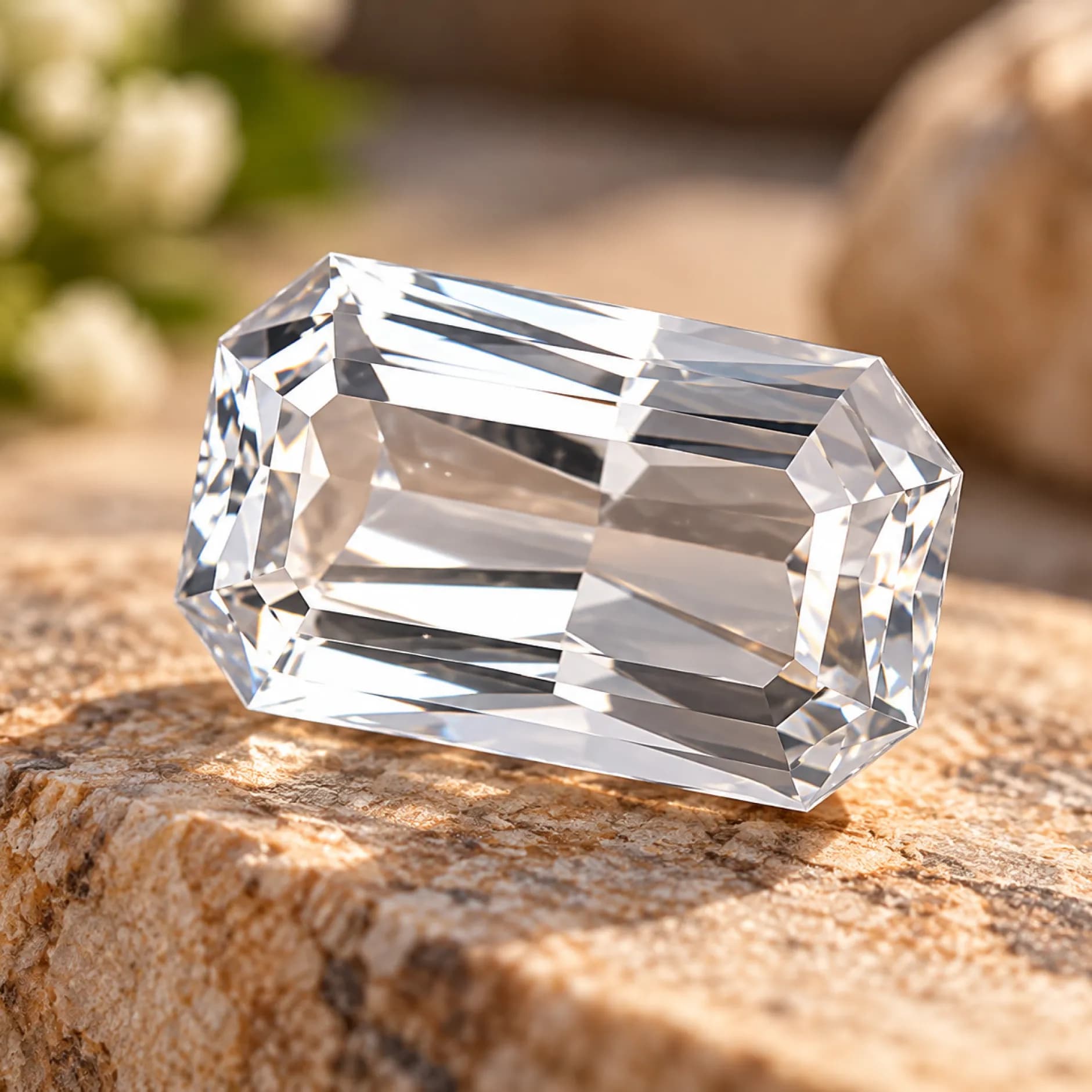
Danburite
Danburite Stone – Meaning, Benefits, Properties & Spiritual Uses Danburite is a beautiful transparent to translucent gemstone known for its clear appearance, subtle brilliance and distinctive prismatic crystal formations. Although many people search for it as White Danburite, natural Danburite can occur in colourless, pale yellow, yellowish-brown, pale pink and light brown varieties. Scientifically, Danburite is a calcium borosilicate mineral with the chemical formula CaB₂Si₂O₈. It has a Mohs hardness of approximately 7 to 7.5 and belongs to the orthorhombic crystal system. Danburite is also popular among people interested in crystals, meditation and modern metaphysical traditions. In these practices, Danburite Crystal is commonly associated with inner peace, clarity, spiritual awareness, compassion and higher consciousness. What Is Danburite? Danburite is a naturally occurring calcium borosilicate mineral. Its important mineral properties include: Mineral Name: Danburite Chemical Formula: CaB₂Si₂O₈ Mineral Type: Calcium borosilicate Crystal System: Orthorhombic Mohs Hardness: 7–7.5 Specific Gravity: Approximately 2.93–3.02 Transparency: Transparent to translucent Lustre: Vitreous to greasy Common Colours: Colourless, pale yellow and yellowish-brown, with gem material also occurring in pale pink and light brown Type Locality: Danbury, Connecticut, USA These mineral properties are documented by Mindat and the Smithsonian National Museum of Natural History. Danburite Stone Origin and History Danburite received its name from Danbury, Connecticut , where the mineral was first described in 1839 by American mineralogist Charles Upham Shepard. The original Danbury deposit is no longer an important commercial source. Gem-quality Danburite has since been found in locations including Mexico, Japan, Myanmar, Madagascar, Switzerland and other regions. The Smithsonian notes that much of the Danburite found in today's commercial gem market comes from Mexico. Danburite Meaning In modern crystal traditions, Danburite meaning is commonly associated with spiritual awareness, inner peace, clarity, compassion and connection with higher consciousness. Crystal practitioners may use Danburite while focusing on intentions involving: Peace and tranquility Spiritual awareness Meditation Mental clarity Compassion Self-reflection Positive intentions Emotional awareness Personal transformation Higher consciousness These associations belong to modern metaphysical traditions rather than scientifically established properties. Danburite Stone Benefits People interested in Danburite Stone benefits commonly use the crystal during meditation, mindfulness and spiritual practices. Traditional metaphysical associations include intentions related to inner calm, clarity, compassion, spiritual development and releasing unhelpful emotional patterns. Danburite should therefore be considered a spiritual or symbolic crystal rather than a medical treatment. Danburite Crystal for Meditation Meditation is one of the most commonly discussed spiritual uses of Danburite Crystal . Modern crystal traditions associate the gemstone with a calm and gentle energy that may complement practices focused on mindfulness, contemplation and spiritual awareness. During meditation, Danburite may be held or placed nearby while focusing on breathing, visualization, mantra repetition or personal intentions. People may incorporate the crystal into meditation centred on peace, clarity, self-awareness, compassion or spiritual growth. Danburite and the Crown Chakra One of the strongest metaphysical associations surrounding Danburite is the Crown Chakra . Modern crystal sources commonly connect clear Danburite with the Crown Chakra and higher spiritual awareness. The Crown Chakra, known as Sahasrara in chakra traditions, symbolically represents higher consciousness, spiritual understanding and connection with something beyond the individual self. Danburite may therefore be incorporated into Crown Chakra meditation while focusing on contemplation, awareness and spiritual development. Chakras are concepts from spiritual traditions and should not be confused with physical organs or medical anatomy. Danburite and the Heart Chakra Danburite is also frequently associated with the Heart Chakra , particularly Pink Danburite. Modern metaphysical sources connect Pink Danburite with compassion, self-love and emotional awareness, while clear Danburite is often linked more strongly with the Crown Chakra. This heart-and-crown combination is one reason Danburite has become popular among people interested in spiritual meditation. Pink Danburite Meaning Pink Danburite is a particularly attractive variety valued for its pale pink appearance. In modern crystal traditions, Pink Danburite is commonly associated with intentions involving compassion, emotional harmony, self-love, kindness and peaceful relationships. From a gemological perspective, pale pink is one of the recognised colours of natural Danburite, although colourless material is more common. Pink Danburite can therefore appeal both to gemstone collectors and people interested in Heart Chakra practices. White Danburite and Clear Danburite The terms White Danburite and Clear Danburite are commonly used by gemstone and crystal buyers for colourless or near-colourless material. Scientifically, “colourless” is usually the more accurate description. Mindat lists colourless, pale yellow and yellowish-brown among Danburite's recognised colours, while Smithsonian specimens demonstrate additional pale pink and light-brown material. Clear Danburite is especially popular in modern metaphysical practices associated with meditation, spiritual awareness and the Crown Chakra. Yellow Danburite Natural Danburite can also occur in yellow and honey-toned varieties. Yellow Danburite gemstones are less commonly encountered than colourless material and can offer an attractive alternative for collectors seeking unusual gemstone colours. The Smithsonian's National Gem Collection includes an unusual intensely golden-yellow Danburite weighing more than 50 carats from Tanzania. Danburite and Angelic Connection Danburite is sometimes called an Angel Stone or associated with angelic communication in contemporary crystal literature. This is a modern metaphysical interpretation rather than an ancient or scientifically established property. Crystal practitioners may use Danburite symbolically during meditation focused on compassion, guidance, spiritual awareness and higher consciousness. Several contemporary crystal traditions particularly associate Danburite with angelic realms and the connection between Heart and Crown energy. Danburite for Clarity and Positive Thinking Clear gemstones are often symbolically associated with clarity, and Danburite is no exception. Within modern crystal practices, Danburite may be used while setting intentions related to: clear thinking, mindfulness, thoughtful communication, emotional awareness and positive decision-making. The gemstone can serve as a physical reminder of these intentions during meditation or daily spiritual practice. It should not, however, be claimed that Danburite directly changes neurological functioning or increases brain performance. Danburite for Emotional Balance Danburite is frequently described in metaphysical traditions as a gentle crystal for emotional reflection. Some practitioners use it while focusing on releasing feelings such as worry, resentment or emotional tension and developing greater compassion. These uses are best described as spiritual or mindfulness practices rather than treatment for anxiety, depression, trauma or other mental-health conditions. Anyone experiencing persistent psychological distress should seek appropriate professional support. Danburite for Communication and Confidence Some modern metaphysical traditions also connect Danburite with compassionate communication. It may be used symbolically by people who want to focus on speaking thoughtfully, expressing feelings respectfully and becoming more comfortable with public communication. However, Danburite should not be presented as a guaranteed treatment for stage fright or communication disorders. Practical preparation, training and professional support remain more appropriate where those difficulties significantly affect daily life. Danburite Metaphysical Properties The most commonly discussed Danburite metaphysical properties centre around spiritual development rather than physical healing. Modern practitioners particularly associate Danburite with meditation, Heart and Crown Chakra practices, compassion, spiritual awareness and higher-consciousness themes. These ideas are useful for people who incorporate crystals into personal spiritual practice, while remaining separate from the mineral's scientifically measurable properties. Danburite Mineral Properties From a mineralogical perspective, Danburite is interesting because it combines good hardness with attractive transparency. Its hardness of 7–7.5 makes it resistant to scratching compared with many softer collector minerals. Danburite also has a relatively high refractive index. The Smithsonian notes that its brilliance can rival Topaz, although Danburite is considerably less familiar in mainstream jewellery. This combination makes transparent gem-quality material suitable for faceting. Danburite vs Quartz Colourless Danburite can sometimes visually resemble Clear Quartz. However, they are completely different minerals. Danburite is a calcium borosilicate with the formula CaB₂Si₂O₈, whereas Quartz is silicon dioxide. Danburite is also slightly harder at approximately 7–7.5 Mohs compared with Quartz at 7, and its optical properties differ. Proper gemological testing is the best way to distinguish visually similar colourless gemstones. Danburite vs Topaz Danburite may also resemble colourless Topaz. The Smithsonian notes that Danburite can rival Topaz in brilliance, which helps explain why the two transparent gemstones can appear similar to an untrained eye. Their mineral compositions and physical properties, however, are different. Gemological examination of refractive index, specific gravity, cleavage and other characteristics can help identify the stone accurately. Is Danburite a Rare Gemstone? Danburite is far less common in mainstream jewellery than gemstones such as Quartz, Amethyst or Topaz. Gemological references describe it primarily as a collector's or connoisseur's gemstone , with colourless material being most common and pink or yellow gem material occurring less frequently. Rarity and value depend on colour, transparency, clarity, size, cut and locality. Where Is Danburite Found? Danburite's type locality is Danbury, Connecticut, but important specimens and gemstone material have been found elsewhere. Documented sources include Mexico, Japan, Myanmar, Madagascar, Switzerland, Tanzania and the United States. Mexico is especially important for modern commercial Danburite. The origin of an individual gemstone should therefore be based on actual supplier or laboratory information rather than assumed from the mineral name. Can Danburite Be Used in Jewellery? Yes. Transparent gem-quality Danburite can be faceted and used in jewellery. Its hardness of approximately 7–7.5 gives it reasonable scratch resistance, although all gemstones should still be protected from strong impacts and harsh treatment. Danburite can be cut into shapes including oval, cushion, round, pear and emerald-style cuts. How to Care for Danburite Stone Danburite jewellery and faceted stones should be handled carefully. Avoid strong impact, harsh chemicals and extreme heat. Store Danburite separately from harder gemstones where possible to reduce scratching and unnecessary damage. A soft cloth and gentle cleaning method are preferable for routine care. Danburite Healing Properties: Important Information Older crystal-healing descriptions sometimes claim that Danburite can: heal the brain, treat allergies, prevent heart attacks, address muscular degeneration or treat other physical illnesses. These claims should not be presented as established medical benefits. There is no reliable clinical evidence that Danburite treats or prevents these conditions. Danburite is better described as a natural mineral, gemstone and crystal used in meditation and metaphysical traditions . Anyone experiencing neurological, cardiovascular, allergic or muscular symptoms should seek qualified medical care rather than relying on a gemstone. How to Use Danburite Crystal Danburite may be used according to personal preference. People interested in crystals may hold it during meditation, keep it near a spiritual altar, add it to a mineral collection, wear it as jewellery or incorporate it into chakra and mindfulness practices. Clear Danburite may particularly suit Crown Chakra-focused meditation, while Pink Danburite is frequently associated with Heart Chakra practices in modern crystal traditions. Why Choose Natural Danburite Stone? Natural Danburite has appeal across several different search interests. Gemstone collectors appreciate its transparency, brilliance and relative rarity. Mineral enthusiasts value its calcium-borosilicate chemistry and distinctive orthorhombic crystals. Crystal practitioners may choose it for modern spiritual associations involving meditation, compassion and higher awareness. This combination makes Danburite relevant to people searching for Danburite Stone, Danburite Crystal, White Danburite, Clear Danburite, Pink Danburite, Danburite Meaning, Danburite Benefits, Danburite Chakra and Danburite Meditation. Frequently Asked Questions What is Danburite? Danburite is a natural calcium borosilicate mineral with the formula CaB₂Si₂O₈. It has a Mohs hardness of approximately 7–7.5 and crystallizes in the orthorhombic system. What does Danburite mean? In modern metaphysical traditions, Danburite symbolizes spiritual awareness, clarity, compassion, peace and higher consciousness. These are spiritual interpretations rather than scientific properties. What are Danburite Stone benefits? Traditional crystal practices associate Danburite with meditation, inner peace, compassion, clarity and spiritual awareness. These are metaphysical beliefs and not medical benefits. Which chakra is Danburite associated with? Modern crystal traditions most commonly associate Danburite with the Heart and Crown Chakras . Pink Danburite is particularly associated with Heart Chakra practices. What is Pink Danburite? Pink Danburite is a naturally pale-pink variety of Danburite. It is relatively uncommon and is associated with the Heart Chakra in modern metaphysical traditions. What is White Danburite? White Danburite is a common commercial or crystal-market term for colourless or near-colourless Danburite. What colour is Danburite? Danburite is most commonly colourless to pale yellow or yellowish-brown. Gem material can also occur in pale pink and light brown varieties. What is the hardness of Danburite? Danburite has a Mohs hardness of approximately 7 to 7.5 . Where was Danburite discovered? Danburite was first described from Danbury, Connecticut, USA, in 1839 and was named after that locality. Where does Danburite come from today? Important occurrences include Mexico, Japan, Myanmar, Madagascar, Switzerland, Tanzania and the United States. Mexico is particularly important for commercial gem-quality material. Is Danburite good for meditation? Danburite is popular in modern crystal traditions for meditation and spiritual-awareness practices. Its role in these practices is metaphysical and symbolic rather than medically proven. Is Danburite an angel stone? Some contemporary crystal traditions describe Danburite as an Angel Stone because of its symbolic association with angelic communication and higher spiritual awareness. This is a modern metaphysical belief rather than a scientific property. Is Danburite a rare gemstone? Danburite is relatively uncommon in mainstream jewellery and is often considered primarily a collector's gemstone. Pink and yellow gem material can be less common than colourless Danburite. Can Danburite heal physical diseases? Danburite should not be presented as a treatment or preventive measure for allergies, heart disease, neurological conditions, muscular degeneration or other illnesses. Medical conditions require appropriate professional care. Buy Natural Danburite Stone Online If you are looking to buy Danburite Stone online , consider the gemstone's colour, clarity, transparency, size, cut, origin and overall quality. Natural Danburite can range from clear and colourless to pale yellow, pink and light-brown varieties. Transparent gem-quality crystals can be faceted into attractive collector gemstones, while natural crystal specimens are also popular for mineral collections and spiritual practices. Whether you are interested in Danburite Crystal meaning, Danburite benefits, Pink Danburite, White Danburite, Danburite properties, Crown Chakra meditation or natural Danburite gemstones , this unusual calcium borosilicate offers both mineralogical interest and a distinctive place in modern crystal traditions.
View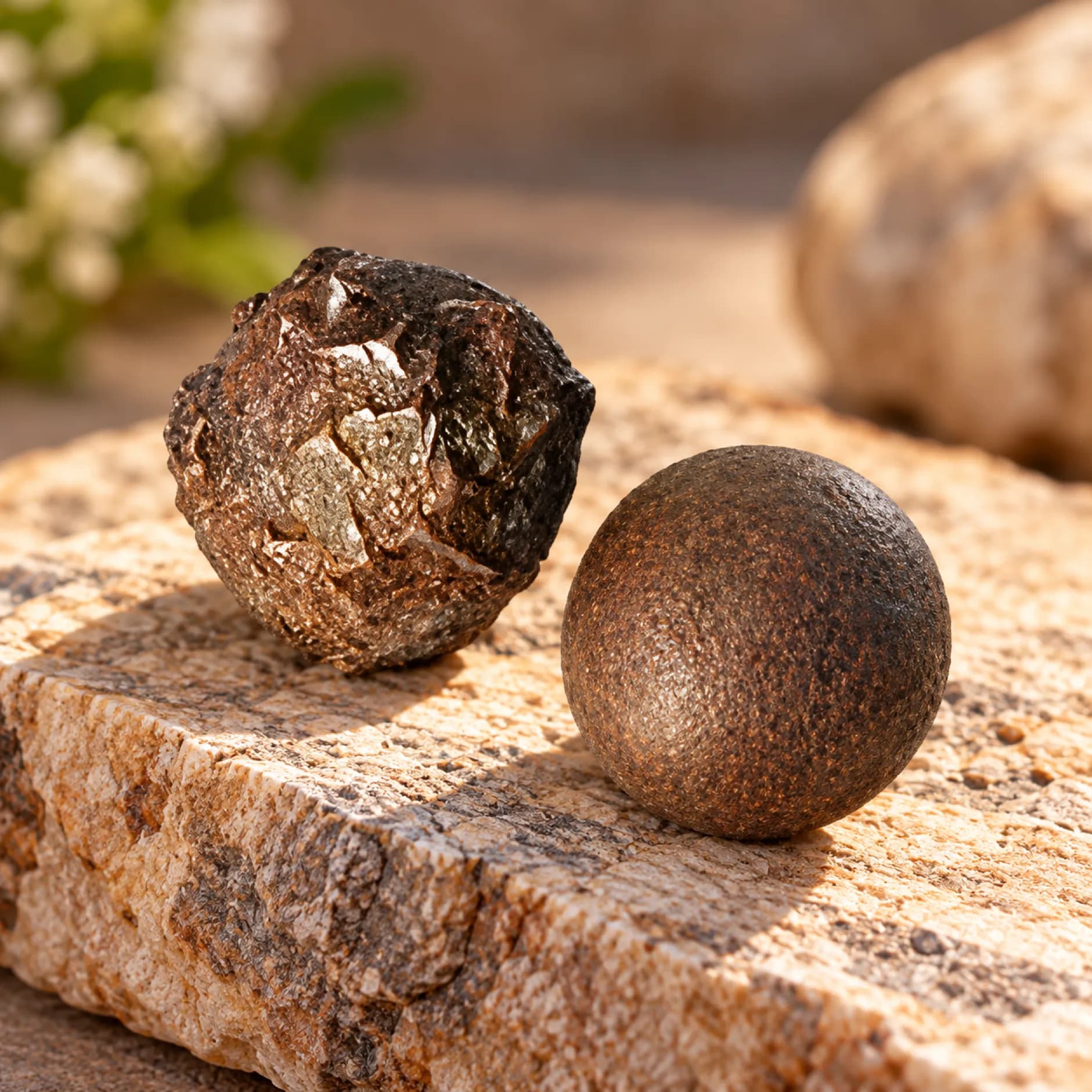
Boji Stone
Home Boji Stone [gallery columns="1" size="large" ids="14690"] Buy Now Boji stone is the name given to the concretion stone. These are highly effective in healing the grounding energy of the body. Boji stones are also called as shaman stones . The colour of the boji stone is brown with little spots on the surface of the stones. Large boji stones can be helpful in healing through crystal therapy. It has strong grounding and healing vibration property. These are also used in jewelry and boji stone necklace are worth wearing. Boji stones may be used in body layouts which helps in clearing the chakras of the body and also balances the male and the female energies of the body. These are excellent helping to heal the negative emotional pain, and they are powerful to clear hypnotic commands that may have been implanted at an earlier time. Boji stones carry the feminine energy and the stones with small nodules on them fall under the category of male stones. Authentic boji stones are very rare to find and we may land up buying fake boji stones. Boji stones or Shaman Stones Boji stones are also called as shaman stones. So, what are shaman stones? Shaman stones are high energy stones and carry a powerful ally to work in the personal front or the personal problem of the wearer. Benefits of Boji stones This stone carries the shaman energy. The smoother stones carry the feminine energy and helps in removing the emotional pain from the mind. Boji stone is found in pairs, the male and the female stone. These usually carry a high level of healing energy and they are known as highly protective stones. These stones create a strong connection with the earth, and they help one to take excess energy down from the base or the root chakra to the earth star chakra to be discharged. Why Would You Use It? Boji stone helps in grounding the spiritual energy and their energy is extremely helpful if you are in the meditation or doing any spiritual development work. Healing through Boji Stone The male Boji stone possesses a “positive” charge and is usually held in the right hand for the left-handed person. The female boji stone should be held in the right hand. After 10 minutes of holding them, you will notice the energy of the body starts to flow more easily. It will go down to every nerve and the cells of the body. Boji stones indeed helps to boost the internal energy system of the body, which, in turn, dissolves the potential energy barriers and brings light and hoy to all body system. Boji stones bring a mental and spiritual unity and bring light and joy in all the system of the body. There is a science behind wearing gemstones . Balances Male Female Energy They have an extremely great electromagnetic energy and each Boji stone have both positive and negative side. These stones are always found in pairs as I have discussed above in the healing through boji stone. You can use two males or two female stones together, but the males are less common than the females. This depends on what you are able to obtain. These stones are found in ovoid or spherical in shape, although there are also some found in irregular shape. There are similar stones sold under the name of Kansas Pop Rocks . It has been known from the sources, Pop Rocks are quite widespread in the Kansas area. They are said to have the same healing attributes, and they are mined from the same area. The mineralogical features of Boji stones have a mixture of minerals. It consists of large amount of Iron pyrite and sometimes palladium in some stones. There are some inclusions of Pyrite in these stones providing them a sparkly look. Who Should Use It? Those who needs to balance their shamanic energy. Use a pair of stones together to balance the male and the female energy in the body. Hold them in your hand and move them towards and away from each other. There will be a feeling, where energy will pull you towards. It is believed that it works better, if you hold the female Boji stone in your right hand and male in your left hand. Wearing Boji Stones These stones can be worn as pendants, by wire wrapping them. They are especially good, if you wear them as birthstone. They are both Scorpio birthstone as well as Aquarius birthstone. After wearing, they give excellent healing energy to the body. The metaphysical properties of Boji stone are helpful due to its excellent spiritual energy through the body from the higher transpersonal chakras. Why Boji Stone from us? We are the only natural Boji stone dealer in India. All our stones are exported from natural and authentic mines. You can visit our online portal to shop with us. Frequently Asked Questions About Boji Stone What is a Boji Stone? Boji Stone is the name commonly given to unusual brown, rounded concretions used in modern crystal and metaphysical practices. They are also popularly known as Shaman Stones and are valued for their distinctive appearance and traditional grounding associations. Is Boji Stone also called Shaman Stone? Yes. Boji Stone is commonly referred to as Shaman Stone in crystal-healing and metaphysical communities. Both names are frequently used for stones associated with grounding, meditation and spiritual practices. What are the benefits of Boji Stone? In metaphysical traditions, Boji Stone benefits are associated with grounding, emotional balance, meditation, protection and balancing different forms of energy. These are traditional spiritual beliefs rather than scientifically proven medical effects. What is Boji Stone used for? Boji Stones are commonly used during meditation, grounding exercises, crystal layouts and intention-setting practices. Some people also keep them in spiritual spaces or wear them as wire-wrapped pendants. What is the difference between male and female Boji Stones? In crystal traditions, smoother Boji Stones are commonly described as female stones, while stones with more pronounced nodules or surface projections are described as male stones. Practitioners often use a male and female Boji Stone together during balancing practices. How do you use a pair of Boji Stones? A pair of Boji Stones can be held in the hands during meditation or grounding exercises. Some traditions recommend holding one stone in each hand while focusing on balance, breathing and relaxation. Which chakra is associated with Boji Stone? Boji Stone is most commonly associated with the Root Chakra because of its traditional connection with grounding and stability. Some crystal practitioners also use it in broader chakra-balancing practices. Can Boji Stone be worn as a pendant? Yes. Boji Stones can be wire-wrapped and worn as pendants if the shape and size of the individual stone are suitable. They may also be kept as loose stones for meditation or crystal practices. How can I identify an authentic Boji Stone? Authentic Boji Stones can vary naturally in shape, texture and surface appearance. Because similar concretions may be sold under different names, buyers should check the stone's source, seller information and available mineral details before purchasing. Are Boji Stones rare? Boji Stones marketed under this particular name can be difficult to source compared with many common crystals. Availability depends on locality, authenticity, size and the type of specimen being offered. Are Boji Stones always found in pairs? They are often sold and used as male and female pairs in metaphysical practices, but individual specimens can also be found and used separately. What colour is a Boji Stone? Boji Stones are generally brown, dark brown or earthy in appearance. Their surfaces may contain small spots, nodules or metallic-looking inclusions that give each stone a distinctive natural appearance. Is Boji Stone good for meditation? Boji Stone is commonly used as a grounding stone during meditation in modern crystal traditions. Some practitioners hold a pair of stones while focusing on calmness, stability and spiritual awareness. Is Boji Stone a Scorpio or Aquarius birthstone? Some modern crystal traditions associate Boji Stone with Scorpio and Aquarius. However, it is not one of the standard traditional monthly birthstones, so these zodiac associations should be considered metaphysical interpretations. Where can I buy Boji Stone online? When buying Boji Stone online, look for clear product photographs, information about the stone's source, size and characteristics, and details that help distinguish the specimen from similar concretions marketed under other names.
View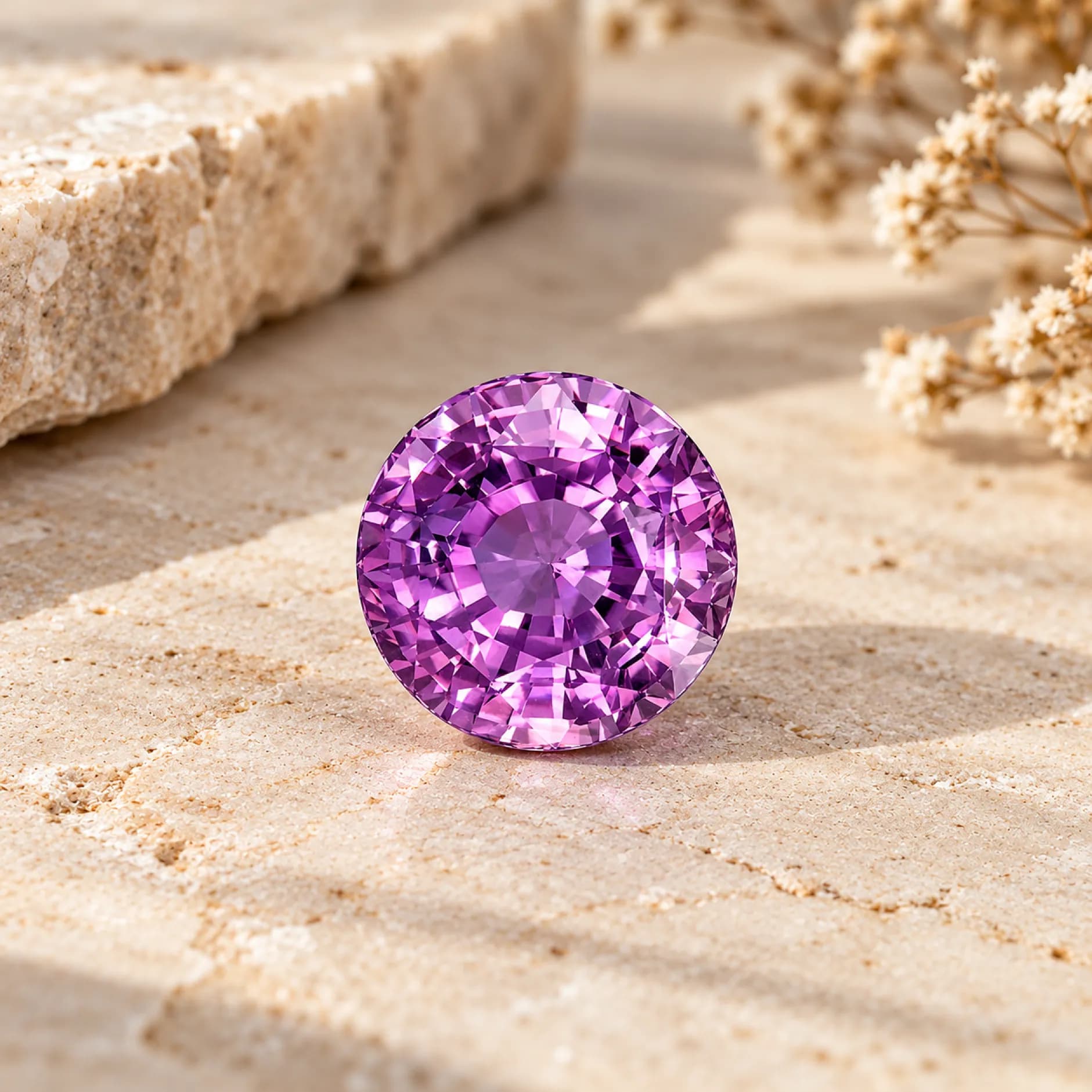
Violet Sapphire (Purple Sapphire) – Meaning, Benefits, Properties and Uses
Violet Sapphire , also widely known as Purple Sapphire , is a beautiful fancy-colour sapphire admired for its shades ranging from bluish violet and violet-purple to reddish purple. It belongs to the corundum mineral family, the same mineral species that includes blue sapphire and ruby. GIA recognizes purple and violet among the natural fancy colours in which sapphire occurs. Natural Purple Sapphire is appreciated for its distinctive colour, excellent durability and suitability for fine jewellery. In spiritual and crystal traditions, Violet Sapphire is also associated with wisdom, meditation, intuition, spiritual awareness and the Crown Chakra. What Is Violet Sapphire? Violet Sapphire is a purple-to-violet variety of sapphire , a gemstone belonging to the mineral corundum. Although sapphire is most commonly associated with blue, natural sapphires occur in many colours, including: Purple Violet Pink Yellow Orange Green Colourless Black These non-blue varieties are often described as Fancy Sapphires . Purple sapphires have purple as their dominant colour and may range from reddish purple to violetish purple with different levels of saturation. Purple Sapphire vs Violet Sapphire The names Purple Sapphire and Violet Sapphire are often used for closely related colour ranges within fancy sapphire. Purple Sapphire generally has purple as the dominant colour, while some stones display stronger violet or bluish-violet tones. Because gemstone colour exists on a spectrum, commercial descriptions may vary. For SEO and product discovery, using both Violet Sapphire and Purple Sapphire on this page helps users understand that the product belongs to the same broader fancy-sapphire category. Violet Sapphire Meaning In modern crystal and metaphysical traditions, Violet Sapphire meaning is commonly associated with spiritual awareness, clarity, wisdom and higher consciousness. Its violet colour is traditionally linked with introspection and spiritual development. People interested in crystal meditation may choose Purple Sapphire as a symbolic gemstone for: Wisdom Mental clarity Spiritual awareness Intuition Focus Self-reflection Personal growth Calmness Meditation These meanings belong to spiritual and metaphysical traditions rather than scientifically proven therapeutic effects. Purple Sapphire Benefits According to traditional crystal beliefs, Purple Sapphire benefits are connected with clarity, focus, spiritual growth and confidence. It is traditionally associated with: Supporting meditation Encouraging mental focus Promoting spiritual awareness Supporting positive thinking Encouraging wisdom and thoughtful decision-making Inspiring confidence and self-expression Supporting personal goals and ambitions Encouraging calm and reflective thinking Supporting Crown Chakra practices Promoting a sense of purpose These are traditional symbolic and spiritual associations and should not be interpreted as medical benefits. Violet Sapphire and the Crown Chakra Violet and purple gemstones are commonly associated in crystal traditions with the Crown Chakra , also known as Sahasrara. The Crown Chakra is traditionally regarded as the energy centre connected with spiritual awareness, higher consciousness, wisdom and one's relationship with the larger universe. A Violet Sapphire for Crown Chakra meditation may therefore be used as a focus stone during: Meditation Mindfulness Visualization Spiritual reflection Chakra practices Intention setting The gemstone may be held during meditation, worn as jewellery or kept in a peaceful spiritual space. Purple Sapphire for Meditation Violet Sapphire's symbolic association with wisdom and higher awareness makes it particularly relevant to people interested in meditation. A Purple Sapphire for meditation may be used while focusing on intentions such as: Mental clarity Wisdom Spiritual growth Positive thinking Intuition Concentration Inner peace The gemstone itself should be viewed as a symbolic aid within a spiritual practice rather than a treatment for stress, anxiety or other health conditions. Purple Sapphire for Success and Leadership In traditional crystal literature, sapphires have long carried symbolic associations with sincerity, truth, faithfulness and nobility. GIA notes that sapphire has historically been linked with these qualities and has been worn by royalty and religious figures for centuries. For this reason, Purple Sapphire may appeal to entrepreneurs, executives, writers, professionals and people interested in gemstones symbolising wisdom, integrity and thoughtful leadership. A Purple Sapphire can serve as a personal reminder of qualities such as: Integrity Clear decision-making Responsibility Confidence Creativity Persistence Leadership Violet Sapphire for Business and Entrepreneurs Some people choose Violet Sapphire for business because of its traditional association with mental clarity, wisdom and focus. Entrepreneurs and professionals may wear Purple Sapphire jewellery or keep the gemstone in their workspace as a symbolic reminder to make thoughtful decisions and pursue goals with integrity. However, claims that a gemstone will automatically increase income, attract money or guarantee business success should be understood as traditional beliefs rather than guaranteed outcomes. Natural Purple Sapphire A Natural Purple Sapphire is corundum that has formed naturally within the earth rather than being produced synthetically in a laboratory. Natural sapphires can also undergo treatments to improve their appearance. Heat treatment is widely accepted within the gemstone trade and is commonly used to improve sapphire colour or clarity. For fine sapphire, laboratory confirmation that there is no evidence of heat can add to rarity and value. For this reason, buyers interested in a Natural Unheated Purple Sapphire should look for an independent gemological laboratory report stating whether evidence of treatment was detected. Is Purple Sapphire Rare? Purple and violet sapphires belong to the fancy-colour sapphire family. Their availability, rarity and value depend on several factors, including: Colour Saturation Tone Clarity Carat weight Cut Origin Treatment status Strong, attractive colour combined with good transparency and minimal treatment can make a Purple Sapphire especially desirable. It is better not to claim that every Violet Sapphire is rarer than every blue sapphire because rarity and value vary considerably by quality and origin. Purple Sapphire Colour Purple Sapphire can occur in several attractive shades. GIA describes purple sapphires as ranging from reddish purple to violetish purple , with saturation varying from weak to vivid. Common commercial descriptions may include: Violet Sapphire Purple Sapphire Bluish Purple Sapphire Violetish Purple Sapphire Reddish Purple Sapphire Lavender Sapphire Deep Purple Sapphire The preferred colour ultimately depends on personal taste, saturation and overall gemstone quality. Purple Sapphire Properties Important gemological properties of Violet Sapphire include: Gemstone: Violet Sapphire / Purple Sapphire Mineral: Corundum Chemical Composition: Aluminium Oxide – Al₂O₃ Colour: Violet, purple, reddish purple, violetish purple Mohs Hardness: 9 Specific Gravity: Approximately 4.00 Refractive Index: Approximately 1.762–1.770 Birthstone: September Gemstone Family: Sapphire / Corundum GIA identifies sapphire as corundum with the chemical composition Al₂O₃ and a Mohs hardness of 9. Is Purple Sapphire Good for Jewellery? Yes. Sapphire is one of the most durable natural gemstones used in jewellery. With a Mohs hardness of 9 , sapphire is second only to diamond on the traditional Mohs scale and has excellent toughness. This makes Purple Sapphire suitable for many types of jewellery, including rings that may be worn frequently. Violet Sapphire may be used in: Purple Sapphire rings Pendants Earrings Bracelets Engagement rings Statement jewellery Custom gemstone jewellery Purple Sapphire Ring A Purple Sapphire Ring combines the durability of sapphire with an unusual violet or purple colour. Purple Sapphire rings may appeal to buyers looking for an alternative to traditional blue sapphire, amethyst or other purple gemstones. Because sapphire is highly durable, it can be especially suitable for rings intended for regular wear. Violet Sapphire Birthstone Sapphire is officially associated with September as its traditional birthstone month. This applies to the sapphire family, which includes blue as well as fancy-colour sapphires such as purple and violet. Therefore, the earlier association of Violet Sapphire with April 20 to May 20 should not be presented as its birthstone month. Some astrological systems may separately associate gemstones with zodiac signs or planets, but these traditions should be identified as separate from the standard birthstone system. Purple Sapphire Treatment Sapphires may be untreated or treated. Heat treatment is common and widely accepted in the gemstone trade. Other treatments can include lattice diffusion, fracture filling and dyeing, although these are less common and may affect value or care requirements. Therefore, it is not accurate to assume that Purple Sapphire generally requires no heating. A gemological laboratory report can help determine whether a sapphire shows evidence of treatment. How to Buy a Purple Sapphire When choosing a Natural Purple Sapphire , consider: Colour Look for an attractive purple or violet colour with good saturation. Clarity Some natural inclusions are expected. Evaluate whether inclusions noticeably affect beauty or durability. Cut A good cut can improve brilliance and display the colour more effectively. Carat Weight Larger fine-quality sapphires may command higher per-carat values. Treatment Ask whether the sapphire is untreated, heat treated or has undergone another enhancement. Certification For valuable stones, an independent gemological laboratory report provides useful information about identification and treatment status. How to Clean Violet Sapphire Sapphire is durable, but jewellery should still be cleaned carefully. GIA recommends warm, soapy water as a safe cleaning method for sapphire. Untreated and heat-treated sapphires generally have excellent durability. Fracture-filled, cavity-filled or dyed stones need greater care and should normally be cleaned only with a damp cloth. For routine cleaning: Use lukewarm water. Add a small amount of mild soap. Gently clean with a soft brush. Rinse thoroughly. Dry with a soft lint-free cloth. Avoid harsh chemicals. Who May Consider Violet Sapphire? Purple Sapphire may appeal to: Sapphire collectors Lovers of purple gemstones Meditation practitioners People interested in Crown Chakra traditions Entrepreneurs and professionals Jewellery collectors September-born individuals Buyers seeking an alternative to blue sapphire People looking for a durable purple gemstone If the gemstone is being selected specifically for astrological purposes, personalised guidance is preferable because planetary gemstone recommendations vary between astrological traditions. Why Choose a Violet Sapphire? A Violet Sapphire gemstone offers an unusual combination of rich colour, excellent durability and sapphire's long history as a precious gemstone. Its purple-to-violet tones make it visually distinctive, while its traditional symbolic associations with wisdom, awareness, integrity, meditation and spiritual growth add another dimension for people interested in crystal traditions. Whether selected as a Natural Purple Sapphire, Purple Sapphire Ring, Violet Sapphire jewellery stone or meditation gemstone , its combination of beauty and durability makes it an appealing member of the fancy sapphire family. Frequently Asked Questions About Violet Sapphire What is Violet Sapphire? Violet Sapphire is a violet or purple variety of sapphire belonging to the corundum mineral family. Is Violet Sapphire the same as Purple Sapphire? The terms are often used for overlapping colour ranges. Purple Sapphire has purple as its dominant hue, while Violet Sapphire may show stronger violet or bluish-violet tones. What are Purple Sapphire benefits? In crystal traditions, Purple Sapphire is associated with wisdom, spiritual awareness, focus, meditation, intuition and Crown Chakra practices. These are traditional beliefs rather than medically proven effects. Is Purple Sapphire natural? Yes, natural Purple Sapphires occur in nature. Laboratory-grown sapphires also exist, so independent gemological identification is useful when natural origin is important. Is Purple Sapphire rare? Purple Sapphire belongs to the fancy-colour sapphire family. Its rarity and value depend on colour, clarity, carat weight, cut, treatment and origin. What is the Purple Sapphire birthstone month? Sapphire is the September birthstone , including fancy-colour sapphires such as purple and violet sapphire. What is the hardness of Purple Sapphire? Purple Sapphire has a Mohs hardness of 9 , making it highly suitable for jewellery. Does Purple Sapphire need heat treatment? Not necessarily. Both treated and untreated Purple Sapphires exist. Heat treatment is common in sapphire, while confirmed unheated fine-quality material can be particularly desirable. Which chakra is Violet Sapphire associated with? In modern crystal traditions, violet gemstones such as Violet Sapphire are commonly connected with the Crown Chakra and spiritual-awareness practices. Can Purple Sapphire be worn every day? Its Mohs hardness of 9 and excellent toughness make sapphire well suited to regular jewellery wear, although normal jewellery care is still recommended.
View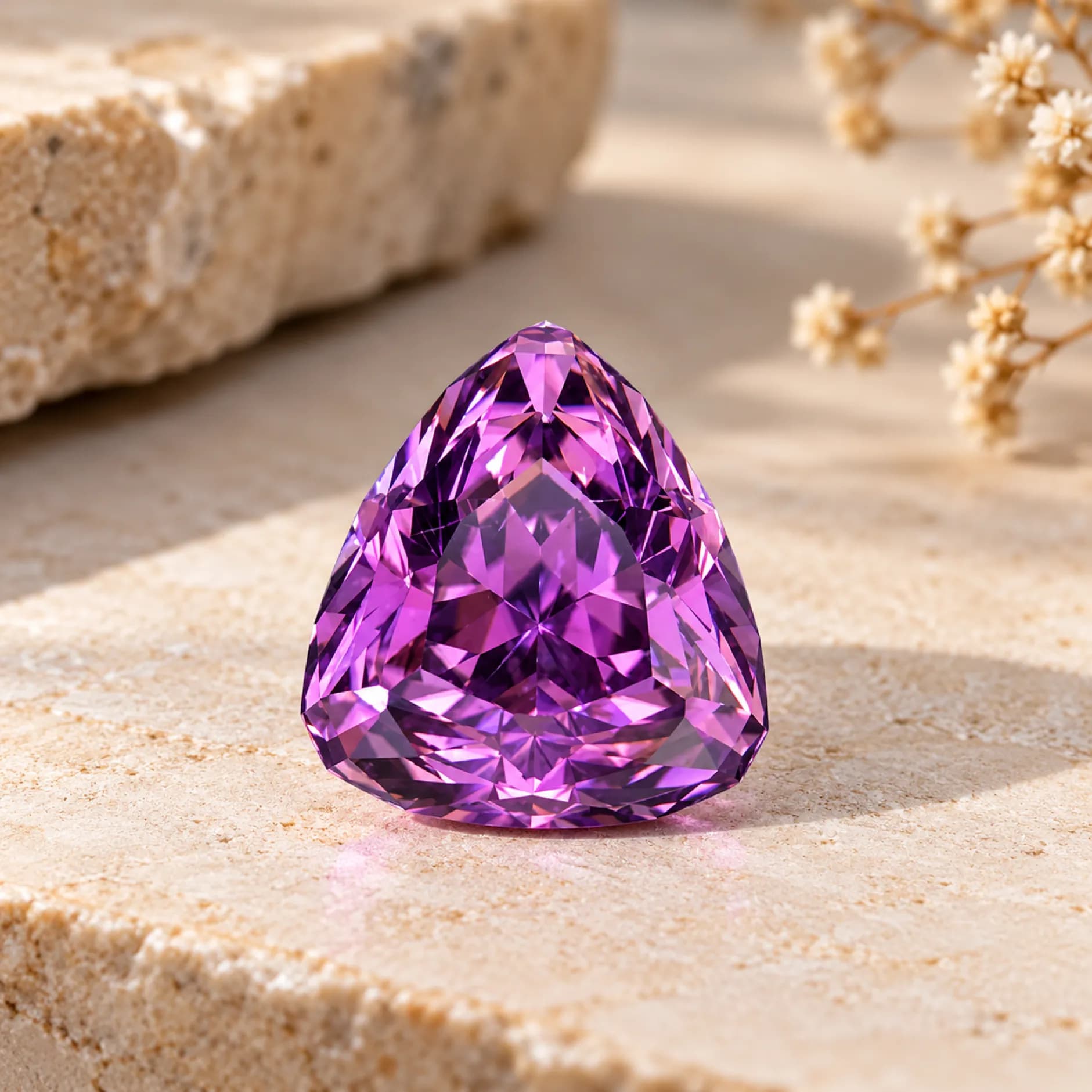
Natural Kunzite Stone – Meaning, Benefits, Properties & Spiritual Significance
Kunzite stone got its name after a famous gemologist George Frederick Kunz. This particular stone has a beautiful pink color and it is becoming increasingly famous in the market of gemstone. Kunzite is a fascinating stone, filtered in energy and cheerful in nature. The palest pink which has a light violet tone, it is a Stone of feelings and emotions, opening and associating the heart to the mind and giving rise to a healing affinity between the two. Kunzite motivates one to free the boundaries created around the heart for protection, and to be responsive to the situation of unconditional and bountiful love. Why should I wear? Pink Kunzite is a stone which is often known as the Woman's Stone. It is particularly helpful for a woman who is experiencing the state of motherhood for the first time. It is a suggestive stone for sleepless babies, aggressive and hyper children, and is an excellent stone for girls entering the stage of puberty or adolescence where the stone helps them to accept their new development. Kunzite is also a stone for children who are facing a difficult time in adjusting to the challenges of everyday life. Its modest pink beam brings solace, and clears any halcyon shadows that may have piled on from negative circumstances or situations in life. It is also a helpful stone for star kids as it helps them to adjust and accept ups and downs in life. Kunzite helps to cure problems related to heartache over loss of a person or things from existing life. It also helps in overcoming the pain of heartbreak after loss of a relationship from life. The calming power of Kunzite eases nervousness during the time of assessment, interview and also is useful in scenarios where one cannot express irritation. In the workplace Kunzite plays the role of a defensive stone when seniors bring personal dislikes or disharmony in work, or uses teasing or sexual torment as a power play. As a travel stone, Lilac Kunzite protects against road accidents and stress while driving. It increases the concentration of a driver while driving his vehicle. When you carry Lilac Kunzite while visiting areas where negative incidents have taken place, it empowers you with the sixth sense and is especially safeguards against harmful elements. Benefits & Effect Kunzite is helpful in curing hormone-linked migraines, the reproductive functions in women, adolescence in girls, premenstrual syndrome, and other problems related to menstrual systems. It is also used to cure skin breakout caused by sensitivity to chemicals, and in decreasing the consequence of anesthesia. Kunzite improves our cardiovascular system and the cardiac infarction, and is favourable in curing neuralgia, epilepsy and treats joint pain. Kunzite increases the medicaments of depression and psychiatric disharmony, and helps us in recovering from emotional anxiety. It is also seen to be used in radionic investigation. Kunzite is a strong mender of the emotional body, particularly for those who are suffering from depression and actually has disconnected himself from every happiness of life. Its high- spirit energy enables a person to let go of any kind of phobia and sadness, and inspires one to connect himself with the present situation in the perfection of the time. It encourages the free declaration of feelings, healing the mind and body, and being always enthusiastic to accept the opportunities that life has is offering one. The pink color energy of kunzite triggers the heart chakra and links it with the light violet spirit of the mind- the crown chakra. The Crown Chakra is situated at the pinnacle of the head, and is our gateway which connects our body and mind with the cosmos . It has a strong influence on how we think, and how we reciprocate to the world surrounding us. It is the origin of our beliefs and starting point of our spirituality. This productive transmission between mind and heart generates a strong state of peace touching the inner core of one's life, and is experienced as eternal joy in thoughts and feelings. Dtails Origin - California, Afghanistan, Brazil, Madagascar Birthstone month - Pink Kunzite - October 22 - November 20. Pale violet kunzite - December 21- January 19 Ruling planet - Pluto and Jupitor Profession - Businessman, people who work in office, travellers, housewives or working women who are pregnant. Significance - Kunzite is helpful for those people who are facing problems connecting with others. It is also supported in forgetting painful memories of a loss and heals the broken heart. It also helps to restore trust and respect for our neighbours, loved ones and friends and also maintains innocence in a person. Kunzite grows tolerance for oneself, as well as sympathy for others. It encourages modesty and an eagerness to serve. Kunzite is a defensive stone, eliminates negativity, and raises a protection around the aura against negative entities and outside impact. It provides a centralizing impact in all situations, encouraging one to remain cool and composed, even in the midst of gatherings. Kunzite brings the high spirit that develops commitment, determination and caring. Its beautiful color soothes feelings of annoyance or resentment, and can help in the process to meditate and reflect. Pink is the shade of fresh love, new charm and new relationships. It increases the growth of sensuality, and can help to get rid of heartache, helping in the enhancement of our caring and loving abilities. Color- Kunzite is found in pink to violet shades. Density - 3.15 - 3.21 Species- Manganese Jewellery metal- Gold, silver. Wearing day- Thursday and Tuesday Caution - Do not decide on your own which shades of Kunzite to wear. Consult an astrologer to get the proper guidance. Always keep the stone away from heat and strong light. Never wear your finger ring made out of kunzite stone while cooking or working in the kitchen. While cleaning the stone do not use strong detergent and use mild shampoo or soap diluted in the water. Keep it away from heavy materials so that your precious stone does not get damaged. Frequently Asked Questions What is Kunzite Stone? Kunzite is the pink-to-violetish-purple gem variety of spodumene. Its colour is associated with trace manganese, and it was named after gemologist George Frederick Kunz. What colour is Kunzite? Natural Kunzite ranges from pale pink and lilac to more intense violetish-purple shades. What are Kunzite Stone benefits? Crystal traditions associate Kunzite with love, compassion, meditation, emotional awareness and personal reflection. These are traditional metaphysical beliefs rather than medically proven benefits. What is Pink Kunzite? Pink Kunzite is pink-coloured spodumene. The pink-to-violet coloration is associated with manganese within the mineral. Is Kunzite a natural gemstone? Yes. Kunzite is a naturally occurring gem variety of spodumene. Natural material is found in locations including Afghanistan, Brazil, Madagascar and California. Is Kunzite associated with the Heart Chakra? Modern crystal traditions commonly associate Pink Kunzite with the Heart Chakra because of its pink colour and symbolism of love and compassion. This is a spiritual association rather than a scientific property. Can Kunzite be used for meditation? Yes. People interested in crystal practices may use Kunzite as a physical or visual focus during meditation, mindfulness and personal reflection. Does Kunzite cure depression or anxiety? Kunzite should not be presented as a treatment for depression, anxiety or any other mental-health condition. Its associations with peace and emotional reflection belong to crystal and spiritual traditions. What is the hardness of Kunzite? Kunzite measures approximately 6.5–7 on the Mohs hardness scale. However, its strong cleavage means it can still break from sharp impact. Can Kunzite fade? Yes. Prolonged exposure to intense light or heat can cause Kunzite's colour to fade. How should Kunzite be cleaned? GIA recommends warm soapy water and advises against steam or ultrasonic cleaning. Is Kunzite a February birthstone? Kunzite is not one of the main standardized February birthstones, but GIA notes that some consider it an alternate February birthstone. What affects Kunzite Stone price? Kunzite price depends on factors such as colour intensity, clarity, cut, carat weight, treatment and overall quality. Explore Natural Kunzite Stone at AstroKapoor Kunzite Stone is an attractive natural gemstone combining delicate pink-to-violet colour with interesting gemological properties and a strong presence in modern crystal traditions. Whether you are researching Kunzite Gemstone, Pink Kunzite, Natural Kunzite Stone, Kunzite Benefits, Kunzite Meaning, Kunzite Properties, Kunzite Price, Kunzite Crystal or Kunzite Jewellery , it is important to distinguish verified gemological information from spiritual beliefs associated with the stone. For jewellery, pay particular attention to colour, clarity, cut, carat weight and careful handling. For meditation or metaphysical use, Kunzite is traditionally associated with compassion, love, reflection and inner peace.
View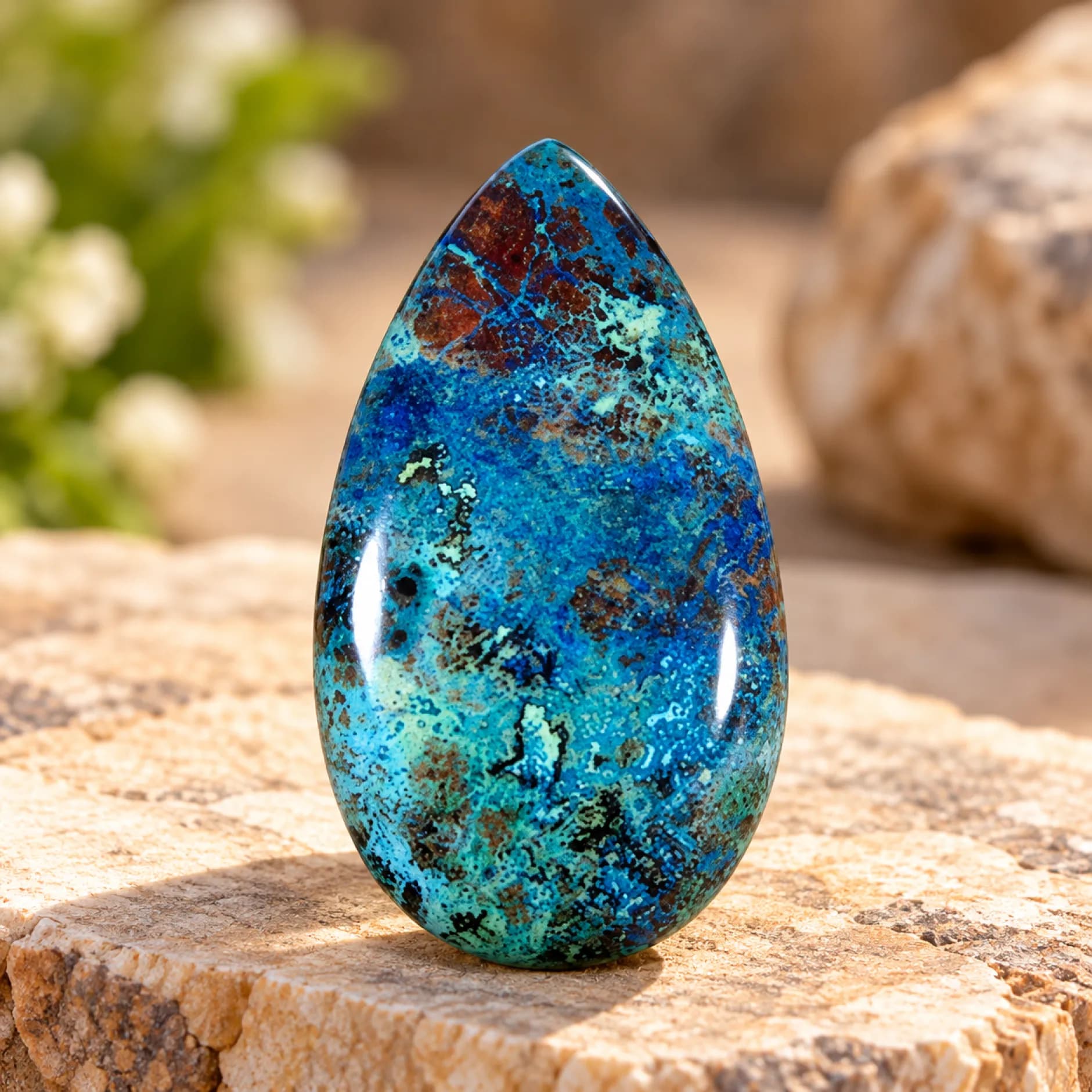
Shattuckite Stone – Meaning, Benefits, Properties and Chakra Uses
Shattuckite Stone is a distinctive blue to blue-green copper mineral admired by mineral collectors and people interested in crystals, meditation and spiritual practices. It is especially recognised for its beautiful shades of blue and its traditional metaphysical associations with communication, intuition, truth and spiritual awareness. Shattuckite is a copper silicate hydroxide mineral. It was first described from the Shattuck Mine in Bisbee, Arizona, United States, and was named after this famous mining locality. The stone often occurs alongside other colourful copper minerals, including azurite, malachite and chrysocolla. Because of these natural associations, specimens combining Shattuckite with Azurite or other copper minerals can display striking shades and patterns. What Is Shattuckite? Shattuckite is a relatively uncommon copper silicate hydroxide mineral. Its mineral formula is: Cu₅(Si₂O₆)₂(OH)₂ The mineral commonly occurs as fibrous, granular, spherical or acicular formations. Acicular means that the crystals can develop in fine needle-like forms. Shattuckite generally displays shades ranging from light blue and turquoise-blue to rich dark blue and blue-green. Its attractive colour comes from its copper content. Why Is It Called Shattuckite? The name Shattuckite comes from the Shattuck Mine in Bisbee, Arizona. The Shattuck Mine is recognised as the type locality for the mineral, meaning it is the locality from which the mineral was originally scientifically described. This connection with Bisbee is important because the region is famous for producing a variety of colourful copper minerals. Shattuckite Azurite Shattuckite Azurite generally refers to mineral material in which Shattuckite occurs together with Azurite. Both are copper minerals, although their chemical compositions are different. Shattuckite is a copper silicate hydroxide, while Azurite is a copper carbonate hydroxide mineral. Natural mineral associations involving Shattuckite can include: Azurite Malachite Chrysocolla Quartz Other secondary copper minerals When multiple minerals occur together, the specimen can show interesting combinations of blue, turquoise, green, white or darker colours. If the AstroKapoor product contains genuine Azurite along with Shattuckite, the term Shattuckite Azurite is highly appropriate. If it is pure Shattuckite, however, the page should primarily describe it as Shattuckite Stone rather than automatically calling every specimen Shattuckite Azurite. Shattuckite Stone Meaning In modern crystal and metaphysical traditions, Shattuckite meaning is closely connected with truth, communication, intuition and spiritual awareness. It is often described as a crystal for people who want to express their thoughts clearly while remaining connected with their inner values. Shattuckite is traditionally associated with: Clear communication Speaking truthfully Self-expression Intuition Spiritual awareness Emotional understanding Confidence while communicating Personal reflection Meditation Inner harmony These are spiritual and metaphysical associations rather than scientifically established health effects. Shattuckite Benefits According to crystal traditions, Shattuckite benefits are primarily connected with communication, intuition and emotional awareness. People interested in crystal practices traditionally use Shattuckite for: Encouraging honest communication Supporting confidence in self-expression Promoting thoughtful conversations Encouraging intuitive awareness Supporting meditation Developing greater self-understanding Encouraging emotional balance Supporting positive thinking Strengthening personal intentions Promoting harmony between thoughts and communication Shattuckite can therefore be particularly interesting to people whose professional or personal lives require regular communication. Shattuckite for Communication One of the best-known traditional uses of Shattuckite is its association with communication. In metaphysical traditions, it is sometimes described as a stone that encourages a person to express thoughts clearly and honestly. For this reason, Shattuckite may appeal to professionals such as: Teachers Lawyers Counsellors Speakers Writers Journalists Politicians Trainers Consultants Content creators The crystal can be carried, worn or kept nearby as a symbolic reminder to communicate clearly and thoughtfully. Shattuckite Chakra Shattuckite is commonly associated with three chakras in modern crystal traditions: Throat Chakra The Throat Chakra is the strongest association for blue Shattuckite. It is traditionally connected with communication, truth, expression and the ability to share thoughts clearly. Lighter blue Shattuckite is frequently associated with Throat Chakra meditation. Third Eye Chakra Deep blue varieties of Shattuckite are also commonly linked with the Third Eye Chakra. The Third Eye Chakra is traditionally associated with intuition, perception, inner awareness and spiritual understanding. For this reason, dark blue Shattuckite may be used during meditation focused on intuition and self-reflection. Heart Chakra Blue-green or greenish Shattuckite is sometimes associated with the Heart Chakra in crystal traditions. The Heart Chakra symbolically relates to compassion, emotional openness, relationships and communicating with kindness. These chakra associations are part of spiritual traditions rather than scientific anatomy. Shattuckite for Throat Chakra Shattuckite is particularly popular as a Throat Chakra crystal because of its blue colour and its traditional association with communication. During Throat Chakra meditation, Shattuckite may be used while setting intentions such as: Speaking clearly Communicating honestly Expressing ideas confidently Listening carefully Communicating with compassion Finding the right words during difficult conversations It can be held during meditation or kept nearby during reflective practices. Shattuckite for Third Eye Chakra Dark blue Shattuckite is traditionally associated with the Third Eye Chakra. People interested in spiritual practices may use a Shattuckite crystal while focusing on: Intuition Awareness Visualization Inner reflection Meditation Understanding personal experiences Developing greater clarity The stone should be regarded as a symbolic meditation tool rather than something that guarantees psychic abilities. Shattuckite for Meditation Shattuckite is widely used within modern crystal traditions as a meditation stone. A person may hold the stone, place it nearby or wear Shattuckite jewellery during meditation. Shattuckite meditation may focus on intentions such as: Clear communication Truth Emotional awareness Personal growth Intuition Confidence Compassion Inner peace Its blue appearance can also provide a visual point of focus during mindfulness exercises. Shattuckite and Intuition Shattuckite is frequently described in crystal traditions as a stone connected with intuition. Rather than treating this as a supernatural guarantee, it can be understood as a symbolic tool for practices involving observation, reflection and attention to one's own thoughts. People may use Shattuckite while journaling or meditating on questions such as: What am I really trying to communicate? Am I expressing myself honestly? What does my intuition tell me about this situation? Am I listening carefully to others? Are my actions aligned with my values? This makes the stone particularly relevant for reflective and mindfulness-based spiritual practices. Shattuckite for Relationships Because Shattuckite is traditionally associated with communication, it is also sometimes used in relationship-focused crystal practices. Clear and respectful communication is important in relationships, and a Shattuckite crystal may serve as a symbolic reminder to: Listen carefully Speak thoughtfully Express feelings honestly Avoid unnecessary conflict Communicate with compassion Understand different viewpoints A gemstone itself cannot guarantee relationship harmony, but it may form part of an individual's meditation or intention-setting practice. Shattuckite Properties Important mineralogical properties of Shattuckite include: Mineral Name: Shattuckite Mineral Type: Copper silicate hydroxide Chemical Formula: Cu₅(Si₂O₆)₂(OH)₂ Crystal System: Orthorhombic Colour: Blue, deep blue, turquoise-blue and blue-green Mohs Hardness: Approximately 3.5 Lustre: Dull to silky Transparency: Usually translucent to opaque Streak: Blue Typical Formation: Fibrous, granular, spherical and acicular aggregates Type Locality: Shattuck Mine, Bisbee, Arizona, USA Shattuckite is considerably softer than gemstones such as quartz or sapphire, so jewellery and polished specimens should be handled with appropriate care. What Colour Is Shattuckite? Shattuckite is best known for its intense blue colour. Depending on the specimen and associated minerals, it may appear: Light blue Sky blue Turquoise-blue Deep blue Blue-green Greenish blue Some specimens can also include contrasting areas created by quartz, malachite, azurite, chrysocolla or other associated minerals. These colour combinations are one reason Shattuckite specimens are attractive to collectors. Where Is Shattuckite Found? The original and most historically important locality is the Shattuck Mine at Bisbee, Arizona. Shattuckite has subsequently been reported from other copper-rich mineral localities around the world. Known localities include areas in: United States Namibia South Africa Germany Greece Argentina United Kingdom The appearance and associated minerals can vary according to the deposit. Is Shattuckite Rare? Shattuckite is considered a relatively uncommon copper mineral compared with more familiar copper minerals such as malachite and azurite. Attractive specimens with strong blue colour, interesting patterns or desirable associated minerals are especially popular among collectors. Material combining Shattuckite with Azurite, Malachite, Chrysocolla or Quartz can also be visually distinctive. Shattuckite vs Azurite Shattuckite and Azurite are not the same mineral. Shattuckite is a copper silicate hydroxide, while Azurite is a copper carbonate hydroxide. Both can have strong blue colours and may occur in copper deposits, which can create confusion. They can also naturally occur together. This makes accurate mineral identification important when purchasing specimens advertised as Shattuckite Azurite. Shattuckite vs Chrysocolla Shattuckite and Chrysocolla can also look similar because both may display blue or blue-green colours and occur in copper-rich environments. However, they are different mineral materials. The two can sometimes occur together in the same specimen, producing colourful mixed-mineral material. Professional mineralogical or gemological testing is the most reliable way to identify unusual specimens. Shattuckite Jewellery Because Shattuckite is relatively soft, it requires more care than harder jewellery gemstones. It may be fashioned into: Pendants Cabochons Beads Earrings Collector pieces Decorative carvings Protective settings can help reduce exposure to impact and scratching. Shattuckite pendants may be especially practical because they generally experience less impact than rings. How to Care for Shattuckite Shattuckite has a Mohs hardness of only about 3.5, so gentle care is important. For regular care: Handle the stone carefully. Keep it away from harder gemstones. Avoid scratching and strong impacts. Use a soft cloth for cleaning. Avoid harsh chemical cleaners. Avoid aggressive scrubbing. Store it separately in a soft pouch or jewellery box. For valuable specimens or jewellery, professional cleaning may be preferable. Shattuckite Birthstone and Astrology Shattuckite is not generally recognised as one of the standard modern birthstones. Different crystal and metaphysical systems sometimes associate Shattuckite with particular zodiac signs, planets or days, but these correspondences vary considerably between sources. Therefore, claims such as December–January being the official Shattuckite birthstone period, Venus being its universal ruling planet or Friday being its required wearing day should not be presented as established mineralogical facts. If Shattuckite is being selected according to astrology, personalised guidance can be used according to the astrological tradition being followed. Who May Consider Shattuckite? Shattuckite may appeal to: Crystal collectors Mineral collectors Meditation practitioners People interested in Throat Chakra practices People exploring Third Eye Chakra meditation Speakers and communication professionals Teachers and counsellors Writers and creative professionals People interested in rare blue minerals Collectors of copper minerals Its combination of striking blue colour, unusual mineralogy and traditional spiritual symbolism makes it interesting from both mineral-collecting and metaphysical perspectives. Why Choose a Shattuckite Stone? Shattuckite is much more than an attractive blue mineral. From a mineralogical perspective, it is an uncommon copper silicate hydroxide named after one of Arizona's famous copper mines. From a crystal-tradition perspective, it has become associated with communication, truth, intuition, meditation and spiritual awareness. Whether you are interested in Shattuckite Stone for collecting, meditation, chakra practice or jewellery, understanding both its genuine mineral properties and its traditional spiritual meaning allows you to appreciate the stone more fully. Frequently Asked Questions About Shattuckite What is Shattuckite Stone? Shattuckite is a blue to blue-green copper silicate hydroxide mineral originally described from the Shattuck Mine in Bisbee, Arizona. What are Shattuckite benefits? According to modern crystal traditions, Shattuckite is associated with communication, truth, intuition, emotional awareness, meditation and self-expression. These are spiritual beliefs rather than scientifically proven medical benefits. What chakra is Shattuckite associated with? Shattuckite is most commonly associated with the Throat and Third Eye Chakras. Greenish varieties are also sometimes linked with the Heart Chakra. Is Shattuckite the same as Azurite? No. They are different copper minerals. However, Shattuckite and Azurite can naturally occur together in the same mineral specimen. What is Shattuckite Azurite? Shattuckite Azurite generally describes a mixed-mineral specimen containing both Shattuckite and Azurite. Where is Shattuckite found? Shattuckite was first described from the Shattuck Mine in Bisbee, Arizona. It has since been reported from several other copper-mineral localities worldwide. Is Shattuckite rare? Shattuckite is a relatively uncommon copper mineral. Attractive specimens with intense blue colour or associations with minerals such as Azurite, Malachite and Chrysocolla can be particularly desirable to collectors. What is the hardness of Shattuckite? Shattuckite has a Mohs hardness of approximately 3.5, so it should be protected from scratches, hard impacts and rough handling. Is Shattuckite good for meditation? In crystal traditions, Shattuckite is commonly used during meditation focused on communication, intuition, truth and personal reflection. Can Shattuckite be worn as jewellery? Yes, Shattuckite can be fashioned into jewellery, particularly pendants and cabochons. Because it is relatively soft, it should be worn and stored carefully.
View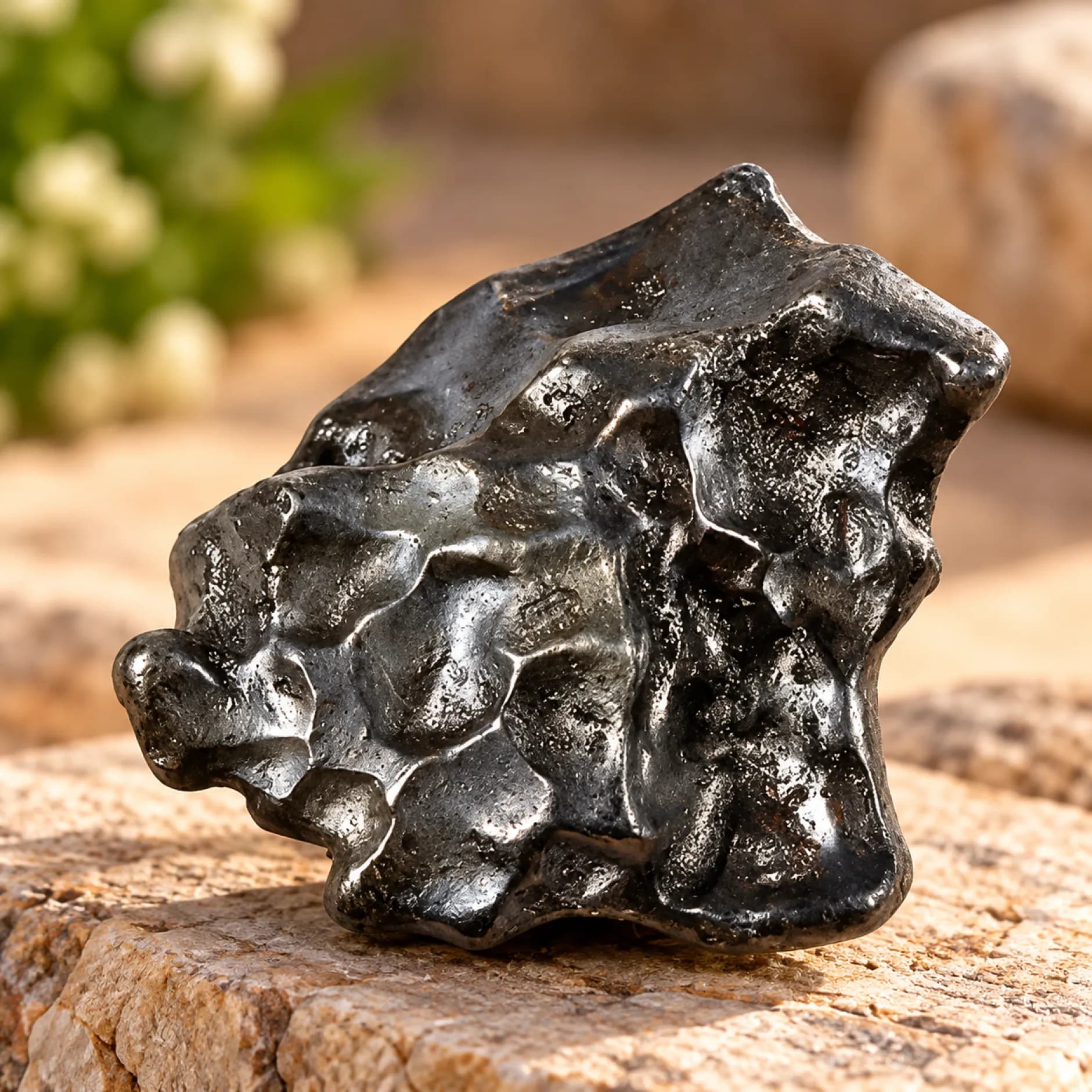
Meteorite Gemstone — Types, Meaning, Authenticity and Care
A meteorite is the only gemstone you can hold that did not form on this planet. It began as material from the asteroid belt or from the early solar system, travelled for millions of years, survived the fall through the atmosphere, and landed here. Nothing else in a jeweller's case has that history. That origin is the whole appeal. In crystal tradition, meteorite is associated with expanded awareness, intuition and a sense of connection to something far larger than daily life — which is unsurprising for an object that is, quite literally, a piece of the wider universe. The Four Things Sold as "Meteorite" — Know What You Are Buying Most confusion and most fraud in this category comes from the fact that four very different materials get sold under one word. Type What it is How it looks Iron meteorite Iron-nickel metal from a shattered asteroid core Silvery grey metal, very heavy, etches to reveal a crystal pattern Stony meteorite (chondrite) The most common type, containing tiny mineral spheres called chondrules Grey to rusty brown, stone-like, often with a dark fusion crust Stony-iron (pallasite) Metal matrix holding olivine crystals Metal with translucent green-gold gem inclusions; the rarest and most beautiful Tektite (including moldavite) Not a meteorite. Earth rock melted by an impact and thrown clear Glassy, black or green, sculpted surface Tektites and moldavite are impact glass formed from terrestrial material. They are genuine and collectable, but they never came from space themselves. Any seller who calls moldavite a meteorite either does not know the difference or is counting on you not knowing it. How to Identify a Real Meteorite The Widmanstätten pattern. When an iron meteorite is cut, polished and etched with acid, it reveals an interlocking lattice of metal bands. This pattern forms only when molten metal cools at roughly one degree per million years, inside the core of an asteroid. It cannot be manufactured, reproduced or faked on Earth. If an iron meteorite piece shows a genuine Widmanstätten pattern, it is real. Weight. Meteorites are noticeably heavier than terrestrial rocks of the same size. An iron meteorite feels startlingly dense in the hand. Magnetism. Almost all meteorites attract a magnet because of their metallic iron content. This is a useful first test but not proof on its own, since plenty of Earth rocks and industrial slag are magnetic too. Fusion crust. A freshly fallen meteorite carries a thin dark rind where the surface melted during atmospheric entry. Older finds may have weathered it away. No bubbles, no holes. Slag and furnace waste — the single most common thing mistaken for meteorite — is full of gas bubbles and cavities. Meteorites are not. Provenance. A genuine specimen should come with a stated fall or find name and locality. Ask for it. Where Meteorites Actually Come From The commercially available meteorites in the market come from a handful of well-documented localities: Northwest Africa and the Sahara, where the desert surface preserves stony meteorites and makes them easy to spot; Campo del Cielo in Argentina; Gibeon in Namibia; Muonionalusta in Sweden; and Sikhote-Alin in Russia. A note on provenance you should insist on from any seller: meteorites recovered in Antarctica are collected under national scientific programmes and are held for research, not sold on the open market. A specimen offered as Antarctic in origin deserves close questioning. Meteorite Meaning and Metaphysical Properties In crystal tradition, meteorite is associated with: Expanded awareness. It is described as widening perspective beyond immediate circumstances, which is why it is used as a meditation stone rather than a calming one. Intuition and inner listening. It is traditionally said to sharpen the ability to recognise and trust one's own instinct rather than second-guessing it. Emotional steadiness through change. It is associated with adapting to unfamiliar surroundings, new countries and new phases of life — fitting for an object that survived the most violent transition imaginable. Resilience. It is regarded as a stone of endurance, chosen by people going through a period that demands they simply keep going. Connection to nature and the Earth. Many people describe the opposite effect from what they expect — holding something from space tends to sharpen appreciation of this planet rather than distract from it. Details of the Gemstone Detail Description Composition Iron-nickel metal, silicate minerals, or both depending on type Types available Iron, stony (chondrite), stony-iron (pallasite) Colour Rusty brown, grey, silvery metallic; pallasites show green-gold olivine Density Approx. 3.0–3.7 g/cm³ for stony meteorites; iron meteorites are far denser at around 7.8 g/cm³ Origin Sahara / Northwest Africa, Argentina, Namibia, Sweden, Russia, USA Jewellery metal Silver or copper Associated planet (crystal tradition) Sun Associated month (crystal tradition) August Suggested day Sunday Suitable for Pendants, rings, collector specimens, meditation pieces Is Meteorite a Vedic Gemstone? No. Meteorite is not one of the nine Vedic ratnas and is not prescribed in Jyotish for any planet. The Sun association listed above belongs to crystal tradition, not to Vedic astrology — the gemstone traditionally prescribed for the Sun is ruby (Manik). This has a practical upside. Because meteorite is not a prescribed ratna, there is no ascendant restriction, no ratti weight, no trial period and no muhurat requirement attached to it, and anyone may wear or keep it regardless of their birth chart. If you are looking for a remedy for a specific planet, a horoscope-based gemstone recommendation is the correct starting point instead. Nickel Content and Skin Sensitivity Worth knowing before you buy meteorite jewellery: iron meteorites are an iron-nickel alloy, and nickel is the most common cause of contact allergy in jewellery worldwide. If you have reacted to costume jewellery, watch backs or belt buckles in the past, a meteorite piece worn against the skin may cause the same irritation. The practical solutions are a sealed protective coating, a rhodium or gold plating over the meteorite surface, a bezel setting that limits skin contact, or choosing a stony meteorite instead, which contains far less free metal. Ask the seller which type your piece is. Care and Cleaning — Iron Meteorites Rust This is the single most important thing to know about owning a meteorite, and most sellers never mention it. Iron meteorites contain metallic iron that has never been exposed to moisture in its entire history. On Earth, it corrodes. Left in humid air, an untreated iron meteorite will develop rust that spreads and eventually destroys the specimen. Never soak a meteorite in water, and dry it immediately if it gets wet Keep it in a dry place; a sealed box with a silica gel sachet is ideal in Indian humidity Handle it as little as possible with bare hands, as skin moisture and salt accelerate corrosion To clean, immerse the piece in isopropyl or rubbing alcohol for around 30 minutes, brushing gently with a soft toothbrush, then dry it completely — alcohol displaces water rather than adding it A light coat of mineral oil, museum wax or a jeweller's lacquer protects a display specimen Remove meteorite jewellery before bathing, swimming, exercise and housework Stony meteorites are more stable than iron ones, but the same keep-it-dry rule applies Frequently Asked Questions What is a meteorite gemstone? It is a piece of a meteorite — material from an asteroid or from the early solar system — that survived the fall to Earth and has been cut, polished or set into jewellery. It is the only gem material available that did not form on this planet. How can I tell if a meteorite is real? The strongest proof for an iron meteorite is the Widmanstätten pattern, an interlocking metallic lattice revealed by acid etching that forms only over millions of years of extremely slow cooling and cannot be manufactured. Weight, magnetism, fusion crust and the absence of gas bubbles are supporting checks. Is moldavite a meteorite? No. Moldavite is a tektite — Earth rock melted by a meteorite impact and thrown clear. It is genuine and collectable, but the material itself is terrestrial, not extraterrestrial. What is the difference between a meteor, a meteorite and an asteroid? An asteroid is the body in space. A meteor is the streak of light as it burns through the atmosphere. A meteorite is what actually reaches the ground. Does a meteorite rust? Iron meteorites do. They contain metallic iron that corrodes in humid air, so they must be kept dry, handled minimally and stored with a desiccant. Stony meteorites are more stable but still need dry storage. Can I wear a meteorite if I have a nickel allergy? Iron meteorites contain nickel and may cause irritation for anyone sensitive to it. A sealed coating, a plated surface, a bezel setting, or a stony meteorite instead are the practical alternatives. Is meteorite a navratna or a Vedic gemstone? No. It is not among the nine Vedic gemstones and is not prescribed in Jyotish for any planet. It is kept for its origin and its qualities in crystal tradition rather than as a planetary remedy. Who can wear a meteorite stone? Anyone. Since it carries no astrological prescription, there is no ascendant rule or restriction. The practical considerations are nickel sensitivity and the need to keep it dry. Is it legal to buy and own a meteorite? Meteorites from documented commercial localities are bought and sold openly worldwide. Specimens recovered by national Antarctic programmes are held for scientific research and are not commercially available, so provenance is worth confirming with any seller. What does a meteorite cost? Price depends on type, size and rarity. Common stony meteorites are the most affordable, iron meteorites sit in the middle, and pallasites with gem-quality olivine command the highest prices per gram. Choosing Your Meteorite Every meteorite specimen is unique — pattern, surface, weight and locality differ from piece to piece, and no two are alike. If you would like help choosing between iron, stony and pallasite material, or would prefer guidance on whether a prescribed Vedic gemstone would serve your purpose better, Mr. Prashant Kapoor's team is available for a personal consultation.
View