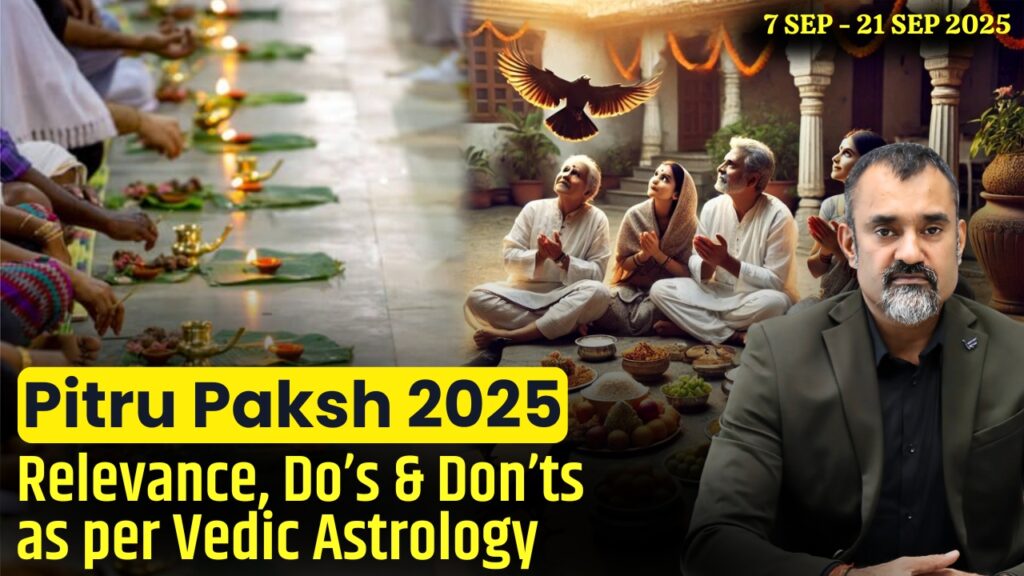
Pitru Paksh, also known as Shraadh, is a sacred 16-day period in the Hindu calendar dedicated to honouring one’s ancestors. Falling in the lunar month of Bhadrapada — from the full moon to the new moon (Amavasya) — it is a time when families remember and pay homage to three generations of departed forebears. According to Vedic tradition, the rituals performed during Pitru Paksh bring peace and happiness to ancestral souls and, in turn, invite their blessings upon the living. Understanding its significance and its do’s and don’ts helps families observe it with sincerity and respect.
The Significance of Pitru Paksh
Vedic tradition holds that our departed ancestors reside in Pitruloka, a realm between heaven and earth governed by Yama, the god of death. During Pitru Paksh, it is believed that these ancestral souls draw closer to their descendants, and that offerings made with devotion reach them and ease their onward journey. The scriptures teach that Shraadh ceremonies bring contentment to the ancestors and support their souls, while the gratitude and remembrance shown by the family strengthens the bond between generations. It is, at its heart, a period of thanksgiving and duty towards those who came before us.
The Key Rituals of Shraddh
The rituals of Pitru Paksh are simple but meaningful, centred on offering food and prayers:
- Tarpan and Pind Daan — offerings of water and rice balls to the ancestors.
- Food offerings — dishes such as kheer, rice, dal and vegetables, traditionally prepared in silver or copper vessels.
- Feeding Brahmins — serving food to priests as a way of reaching the ancestors.
- Feeding animals — offering portions to cows, dogs and especially crows, whose acceptance is seen as the ancestors receiving the offering.
- Recitation of scripture — such as the Bhagavad Gita or Bhagwat Puran.
The Shraddh is ideally performed by a son of the family, though it may be conducted by anyone with sincere intentions. Such fire and food offerings share the same spirit as a pooja or homan and can be supported by a yagya where guided.
The Do’s During Pitru Paksh
To honour the ancestors properly, tradition encourages certain positive practices:
- Perform the Shraddh rituals with devotion and a calm, respectful mind.
- Offer food to Brahmins, animals and those in need.
- Maintain a peaceful, sattvic and grateful attitude throughout.
- Remember and speak well of the departed.
- Keep the home and self clean before performing rituals.
The Don’ts During Pitru Paksh
Equally, some activities are traditionally avoided during this solemn period:
- Eating non-vegetarian food, onion and garlic.
- Starting new ventures, weddings, engagements or major decisions.
- Buying gold, silver, new vehicles or property.
- Undertaking long-distance travel where it can be avoided.
- Cutting hair or nails, and neglecting personal cleanliness.
- Harbouring anger, negativity or disrespect.
These guidelines reflect the reflective, respectful mood of the period rather than a celebratory one.
Observing Pitru Paksh with the Right Spirit
Above all, Pitru Paksh is about gratitude, remembrance and duty. Whether or not every ritual can be performed perfectly, the sincerity of the intention matters most — a calm, grateful heart and genuine respect for one’s ancestors are the true essence of Shraadh. For families unsure of the correct timing, rituals or Amavasya date for their Shraddh, or seeking to understand ancestral influences (Pitru Dosh) in a horoscope, a personalised consultation can offer clear, chart-based guidance.
Frequently Asked Questions
What is Pitru Paksh?
Pitru Paksh, or Shraadh, is a sacred 16-day period in the Hindu calendar, falling in Bhadrapada from the full moon to Amavasya, dedicated to honouring and offering prayers to three generations of ancestors.
What rituals are performed during Pitru Paksh?
Key rituals include Tarpan and Pind Daan, food offerings prepared in silver or copper vessels, feeding Brahmins and animals (especially crows), and reciting scriptures such as the Bhagavad Gita.
What should you not do during Pitru Paksh?
Traditionally avoided are non-vegetarian food, onion and garlic, starting new ventures, weddings, buying gold or property, long-distance travel, cutting hair or nails, and any anger or negativity.
Who can perform Shraddh?
Shraddh is ideally performed by a son of the family, but it may be conducted by anyone with sincere intentions and genuine respect for the ancestors.
Why is feeding a crow important in Pitru Paksh?
Crows are believed to represent the ancestors during Pitru Paksh, so a crow accepting the food offering is traditionally seen as a sign that the ancestors have received it.
▶️ Watch to know more! https://youtu.be/9BoE-QtJBjk
🌟 Subscribe to AstroKapoor for insightful content on Astrology, Health, and Spiritual Well-being!
📺 YouTube: AstroKapoor Channel
🔮 Join Our Upcoming Webinar
👉 Register here: astrokapoor.com/webinar
🌐 Become a Channel Member for exclusive perks:
👉 Join Now
📞 Book Your Personalized Astrology Consultation:
🔗 Astrology Consultancy
📜 Order Your Custom Astrology & Numerology Report
📲 Contact: +91 9289205568
🔗 Purchase Report Online
💎 Buy 100% Authentic Gemstones
🌐 Visit: astrokapoor.net
📩 For enquiries: media.astrokapoor@gmail.com
🌐 Website: astrokapoor.com
🔔 Follow Prashant Kapoor for Daily Insights & Tips:
🐦 Twitter: @AstroKapoor
📘 Facebook: Prashant Kapoor
📸 Instagram: @pkapoor80
📸 Instagram (Official): @astrokapoorcom
🔢 Follow Akanksha Srivastava for Numerology Guidance:
📘 Facebook: Akanksha Srivastava
📸 Instagram: @akankshasri84
