
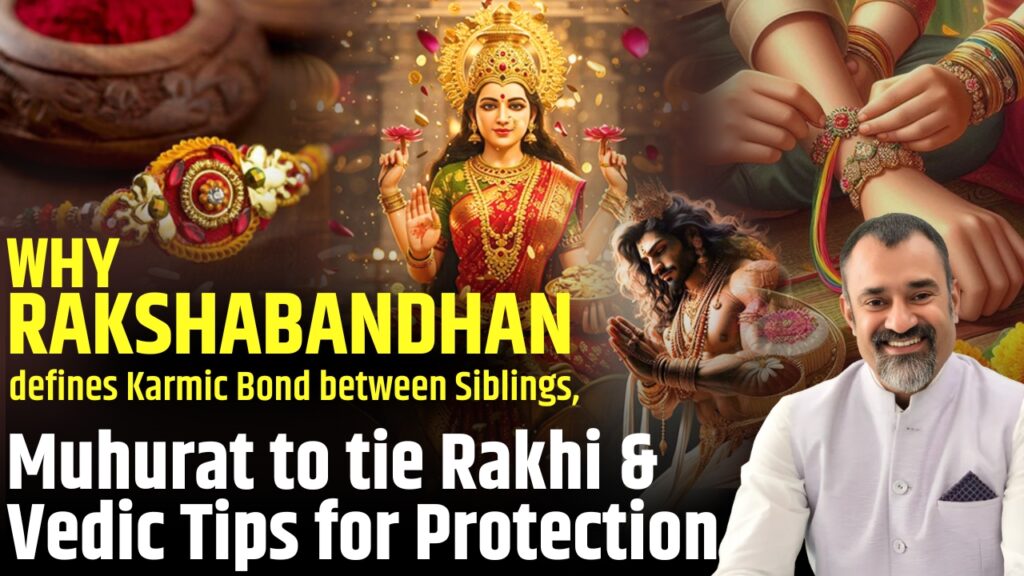
Rakshabandhan: The Karmic Bond Between Siblings, Rakhi Muhurat & Vedic Tips for Protection
Rakshabandhan is the beautiful festival that celebrates the sacred bond between a brother and sister. The name itself, in Sanskrit, means the “bond of protection, obligation and care.” But beyond the thread of rakhi lies a deeper truth: astrologically, Rakshabandhan strengthens the karmic bond siblings share across lifetimes. This guide explains the festival’s significance, the right muhurat to tie the rakhi, the protective mantra, and Vedic tips to strengthen the bond of protection.
When is Rakshabandhan?
Rakshabandhan falls on the full moon day (Purnima) of the Hindu month of Shravan (July–August). As the exact date and muhurat shift each year with the lunar calendar, always confirm the current year’s date and timing before the festival.
How Rakshabandhan Defines the Karmic Bond
According to expert astrologer Prashant Kapoor, Rakshabandhan solidifies the karmic connection between siblings. The strong lunar (Moon) energy during Shravan Purnima makes this a powerful time for emotional expression, love and commitment. The bond works in four beautiful ways:
- The brother pledges protection to his sister from life’s troubles.
- The brother commits lifelong support and care.
- The sister prays for her brother’s health, prosperity and long life.
- The ritual strengthens the whole family’s relationships and karma.
The Mythology of Rakshabandhan
The Vishnu Purana tells how Goddess Lakshmi tied a rakhi to King Bali, making him her brother, and in return requested the release of Lord Vishnu to return home. This ancient story establishes the rakhi as a thread of protection, love and sacred obligation — a bond that even the gods honour.
Muhurat to Tie the Rakhi (Avoiding Bhadra)
The rakhi should be tied during the auspicious muhurat — traditionally the Aparahna (afternoon) period of Shravan Purnima, or a clear window in the morning.
The most important rule: avoid Bhadra Kaal. Bhadra is an inauspicious period during which tying the rakhi is prohibited in tradition. Always check the current year’s panchang so the rakhi is tied after Bhadra ends and within the auspicious muhurat.
How to Tie the Rakhi – The Ritual
- Prepare a brass or copper puja thali with rakhi, roli (tilak), rice (akshat), a diya, and sweets.
- The brother faces east; the sister applies tilak and rice on his forehead.
- The sister performs aarti and ties the rakhi on his right wrist with love and good wishes.
- She offers sweets, and the brother gives a gift and pledges his protection.
- Keep positive, loving intentions throughout, and avoid wearing black.
- Recite the protective mantra as the rakhi is tied.
The Protective Rakhi Mantra
“Yena baddho Bali Raja Danavendro Mahabalah, Tena twaam anubadhnami rakshe maa chala maa chala.”
This is the same mantra tradition associates with the tying of the sacred protective thread — invoking strength and protection for the wearer.
Vedic Tips for Sibling Protection
- Tie the rakhi only within the auspicious muhurat, after Bhadra ends.
- Use a red or yellow thread, colours associated with auspicious, protective energy.
- Keep the mood positive and loving — intention strengthens the bond.
- Some families also tie a rakhi before the family deity first, for blessings.
Celebrate with Guidance from AstroKapoor
For personalised guidance, auspicious timings, or remedies to strengthen family bonds, book an Astrology Consultancy or explore a custom Astrology & Numerology Report.
Frequently Asked Questions
What is the significance of Rakshabandhan?
Rakshabandhan means the “bond of protection.” It celebrates and strengthens the karmic bond between siblings — the brother pledges lifelong protection, while the sister prays for his prosperity and long life, blessed by the strong lunar energy of Shravan Purnima.
When is Rakshabandhan celebrated?
Rakshabandhan is celebrated on the full moon day (Purnima) of the Hindu month of Shravan, which usually falls in July or August. The exact date changes each year, so check the current year’s panchang.
What is the muhurat to tie the rakhi?
The rakhi should be tied during the auspicious muhurat, traditionally the afternoon (Aparahna) of Shravan Purnima, and always after Bhadra Kaal ends. Confirm the exact timing in the current year’s panchang.
Why should Bhadra Kaal be avoided on Rakshabandhan?
Bhadra is considered an inauspicious period in which tying the rakhi is traditionally prohibited. The rakhi should be tied only after Bhadra ends, within the auspicious muhurat.
What is the mantra for tying a rakhi?
The traditional mantra is “Yena baddho Bali Raja Danavendro Mahabalah, Tena twaam anubadhnami rakshe maa chala maa chala,” recited while tying the protective thread to invoke strength and protection.
▶️ Watch to know more! https://youtu.be/_XgAl9GC7-c
🌟 Subscribe to AstroKapoor for insightful content on Astrology, Health, and Spiritual Well-being!
📺 YouTube: AstroKapoor Channel
🔮 Join Our Upcoming Webinar
👉 Register here: astrokapoor.com/webinar
🌐 Become a Channel Member for exclusive perks:
👉 Join Now
📞 Book Your Personalized Astrology Consultation:
🔗 Astrology Consultancy
📜 Order Your Custom Astrology & Numerology Report
📲 Contact: +91 9289205568
🔗 Purchase Report Online
💎 Buy 100% Authentic Gemstones
🌐 Visit: astrokapoor.net
📩 For enquiries: media.astrokapoor@gmail.com
🌐 Website: astrokapoor.com
🔔 Follow Prashant Kapoor for Daily Insights & Tips:
🐦 Twitter: @AstroKapoor
📘 Facebook: Prashant Kapoor
📸 Instagram: @pkapoor80
📸 Instagram (Official): @astrokapoorcom
🔢 Follow Akanksha Srivastava for Numerology Guidance:
📘 Facebook: Akanksha Srivastava
📸 Instagram: @akankshasri84
