
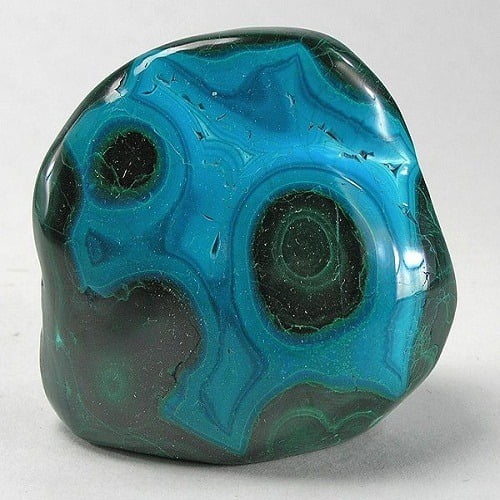
Chrysocolla malachite is one of the most beautiful, colorful semi-precious gemstone known until now. Chrysocolla stone is a silicate of copper and blends well with malachite. These are found in beautiful green and blue color. The source of Chrysocolla-Malachite is Arizona. Most of the Chrysocolla-Malachite is also found in the Bagdad Copper Mine. Chrysocolla-Malachite is a fragile stone. It is usually cut en-cabochon. It is about 3-4 on the Moh’s scale and proper care must be taken while handling the stone.
Chrysocolla with Malachite is admired for its distinctive combination of blue, turquoise, green and deep green patterns. The presence of two visually striking copper minerals can create unique natural designs, making each specimen different in color distribution and appearance.
Natural Chrysocolla Malachite is particularly attractive when polished into cabochons, pendants, beads and collector stones. Because Chrysocolla can be comparatively soft and delicate, proper handling is important when the material is used for jewelry.
Chrysocolla Malachite Color and Appearance
Chrysocolla with Malachite generally combines the blue to blue-green shades of Chrysocolla with the rich green tones associated with Malachite. The resulting patterns can include bands, patches, swirls and irregular natural formations.
Color intensity, pattern and overall appearance vary from one natural specimen to another. This variation is one of the main characteristics that makes Chrysocolla Malachite attractive for gemstone collectors and jewelry lovers.
Chrysocolla is named after the Greek, Chrysos – “gold”, and “Kolla”- glue in illusion to the name of the material used to soldier gold.
The name Chrysocolla comes from the Greek words associated with “gold” and “glue,” referring historically to material connected with soldering gold.
Metaphysical Properties of Chrysocolla with Malachite
Metaphysical Properties
Chrysocolla is associated with serenity and tranquillity. It brings peace, patience, tolerance to the mind and the brain. Chrysocolla- malachite is said to assists you in the changing situation and condition. It is very useful in bringing positive vibes around the soul and the body. This stone clears and activates the chakras and attunes to spiritual guidance. If placed on the third eye, it activates visualization and psychic vision.
In crystal traditions, the combination of Chrysocolla and Malachite is associated with emotional balance, personal transformation, communication and inner awareness.
Chrysocolla is traditionally considered a calming stone, while Malachite is frequently associated with transformation and emotional reflection. Together, they are used by some crystal practitioners during meditation and spiritual practices.
These metaphysical properties are traditional beliefs and are not scientifically established effects.
Chrysocolla Malachite Meaning
Chrysocolla Malachite meaning is commonly connected with peace, transformation, emotional awareness and personal growth.
The combination of blue and green colors also contributes to its popularity among people interested in chakra meditation and crystal symbolism.
Some people keep the stone in meditation spaces, carry polished pieces or wear it as jewelry according to their personal spiritual practices.
Healing Properties of Chrysocolla Malachite
Healing Properties
Chrysocolla-malachite is a great healer. It heals the body inner ability to fight against any diseases. Mentally, it goes to the base of the problem and enhances the intuition. It helps to remove mental depression and other psychic problems. It releases negative experiences and old traumas. At an emotional level, it may make moods more intense but quick to change. Chrysocolla can be used for needed support in the healing and transformation process by other stones.
It is an extremely versatile stone. Chrysocolla resonates with the female sexual organs and treats any sexual disease. This stone lowers blood pressure, treats asthma, arthritis, tumors, optic nerve disease and swollen joints.
Traditional Chrysocolla Malachite healing properties are discussed primarily within crystal-healing and metaphysical practices. It is often symbolically associated with calmness, emotional release, self-expression and personal transformation.
Claims related to depression, blood pressure, asthma, arthritis, tumors, sexual disorders, eye conditions or other diseases are not established medical treatments. Chrysocolla with Malachite should never replace professional medical diagnosis, medication or treatment.
Chrysocolla – Malachite Position
Chrysocolla – Malachite Position
Wear on left hand or place on third eye. Position as appropriate for healing, if placed on the solar plexus it helps to absorb negative emotions. An extremely cautious note-Malachite may cause heart palpitations, in this case remove immediately and replace it with Rose Quartz and Rhodonite.
Chrysocolla with Malachite is an excellent combination. It may manifest as a clear gem crystal with a very high healing vibration. This combination symbolizes wholeness and peace. If one stone is placed on the third eye and another on the solar plexus, mind, body and emotions are balanced.
In traditional crystal practices, Chrysocolla Malachite may be positioned according to the intention of meditation or chakra work. These placement practices are spiritual traditions rather than medically proven therapies.
If a person experiences heart palpitations or any other physical symptoms, appropriate medical care should be sought rather than relying on gemstones or crystals.
Chrysocolla with Malachite Chakra Association
Chrysocolla with Malachite is commonly associated in crystal traditions with the Heart, Throat and Third Eye Chakras.
Its blue-green appearance contributes to these symbolic associations. Crystal practitioners may use it during meditation focused on communication, emotional awareness, compassion and intuition.
Chakra associations are based on spiritual traditions and should be understood separately from scientifically measurable mineral properties.
Chrysocolla Zodiac
Chrysocolla – Malachite is a zodiac stone for Sagittarius. These people are calm, sober and gentle full of patience and charm.
Chrysocolla Malachite is associated with Sagittarius in some modern crystal and zodiac traditions. Astrological gemstone associations can vary between different systems and should therefore be considered traditional guidance rather than universal rules.
Natural Chrysocolla with Malachite Properties
Chrysocolla and Malachite are both copper-bearing minerals and may naturally occur together in copper deposits. Their contrasting blue and green colors can create visually striking specimens.
Chrysocolla itself is relatively soft and can be fragile. When it occurs together with other minerals, the hardness and durability of an individual specimen can vary.
For this reason, Chrysocolla with Malachite should be handled carefully, particularly when it has been cut into jewelry.
Chrysocolla Malachite Origin
Arizona is known for important copper-mineral localities where Chrysocolla and Malachite can occur together.
The Bagdad Mine in Arizona is one documented location where Chrysocolla is found in association with Malachite. Natural material from copper-rich geological environments may display attractive combinations of blue, green and turquoise shades.
Origin is only one factor when evaluating an individual stone. Color, pattern, condition, polish and overall visual appeal should also be considered.
How to Identify Chrysocolla with Malachite
Chrysocolla with Malachite can often be recognized by its characteristic mixture of blue-green and rich green colors.
Chrysocolla may contribute turquoise-blue, blue-green or lighter green areas, while Malachite usually contributes stronger green shades and distinctive patterns.
When choosing a natural specimen, consider:
- Blue, turquoise and green color combinations
- Natural bands, patches or irregular patterns
- Overall surface condition
- Quality of polish
- Shape and size
- Presence of natural matrix
- Authenticity or available identification
Professional mineralogical or gemological testing may be useful when accurate identification is required.
Chrysocolla Malachite Jewelry
Chrysocolla with Malachite is often cut as a cabochon because this style can highlight the natural colors and patterns of the material.
It may be used for pendants, earrings, bracelets, beads and other decorative pieces. Because the stone can be comparatively fragile, protective jewelry designs are generally more suitable than settings that expose it to repeated knocks or abrasion.
Each Chrysocolla Malachite jewelry piece can have a different appearance because of the naturally varying distribution of blue and green minerals.
How to Care for Chrysocolla with Malachite
Chrysocolla Malachite should be cleaned and handled gently.
Use a soft cloth for routine cleaning and avoid abrasive cleaners, harsh chemicals, acids and strong impacts. Because the material may be relatively soft, store it separately from harder gemstones that could scratch its polished surface.
Avoid aggressive cleaning systems unless a professional familiar with the specific specimen confirms that they are suitable.
Why Chrysocolla with Malachite Is Unique
Chrysocolla with Malachite combines two distinctive copper minerals within the same natural material.
The contrast between Chrysocolla’s blue to turquoise tones and Malachite’s rich green coloration gives the stone a recognizable appearance. Its natural patterns make each specimen visually individual.
For this reason, Chrysocolla Malachite appeals to mineral collectors, jewelry enthusiasts and people interested in traditional metaphysical stones.
Frequently Asked Questions
What is Chrysocolla with Malachite?
Chrysocolla with Malachite is natural material in which the blue to blue-green copper mineral Chrysocolla occurs together with green Malachite. The combination can create attractive turquoise, blue and green patterns that make every specimen distinctive.
What are the traditional benefits of Chrysocolla Malachite?
In metaphysical traditions, Chrysocolla Malachite is associated with peace, emotional balance, communication, transformation and self-awareness. These benefits belong to traditional crystal practices and are not scientifically established medical effects.
Where is Chrysocolla with Malachite found?
Chrysocolla and Malachite can occur together in copper-rich mineral deposits. Arizona is one notable source, and the Bagdad Mine has documented occurrences of Chrysocolla associated with Malachite.
How do I identify natural Chrysocolla Malachite?
Look for characteristic combinations of turquoise-blue, blue-green and deeper green areas along with natural bands, patches or irregular patterns. Because similar-looking materials exist, professional mineral identification can be useful when authenticity needs to be confirmed.
Can Chrysocolla with Malachite be used in jewelry?
Yes. Chrysocolla with Malachite is commonly polished and cut into cabochons, pendants, beads and other jewelry. Because Chrysocolla is relatively soft and fragile, jewelry containing it should be protected from scratches, harsh chemicals and strong impacts.


