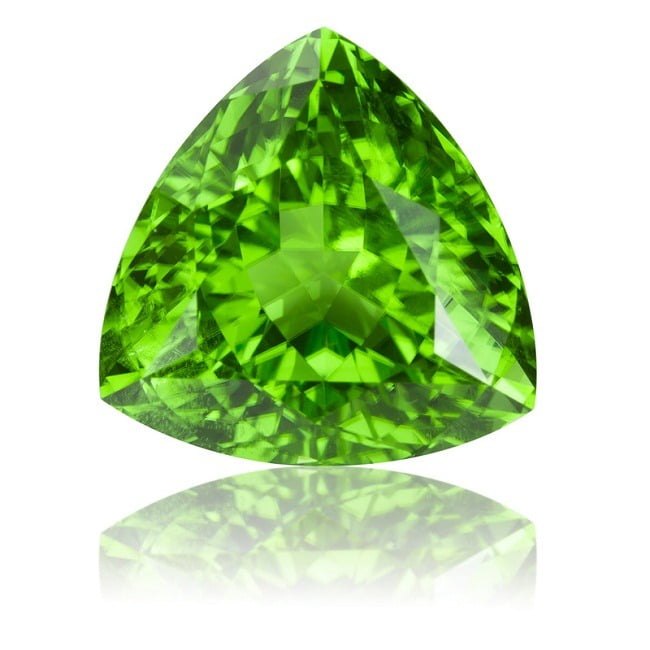
Certified Peridot Gemstone
Peridot is a gem, which belongs to the family of Olivine. Olivine is a silicate mineral. It is a common mineral found in mafic and ultramafic rock. Peridot is a magnesium rich variety. The name Peridot has been derived from Arabic word for gem “faridat” It is also called as poor man’s emerald. This gem is the oldest known gemstone in the world. Peridot is idiochromatic, which implies that its name has originated from its composition and not from minor traces of impurities. It is one of the few gems that occur in only one color, olive green. The intensity and tint of color determines how much iron is present in the crystal structure. Trace amount of nickel and chromium is also found in this gem. The most valued color of Peridot is dark-olive green. Peridot stone is not hard, and has no intensity for chemicals. It has strong double refraction.
Peridot is recognized for its distinctive olive-green colour and natural brilliance. Unlike many coloured gemstones, its green colour is primarily related to its chemical composition rather than trace impurities. The gemstone is popular in jewellery because of its fresh green appearance and historical significance.
Peridot Olivine is mined in Egypt, Arizona, Australia, Mexico, Brazil, China, Norway, India, Saudi Arabia, South Africa and Tanzania. Today, the finest quality comes from Mogok in Burma, but the stone form Pakistan is now highly regarded as well. Some of the earliest record of this gemstone comes from Bible and some early records of these stone are found in the history of ancient Romans. It is the birthstone for the person born in the month of August.
Peridot Gemology
Color-Olive Green
Appearance-Usually transparent
Rarity-Easily obtained
Source-South Africa, Pakistan, Saudi Arabia, Brazil, China, Mexico, Myanmar
Category-Mineral
Luster-Vitreous-Vitreous (glassy)
Crystal structure-Orthorhombic
Mohs scale hardness-6.5-7
Formula- (Mg, Fe)2 Si O4
The quality of Peridot can vary according to colour, clarity, transparency, cut, carat weight, and overall appearance. A rich and attractive olive-green colour with good transparency is generally desirable.
Benefits and Healing Properties
Peridot is a protective stone for the aura. It is a powerful cleanser. It purifies the subtle and physical bodies, and the mind. It opens, cleanses and purifies the heart chakra*. This tone releases the negative patterns and old vibrations so that a new frequency can be accessed.
Psychologically, it alleviates jealousy, resentment, spite and anger, and reduces stress. It increases confidence and self-esteem. This stone promotes psychological clarity and well being. Mentally, it sharpens the mind and opens it to a new level. It removes lethargy and increases concentration. It helps you to take responsibilities for your own life.
Physically, Peridot heals thymus, lungs, heart, gall bladder, spleen, intestinal tract. It cures and regenerates tissue. It strengthens muscular contraction and overcome hypochondria.
In traditional crystal and gemstone practices, Peridot is also associated with emotional balance, confidence, positive energy, mental clarity, heart-centred healing, and protection. These traditional healing claims should be understood as complementary beliefs and not as medical treatment.
Peridot and Heart Chakra
Peridot is traditionally associated with the Heart Chakra because of its green colour and its symbolic connection with emotional harmony, compassion, balance, and positive transformation.
Crystal practitioners may use Peridot during meditation or other spiritual practices to encourage emotional release and a greater sense of inner calm.
Famous Peridot Gemstones
The largest gem is found in the island of Zabargad, which weigh 319 carats. It belongs to Smithsonian Institution in Washington D.C.
Large and high-quality Peridot specimens are particularly valued by gemstone collectors because of their rarity, transparency, colour, and historical significance.
Peridot Gem Jewelry
Peridot is hard and durable stone. It should be cleansed with soap and water softly. It should be protected with physical injury and hard chemicals. It is used in rings, pendants, bracelets and necklace studded along with the semi precious gems.
Because Peridot has a moderate hardness and can be affected by rough handling, it is advisable to protect it from hard impacts, abrasive materials, and harsh chemicals. Gentle cleaning and appropriate jewellery storage can help maintain its appearance.
How to Choose a Natural Peridot Gemstone
When buying Peridot, important factors can include:
- Natural olive-green colour
- Transparency and clarity
- Cut and overall brilliance
- Carat weight
- Origin
- Surface condition
- Certification, where available
A natural and certified gemstone can help buyers understand the documented characteristics of the individual Peridot.
Note: Corporate Supplies and Wholesale Requirement
Note: Corporate supplies and wholesale requirement: Please click here
We at Astrokapoor offer natural and certified gemstones of excellent quality. Each gemstone is passed from various tests by the team of our own gemologist and finally certified by government approved laboratories and best quality is picked for our clients. You can directly buy natural Peridot Gemstones from our online store by sending us your details and requirements. We offer best competitive rates to our clients. Kindly provide your requirement filling up the given form.
The Six Key Steps in Examining a Stone
Whenever possible, examine stones unmounted.
Make sure the gem is clean.
Hold the unmounted stone so that your fingers touch only the girdle.
View the gem under proper lightning.
The stone should also be observed from different angles and under suitable lighting to understand its natural colour, transparency, inclusions, and overall appearance.
Vedic Mantra for Wearing
“Om sah shanicharaye namah”
Please note that all Gems are already energized (Pran Pratishtha) before sending to our clients by special Pundits and Purohits having in-depth knowledge of Vedas.
An auspicious day and nakshatra is chosen by client Name, Date of birth and Place by our Purohits.
A Matt is placed with its face towards East, North or North east while performing Pooja.
The gemstone is washed with holy Gangajal applied Kum Kum.
An incense stick is lighted in front of the gemstone and mantra is enchanted along with marigold flowers in according to the concerned gemstone.
The Name of the person, Date of birth is enchanted by closing the eyes by Purohits according to the concerned gemstone.
This completes the Pran Pratishtha of the gemstone and the person can directly wear this as it has already been energized.
Frequently Asked Questions
What is Peridot gemstone?
Peridot is a green variety of the mineral olivine and is known for its distinctive olive-green colour. It is a naturally occurring gemstone commonly used in jewellery and traditional gemstone practices.
What are the benefits of Peridot gemstone?
Peridot is traditionally associated with protection, emotional balance, confidence, mental clarity, positive energy, and Heart Chakra harmony. Its traditional benefits may vary depending on the individual and the purpose for which it is used.
Where is Peridot found?
Peridot is found in several locations around the world, including Egypt, Pakistan, Myanmar, Arizona, Australia, China, Brazil, Mexico, India, Tanzania, and South Africa.
Is Peridot suitable for everyday jewellery?
Peridot can be used in rings, pendants, bracelets, and necklaces, but it should be protected from hard impacts, abrasive substances, and harsh chemicals because it has a moderate hardness compared with some other gemstones.
How should Peridot gemstone be cared for?
Peridot should be cleaned gently with mild soap and water and handled carefully. It should be protected from strong chemicals, rough impact, and conditions that may scratch or damage the stone.


