Birthday Graha Shanti – A Vedic Ritual for Blessings and Prosperity
What is Birthday Graha Shanti?
Birthday Graha Shanti is a Vedic ritual performed on one's birthday to seek divine blessings and ward off negative planetary influences. According to Vedic astrology, the position of planets at the time of birth significantly impacts an individual's life, health, and overall well-being.
The practice rests on a simple idea. The chart cast at your birth is the map you live by for the whole of your life, and every year the Sun returns to the exact degree it occupied at that moment. That return marks the beginning of a fresh personal year. A birthday graha shanti puja is performed at that turning point so that the year ahead opens with the nine planets addressed rather than ignored — those that are strong acknowledged, and those that are afflicted pacified before their period begins to tell.
"Performing Graha Shanti on one's birthday is traditionally undertaken to invite peace, harmony and prosperity by balancing planetary energies."
Why the Birthday Is Chosen for Graha Shanti
Graha shanti can be performed on any suitable day. The birthday is chosen for a specific reason: in Vedic practice, the moment of the Sun's annual return to its natal position is regarded as the seam between one personal year and the next, and the chart drawn for that instant — the Varshphal or annual solar-return chart in Tajika astrology — is read to understand the year that is opening.
Performing the shanti at that seam is the ritual counterpart of reading that chart. It is why the same puja carries more traditional weight on your birthday than on an ordinary day, and why families who perform it do so annually rather than once.
Alongside the yagya, the classical birthday observances are worth knowing: rising early and bathing before sunrise, performing Abhivadanam (the formal salutation in which one announces one's gotra, sutra, shakha and name while touching the feet of elders), offering tarpan to the ancestors where the family tradition prescribes it, feeding brahmins or the needy, and giving daan. The homa is the centre of the day; these surround it.
Which Birthday Do You Perform It On — English Date, Tithi or Nakshatra?
This is the most common practical question, and the answer is that the Vedic birthday and the calendar birthday are not the same thing.
By tithi — the lunar day of your birth in the same lunar month. This is the traditional North Indian reckoning and is what most families follow for a janmdin puja.
By Janma Nakshatra — the day on which the Moon returns to your birth star in the same solar month. This is the South Indian reckoning, and it is the basis on which Ayushya Homam is scheduled. Your Janma Nakshatra also recurs every 27 days or so, which is why some families observe a monthly nakshatra birthday in addition to the annual one.
By English date — the Gregorian anniversary, which is what most people actually celebrate and which is close to, though rarely exactly on, the Sun's true return.
None of the three is wrong. For a formal graha shanti yagya, the tithi or the Janma Nakshatra is preferred, and where the family observes the English date socially, the puja is simply scheduled on the traditional day and the celebration held on the other. Where the three fall far apart, our astrologers select the muhurat.
How is Birthday Graha Shanti Performed?
The Graha Shanti ritual is performed under the guidance of an experienced Vedic priest or astrologer, who determines the planetary positions and selects the appropriate mantras.
The selection is the part that cannot be standardised. Two people born on the same date have different afflictions, so the number of chants apportioned to each planet, the samidha (sacred wood) used for each, and the emphasis placed on one graha over another are all decided from the individual chart. A ready-made navagraha puja performed identically for everybody is a different thing from a graha shanti drawn from your own horoscope.
Rituals Involved in Graha Shanti Pooja:
- Sankalpa — the formal statement of intent, taken in the name, gotra and birth star of the person for whom the ritual is performed
- Recitation of Vedic Mantras to appease the Navagrahas (nine planets)
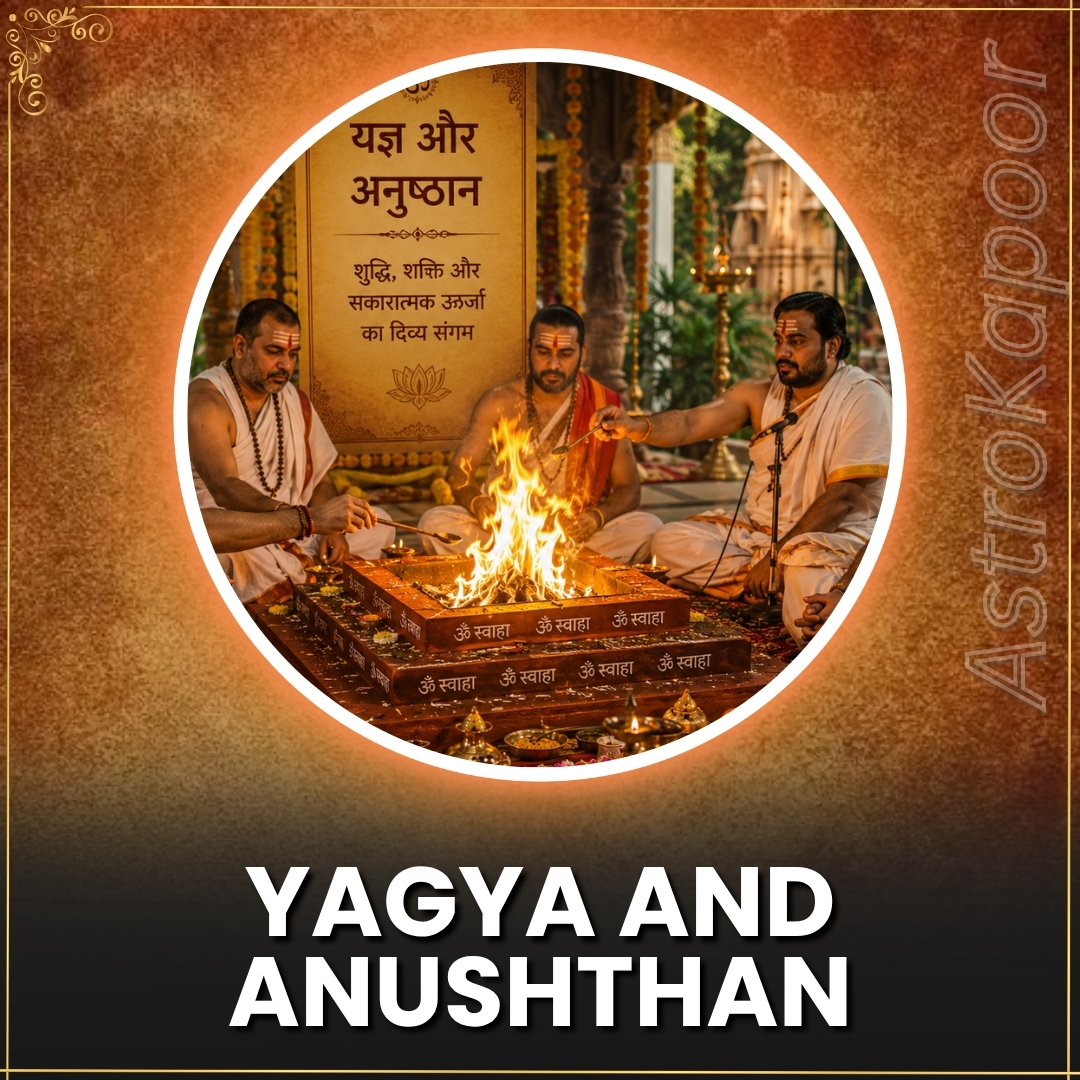
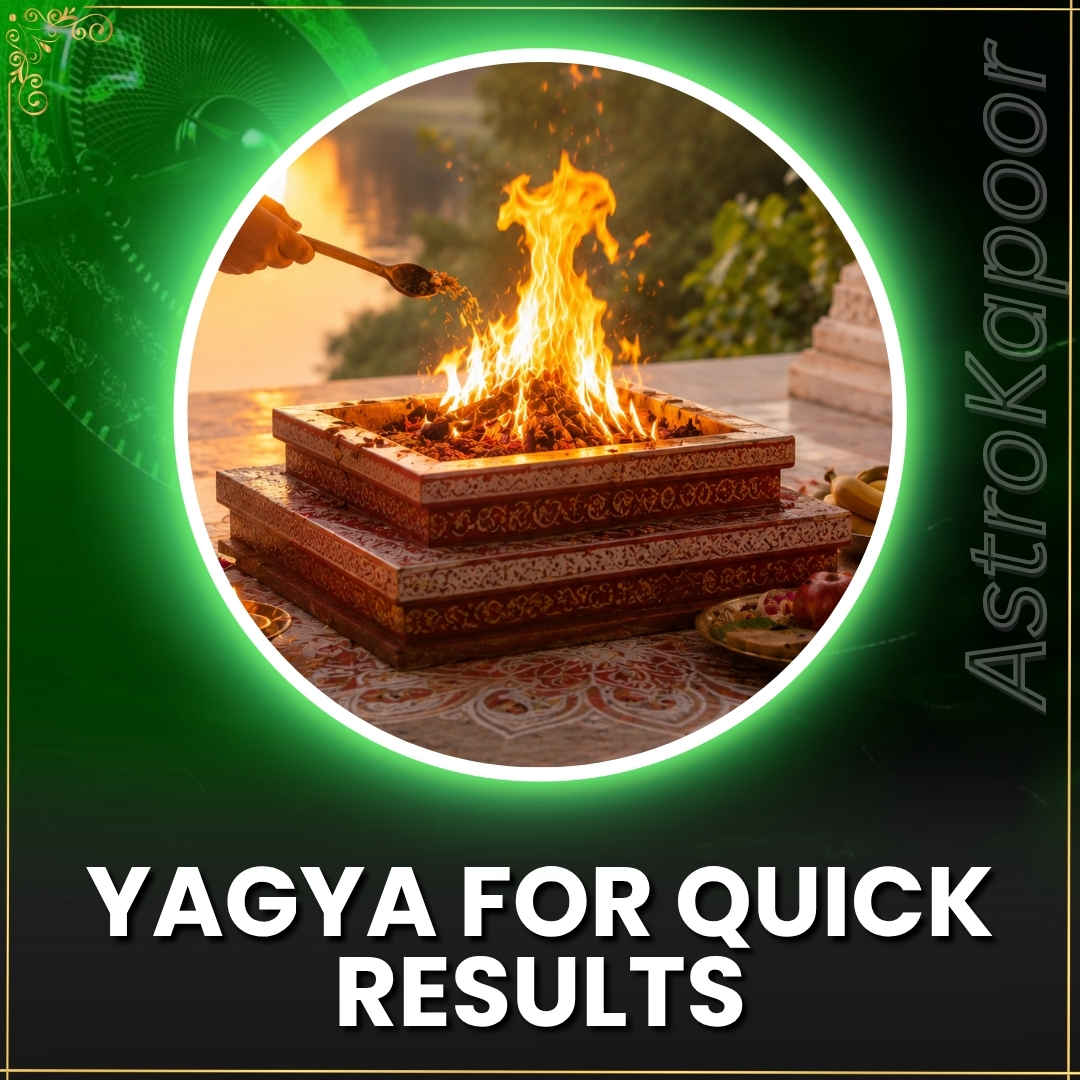
- Homa (fire ritual) to invoke divine blessings
- Offerings of flowers, fruits, ghee, and grains to the sacred fire
- Chanting of specific mantras for each planet
- Purnahuti — the concluding full offering, followed by aarti, prasad and daan
The primary purpose of this ritual is to neutralize the malefic effects of the planets and invite positive energy and prosperity.
Navagraha Yagya – A Birthday Graha Shanti Yagya
What is Navagraha Yagya?
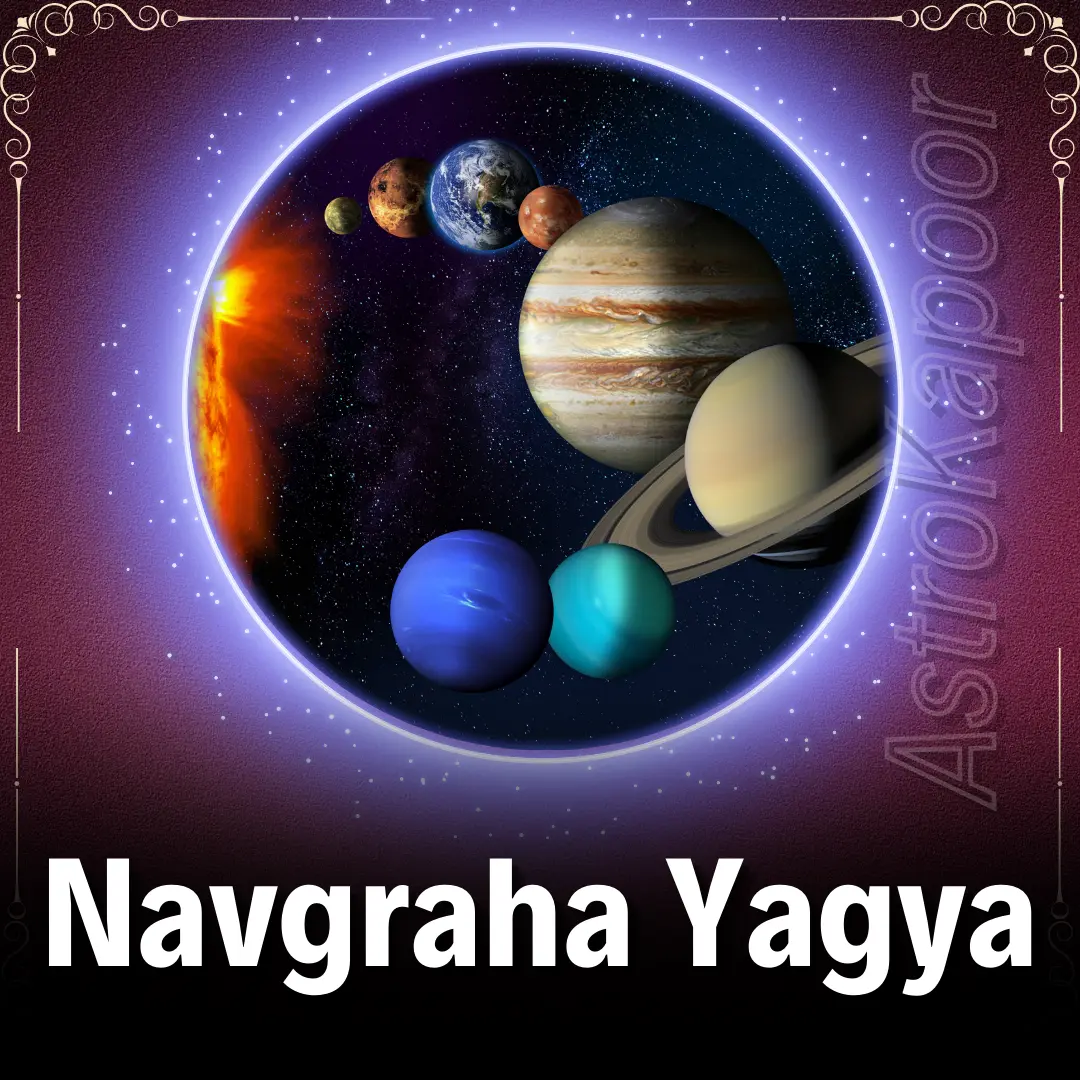
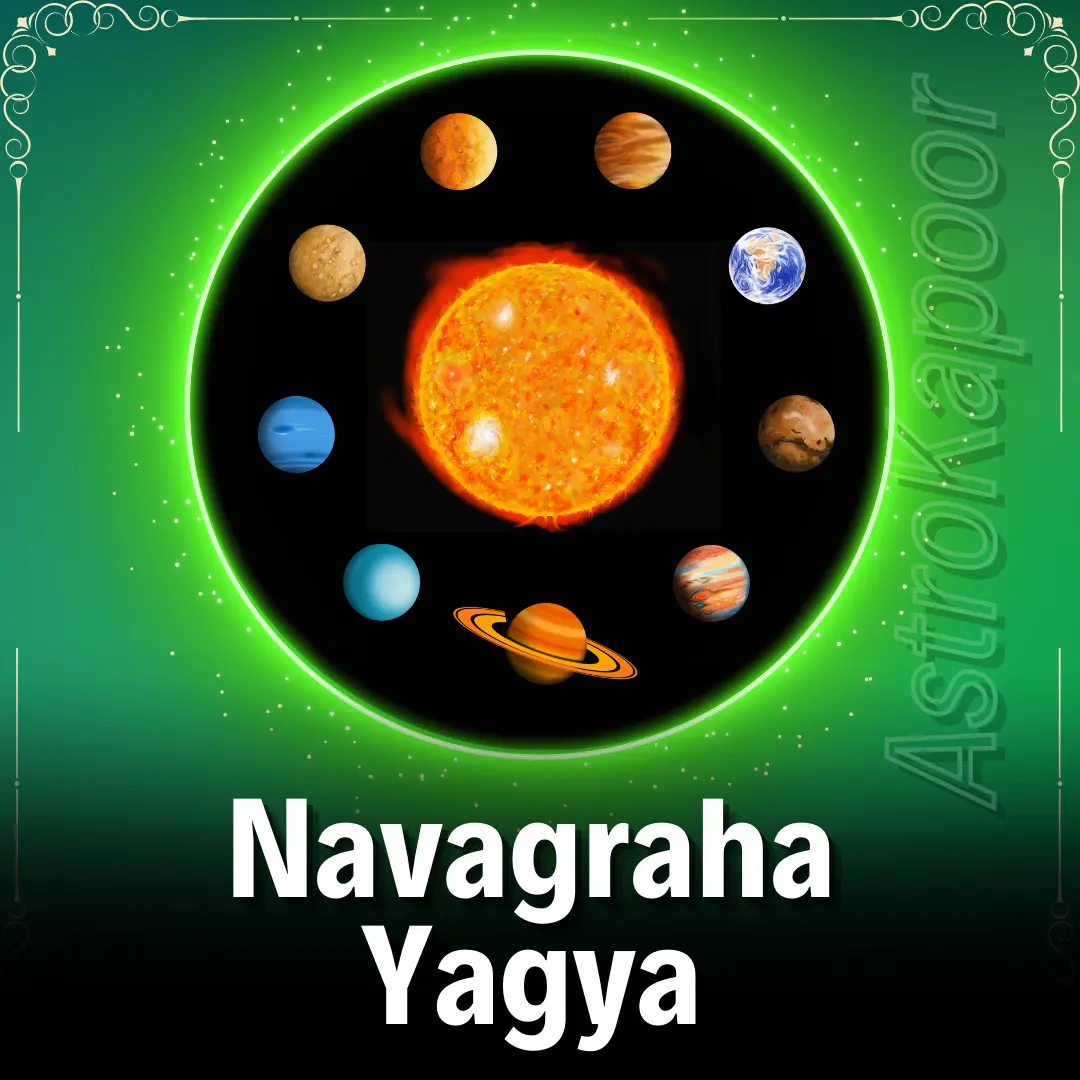
The Navagraha Yagya is a Vedic ritual performed to appease the nine celestial bodies (Navagrahas) in Hindu astrology. These include:
- Sun – Authority, energy, and success
- Moon – Emotions, mind, and peace
- Mars – Strength, courage, and protection
- Mercury – Wisdom, communication, and intelligence
- Jupiter – Prosperity, fortune, and growth
- Venus – Love, beauty, and relationships
- Saturn – Discipline, karma, and patience
- Rahu – Ambition, desire, and transformation
- Ketu – Spiritual growth, detachment, and wisdom
"Navagraha Yagya aligns planetary energies, removing obstacles and enhancing positive vibrations in one's life."
All nine are addressed in a birthday graha shanti, in the traditional order, because the purpose here is a general settling of the chart for the year ahead rather than the correction of one specific planet. Where a single graha needs concentrated work — a heavy Saturn period, an afflicted Moon, a Rahu dasha in progress — that is undertaken as a separate, dedicated yagya rather than folded into the annual ritual.
How is Navagraha Yagya Performed?
- Specific mantras are chanted for each planet
- Offerings like flowers, fruits, ghee, and grains are made
- Prayers and rituals are performed systematically
- Yagya is conducted by expert Vedic priests
Each planet also has its own prescribed samidha and offerings — arka for the Sun, palasha for the Moon, khadira for Mars, apamarga for Mercury, ashwattha for Jupiter, udumbara for Venus, shami for Saturn, durva for Rahu and kusha for Ketu. Following that correspondence is one of the marks of a properly conducted navagraha homa.
Who Should Consider a Birthday Graha Shanti
- Anyone who wishes to begin the new personal year with the planets formally addressed, as an annual observance.
- A difficult Mahadasha or Antardasha beginning, ending, or running through the year ahead.
- Sade Sati, Shani dhaiya or a strong Rahu–Ketu influence in the current period.
- A year in which a major step is planned — a marriage, a new venture, a move abroad, an examination, a construction.
- A year in which the previous one brought repeated obstruction despite genuine effort.
- Parents performing the ritual for a child, particularly on a first birthday.
- Families who have kept the practice for generations and wish to continue it correctly.
Birthday Graha Shanti for Children
The ritual is performed for children as often as for adults, and the first birthday is the most common occasion for it. In South Indian practice the equivalent observance is Ayushya Homam, performed on the child's Janma Nakshatra with the Ayushya Sukta and the Mrityunjaya mantra, as a prayer for long life and health. Birthday Graha Shanti is the broader navagraha form of the same intent, and where a family follows both traditions the two are commonly performed together.
For a child, the sankalpa is taken by the parents in the child's name, gotra and birth star, and the child's presence for the purnahuti and aarti is sufficient — no fasting or extended participation is expected.
Benefits of Performing Birthday Graha Shanti & Navagraha Yagya
- Helps reduce the malefic effects of afflicted planets
- Brings peace, harmony, and prosperity
- Supports the removal of obstacles and negativity
- Is traditionally performed as a prayer for good health and long life
- Supports personal and professional endeavours through the year ahead
- Renews the family's connection to its tradition and to daan, since the ritual concludes in giving
"Start your new year with divine blessings and planetary balance for a fulfilling life!"
What the Ritual Does Not Promise
A graha shanti is a spiritual and traditional observance. It is undertaken for peace of mind, discipline and support, and it works alongside medical care, professional advice and your own effort — never in place of any of them. No yagya can guarantee a commercial result, an examination outcome or a cure, and no astrologer or priest should offer one. Where health is a concern, the care of a qualified doctor continues throughout, and prayers for long life are offered as prayers, not as treatment.
AstroKapoor – Your Trusted Partner for Graha Shanti Pooja
At AstroKapoor, we perform Birthday Graha Shanti Pooja with utmost precision and devotion under the guidance of Astrologer Prashant Kapoor.
- Performed annually for our clients
- Each step is carefully followed
- Expert Vedic priests conduct the ritual
- The chart is examined before the ritual, so the mantra counts and offerings are set from your own horoscope
- The muhurat is fixed on the tithi or Janma Nakshatra, not merely on the calendar date
- The ritual can be performed with you present, or on your behalf with the sankalpa taken in your name
"On your special day, may the planets bless you with joy, success, and abundance! Wishing you a wonderful year ahead."
How to Book Your Birthday Graha Shanti Pooja
Share your date of birth, exact time of birth and place of birth, along with your name and gotra where known. The chart is examined, the afflicted planets identified, the muhurat fixed and the scope and cost confirmed before anything is scheduled. Booking two to three weeks ahead of the birthday is advisable, since the muhurat is tied to a specific day and cannot be moved freely.
Contact us today to book your Birthday Graha Shanti Pooja!
Frequently Asked Questions
What is Birthday Graha Shanti?
It is a Vedic homa performed on a person's birthday in which all nine planets — the Navagraha — are propitiated with their prescribed mantras and offerings. It is undertaken to pacify afflicted planets and to begin the new personal year with divine blessings, peace and stability.
Why is graha shanti performed on the birthday specifically?
Because the birthday marks the Sun's annual return to the position it held at your birth, which in Vedic reckoning is the start of a new personal year. Performing the shanti at that point addresses the planets at the seam between one year and the next, rather than at an arbitrary date.
Should the puja be done on my English birthday or my tithi?
Traditionally on the tithi — the lunar day of birth in the same lunar month — or in South Indian practice on the Janma Nakshatra, the day the Moon returns to your birth star. The English date is a Gregorian anniversary and rarely coincides exactly with either. Where they differ, our astrologers fix the muhurat and the family is free to celebrate socially on the calendar date.
What is a Janma Nakshatra birthday?
Your Janma Nakshatra is the constellation the Moon occupied at your birth. Because the Moon completes its circuit in about 27 days, that star recurs monthly, and the annual return within your birth month is treated as the Vedic birthday in South Indian tradition. Many families observe the monthly recurrence with a small prayer and reserve the yagya for the annual one.
What is the difference between Birthday Graha Shanti and a Navagraha Yagya?
They share the same core ritual. A Navagraha Yagya can be performed at any suitable time and for any specific purpose; a Birthday Graha Shanti is that yagya performed at the solar return as an annual observance for the year ahead. If your need is a targeted remedy for one planet or one problem, a dedicated yagya is the better route.
Is Birthday Graha Shanti the same as Ayushya Homam?
They are closely related but not identical. Ayushya Homam is the South Indian birthday homa performed on the Janma Nakshatra with the Ayushya Sukta and the Mrityunjaya mantra, principally as a prayer for long life. Birthday Graha Shanti is the broader navagraha form, addressing all nine planets according to the individual's chart. Families following both traditions often perform them together.