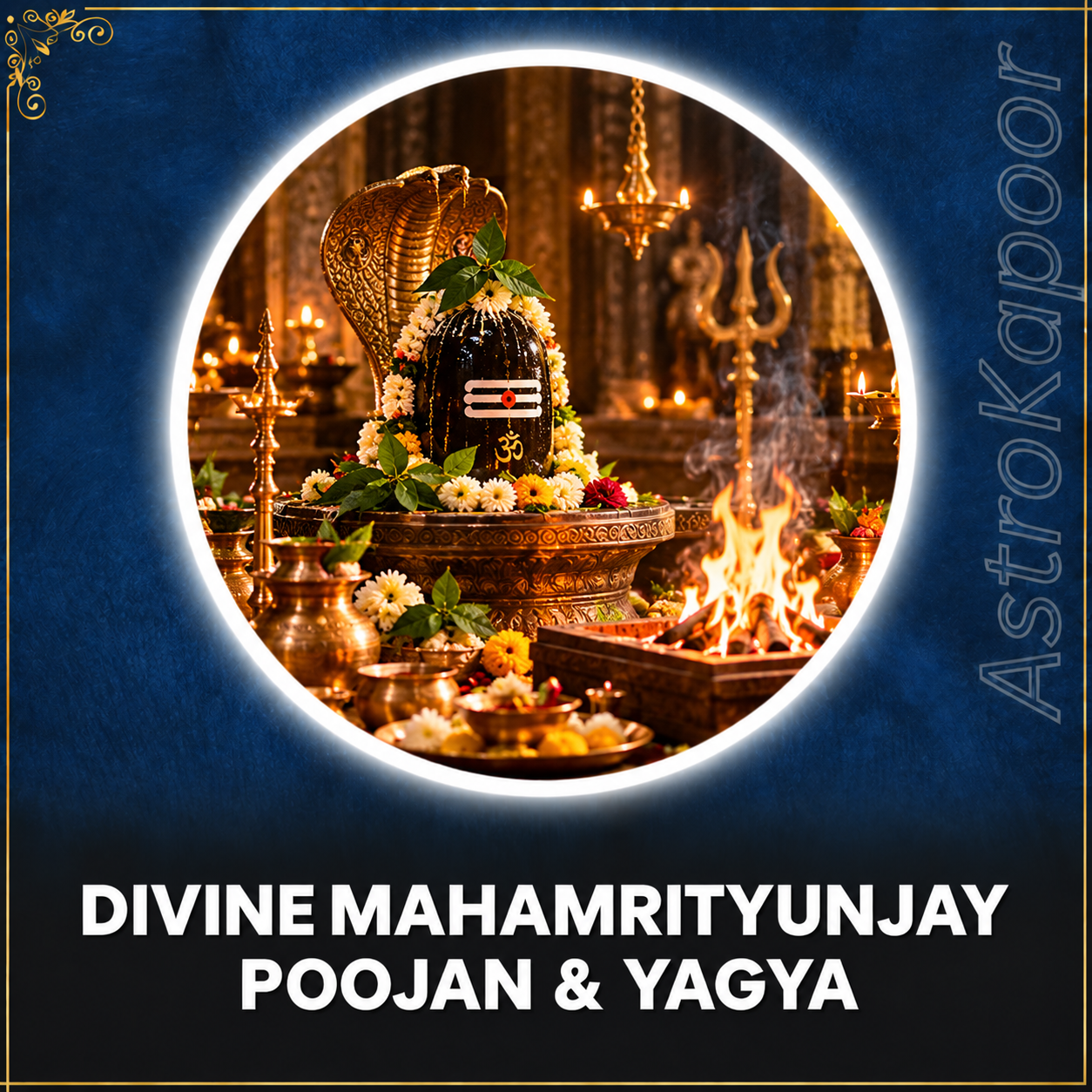
Mahamritunjaya Tula Daan – A Sacred Vedic Remedy
What is Mahamritunjaya Tula Daan?
Tula Daan was initiated by the great sage Narada and is considered one of the most powerful Vedic remedies. The word Daan signifies a sacred donation, performed to eliminate life problems and attract divine blessings.
"Tula Daan is not just a ritual; it is a powerful astral remedy for removing planetary doshas and bringing balance to life."
Tula Daan is especially beneficial for individuals suffering from incurable diseases and those experiencing severe planetary afflictions in their horoscope.
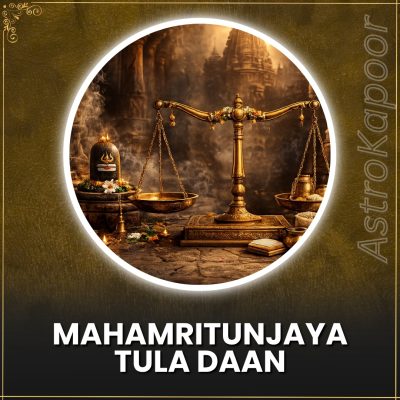
The word tula means a balance or weighing scale, and daan means charitable giving. In a tula daan puja the devotee is seated on one pan of a large scale and weighed against materials of equal weight, which are then donated. It is among the sixteen mahadaans described in the Puranas, and it is performed as an act of surrender — what is offered is measured against the person themselves, not against a convenient sum. In South India the same practice is known as tulabharam and is performed at temples such as Tirumala and Guruvayur, most often against jaggery, sugar, bananas or coins. Mahamritunjaya Tula Daan is the North Indian Vedic form, performed at a place and time chosen from the individual's horoscope, with the donation materials selected planet by planet.
This is a spiritual and charitable remedy. It is undertaken for peace of mind, strength and the pacification of afflicted planets, and it is performed alongside qualified medical treatment and practical effort — never in place of either. Anyone facing a serious illness should remain under the care of their doctor throughout.
Where the concern is health, a
medical astrology consultation can be taken first to understand what the chart indicates, and it is followed alongside your doctor's treatment rather than in place of it.
Principles of Mahamritunjaya Tula Daan
Tula Daan is a highly specialized ritual that can only be performed by expert astrologers who have inherited the Vedic knowledge from their ancestors.
The reason the ritual is not self-performed is that both the sankalpa and the material list are horoscope-specific. The planet to be pacified, the tithi and day chosen, the substances weighed and the recipients of the donation are all decided from the chart, and an error in any of them dilutes the entire tula daan vidhi.
That chart work is part of the broader
vedic astrology services offered by the AstroKapoor group, so the remedy is prescribed from a full reading rather than from the presenting problem alone.
🔹 Tula Daan Pooja Procedure
Anusthan (Preparatory Ritual):
The pooja begins with an Anusthan, which lasts for one hour.
Balancing the Scale (Manual Balance Ritual):
The individual sits on one side of the balance.
On the other side, specific materials are placed according to astrological recommendations.
The balance is adjusted until both sides are equal.
The flow of material must not be stopped until the balance is achieved.
The unbroken flow of material is the heart of the ritual. In Vedic practice the continuous stream represents an unhesitating offering, and pausing to reconsider mid-donation is held to break the sankalpa — which is why the quantity is arranged in full before the weighing begins.
Selection of Materials for Tula Daan:
The materials are chosen based on the individual's horoscope.
Common items include:
Grains: Wheat, rice, pulses, sugar, jaggery
Metals: Bronze, copper, iron
Clothes: Wool, silk, cotton
Essential Items: Oil, ghee, flowers
"Tula Daan aligns an individual's karma with cosmic energies, bringing relief from suffering."
🔹 Why Choose Astrokapoor for Mahamritunjaya Tula Daan?
✅ 35+ Years of Experience in performing Tula Daan rituals.
✅ Our specialists are invited worldwide for Tula Daan Vidhi.
✅ We use gems and cosmic materials to enhance planetary influences.
✅ Donations are made only to the needy – at orphanages, temples, and religious places.
✅ The complete daan is arranged for you — chart analysis, muhurat selection, materials, pandits and distribution.
"Tula Daan is an effective way to neutralize negative planetary effects and amplify positive energies in life."
Who Should Consider Tula Daan?
Tula daan is most often recommended in situations where an affliction has proved persistent rather than passing:
- A severely afflicted or debilitated planet in the birth chart, or a difficult Mahadasha or Antardasha in progress.
- Sade Sati, Shani dhaiya or a heavy Rahu–Ketu influence.
- Prolonged ill health in the family, where the ritual is undertaken as spiritual support alongside ongoing medical treatment.
- Repeated obstruction in work, finances or family matters despite genuine effort.
- Pitra dosh or ancestral obligations, for which the evening and night donation timings are prescribed.
- A vow or sankalpa taken in gratitude after recovery, a birth, or the fulfilment of a long-held wish.
If you are not sure whether your chart calls for this remedy, a free astro consultation is the simplest way to find out before any ritual is booked.
Navgrah Tula Daan Items & Their Significance
🔹 Donations for Each Planet
| Planet | Day of Donation | Materials Used |
|---|
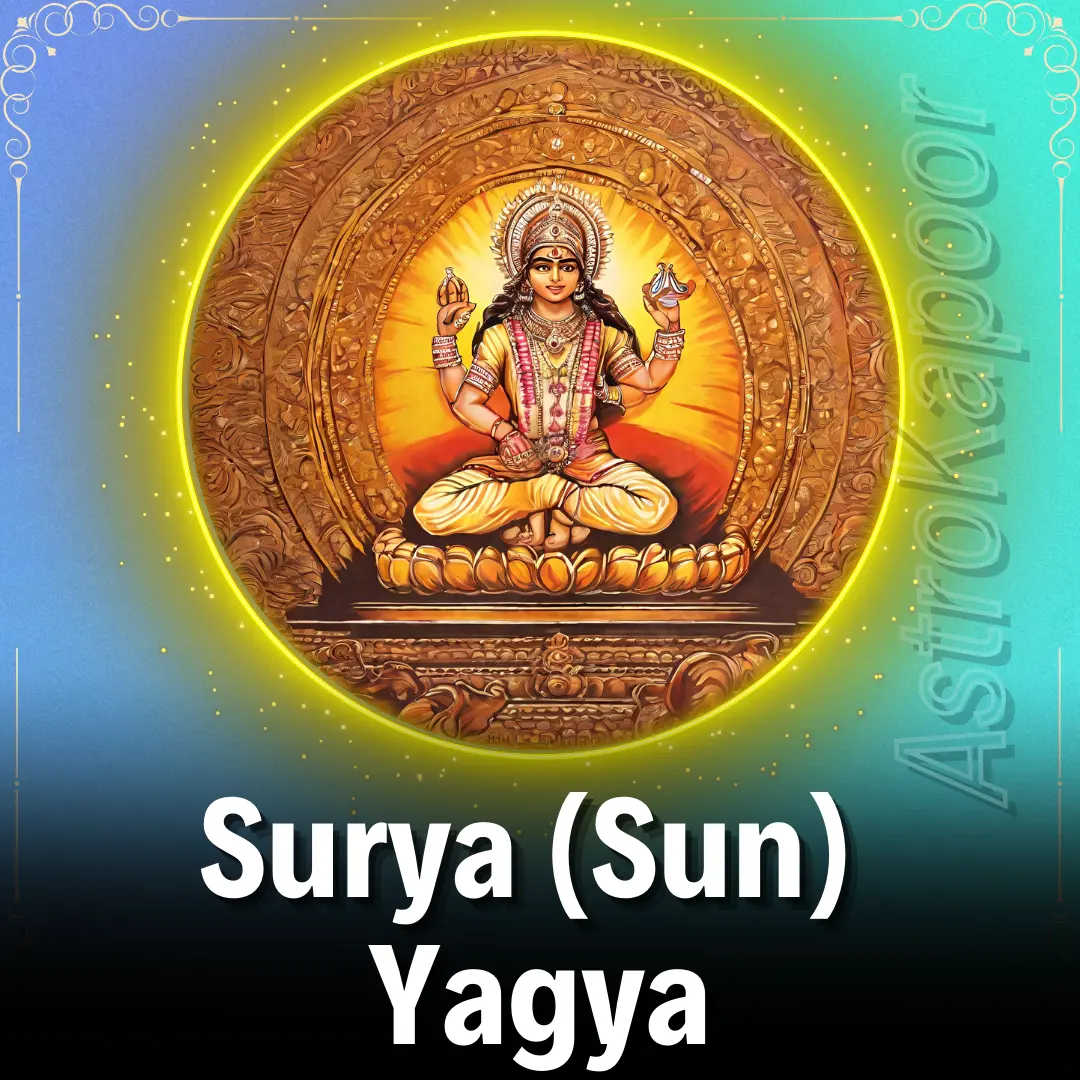
| 🌞 Sun | Sunday | Ruby, coral, wheat, ghee, red cloth, saffron flowers |
| 🌙 Moon | Monday | Camphor, flowers, conch, rice, curd, white cloth |
| 🔥 Mars | Tuesday | Sandalwood, saffron, jaggery, copper, lentil, ghee, red cloth |
| 🟢 Mercury | Wednesday | Camphor, green clothes, sugar, fruits, Emerald |
| 🟡 Jupiter | Thursday | Gold, Topaz, yellow cloth, turmeric, ghee, flowers, fruits |
| 💎 Venus | Friday | Sugar candy, milk, curd, sandalwood, gold, diamond |
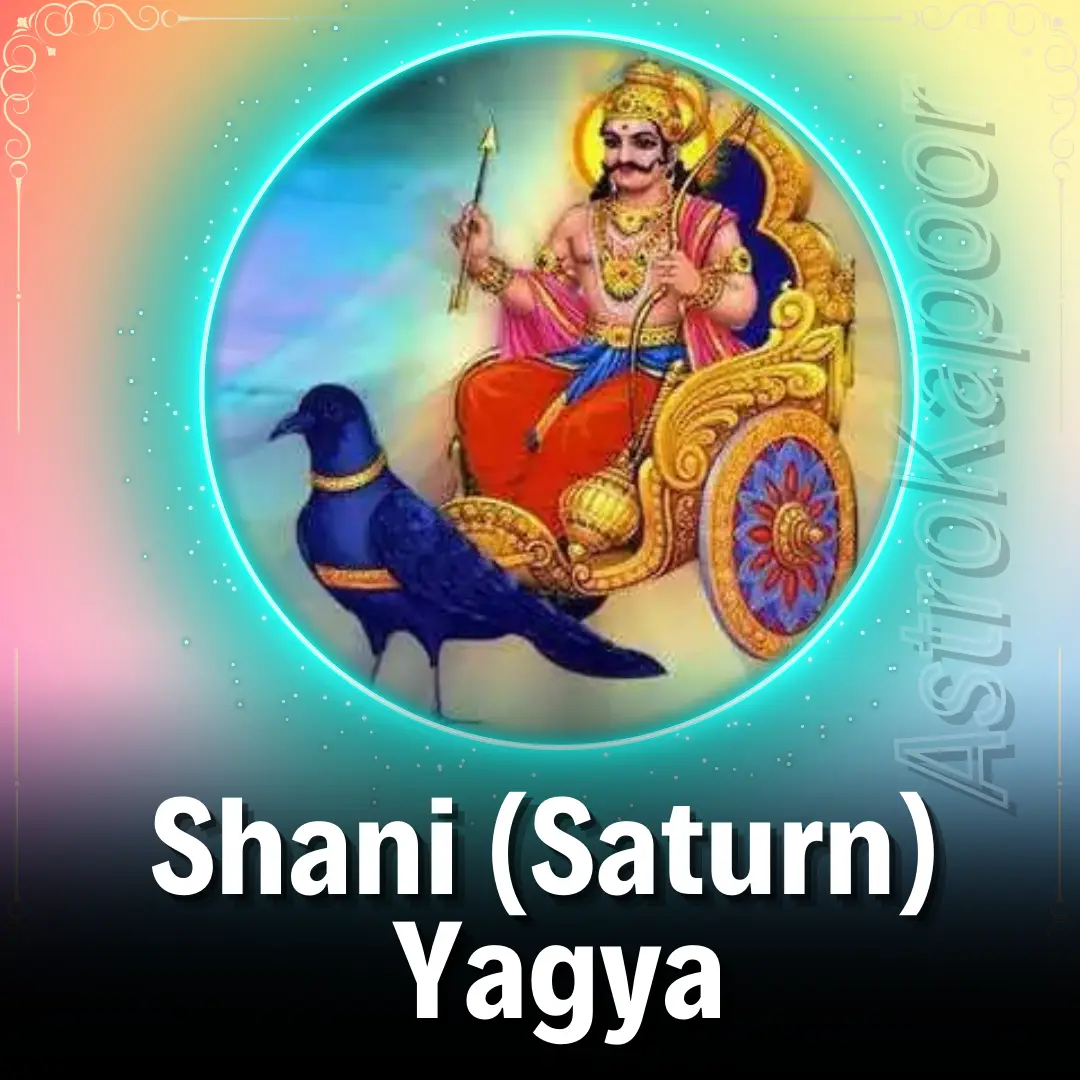
| 🖤 Saturn | Saturday | Black cloth, horse bean, flowers, sapphire, dakshina |
| 🌪️ Rahu | Saturday | Gold, mustard oil, sesame oil, blue cloth, lead, Agate |
| 🔪 Ketu | Saturday | Knife, seven cereals, coconut oil, bluish-grey cloth |
Each planet's list follows its own significations — the Sun's items are red and solar, the Moon's are white and cooling, Saturn's are black and iron-bound, and Rahu and Ketu take the shadowy, mixed substances traditionally assigned to the chhaya grahas. Which of the nine is to be propitiated is decided from your chart, since donating for the wrong planet gives none of the intended benefit. Where a gemstone appears in the list, it is offered as part of the navgrah daan and is a separate matter from a gemstone worn on the body, which requires its own recommendation.
"Tula Daan donations must be given with full devotion to reap maximum spiritual benefits."
Best Time for Tula Daan & Dakshina
When to Perform Tula Daan?
- Morning: Donations for God and auspicious planets.
- Afternoon: Donations for human-related planetary doshas.
- Evening: Donations for spirits and ancestors.
- Night: Donations for deceased souls.
Best Dates (Tithis) for Tula Daan
- Magh Shukla, Chaitra Krishna Panchami
- Vaishakh Shukla Tritiya, Kartik Shukla Saptami
- Margshish Shukla Navami, Magh Shukla Trayodashi
- Phalgun Krishna Tritiya, Kartik Shukla Dwadashi & Poornima
- Paush Shukla Ekadashi, Jyestha Shukla Poornima
These tithis recur every year, but the corresponding English dates change annually with the lunar calendar, so the exact tula daan muhurat is fixed from the current panchang together with your birth chart. Dakshina — the offering made to the officiating pandits — is given at the conclusion and is considered an inseparable part of the daan; a ritual completed without dakshina is traditionally held to be incomplete.
Special Events for Tula Daan
Solar & Lunar Eclipses
- Tula Daan during eclipses offers unlimited benefits.
- Chudamani Yoga: If a Solar Eclipse falls on a Sunday or a Lunar Eclipse on a Monday, donations yield extraordinary results.
Amavasya, Poornima & Sankranti
- Donations on Amavasya, Poornima, Sankranti, Vyatipat, and Vaidhriti Yoga bring immense spiritual growth.
Eclipse and Sankranti windows are the most sought-after dates in the year for daan, and they are fixed calendar events, so booking well in advance is advisable. Makar Sankranti in particular is regarded across India as one of the greatest days for charitable giving.
Why Tula Daan? – Transform Your Life Today!
Removes negative karma
Grants good health and prosperity
Pacifies malefic planets
Enhances spiritual growth
The benefit also runs in a second direction that is easy to overlook: the entire weight of the donation reaches people who need it. Grain, cloth, oil and metal go to orphanages, temples and religious places, so the punya of the ritual is created by a real act of charity rather than by the ceremony alone.
How to Book Your Tula Daan Puja
To arrange a Mahamritunjaya Tula Daan, share your birth date, birth time and birth place, along with the concern for which the remedy is being sought. Our astrologers examine the chart, identify the planet to be propitiated, fix the muhurat and confirm the material list and total cost before the ritual is scheduled. The daan can be performed with you present, or on your behalf by our pandits if travel is not possible, with the distribution documented for you afterwards.
Overseas families and those outside Delhi usually settle all of this through an
astrology consultation online, after which the muhurat and material list are confirmed by email.Clients who consult us for this remedy often seek guidance in other areas as well — a
corporate horoscope for business and partnership decisions, or our
stock market astrology service for those active in the markets.
Book Your Tula Daan Pooja Now!
Watch Our Expert Pandits Performing Tula Daan
FAQ
1. What is Mahamritunjaya Tula Daan?
It is a Vedic charity ritual in which the devotee is weighed on a large balance against grains, metals, cloth and other prescribed materials, which are then donated to the needy. Initiated by the sage Narada, it is performed to pacify afflicted planets, clear negative karma and invite divine blessings.
2. What is the meaning of tula daan?
Tula means a weighing balance and daan means charitable donation, so tula daan literally means giving in charity a quantity equal to one's own weight. It is counted among the great daans described in the Puranas.
3. What is the difference between tula daan and tulabharam?
They are the same principle under two regional names. Tulabharam is the South Indian temple practice, performed at shrines such as Tirumala and Guruvayur, usually against jaggery, bananas, sugar or coins. Mahamritunjaya Tula Daan is the North Indian Vedic form, where the materials, day and muhurat are selected from the individual's horoscope for a specific planetary remedy.
4. Who should perform Tula Daan?
It is generally advised for those with a severely afflicted planet or a difficult Mahadasha running, those under Sade Sati or a strong Rahu–Ketu influence, families facing prolonged difficulty or illness, or anyone fulfilling a sankalpa taken in gratitude.
5. What materials are used in Tula Daan?
Commonly grains such as wheat, rice, pulses, sugar and jaggery; metals such as bronze, copper and iron; cloth in wool, silk or cotton; and essentials like oil, ghee and flowers. The exact combination is chosen from your horoscope and from the planet being propitiated.
6. On which day should Tula Daan be performed?
The day follows the planet — Sunday for the Sun, Monday for the Moon, Tuesday for Mars, Wednesday for Mercury, Thursday for Jupiter, Friday for Venus, and Saturday for Saturn, Rahu and Ketu. The tithi is then chosen from the auspicious dates listed above, or aligned with an eclipse, Amavasya, Poornima or Sankranti.
7. How much does a Tula Daan puja cost?
The cost depends on the person's weight, the materials prescribed by the chart, the muhurat chosen and the place of performance, so it is confirmed only after the horoscope is examined. Share your birth details and we will give you the full material list and the total before anything is scheduled.
8. Can Tula Daan be performed on someone else's behalf?
Yes. Where the person cannot travel or is unwell, our pandits perform the ritual on their behalf with a sankalpa taken in their name, and the donation is distributed and documented for the family.
9. Can Tula Daan cure a disease?
No ritual should be presented as a cure, and medical treatment must never be paused for one. Tula daan is undertaken as spiritual and charitable support — for strength, peace of mind and the pacification of afflicted planets — alongside the care of qualified doctors.
10. How long does the Tula Daan ritual take?
The preparatory anusthan lasts about an hour, and the weighing and donation follow it. Allow the better part of a morning; the exact duration varies with the number of planets addressed and the volume of material to be weighed.