Manmohini Yagya – A Divine Ritual to Fulfill All Wishes
What is Manmohini Yagya?
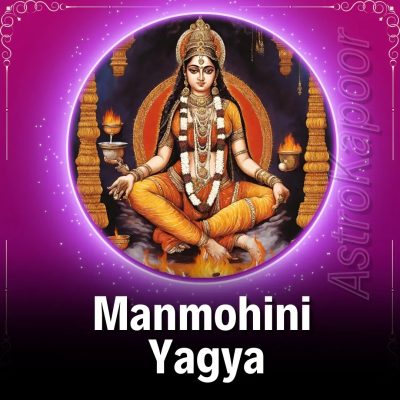
Manmohini Yagya is a sacred ritual performed to fulfill all desires and wishes. The term Manmohini means "Captivating", and this Yagya is believed to attract success, prosperity, and protection.
What is being drawn near, in the traditional sense of the word, is favourable circumstance — opportunity, resolution, support, and the goodwill of those in a position to help. The Yagya is performed for the person who requests it and for the direction of their own life. It is not performed to influence, control or bend the will of another individual, and AstroKapoor does not undertake it for that purpose. This distinction matters, because the term is often misunderstood, and it is the reason the ethical scope stated at the end of this page is not a formality.
This Yagya is a powerful combination of four major Yagyas:
- Bhugarbh Vidya Mantra (भूर्गव विद्या मंत्र)
- Shatchandi Maha Yagya Mantra & Path (शतचंडी महा यज्ञ मंत्र और पाठ)
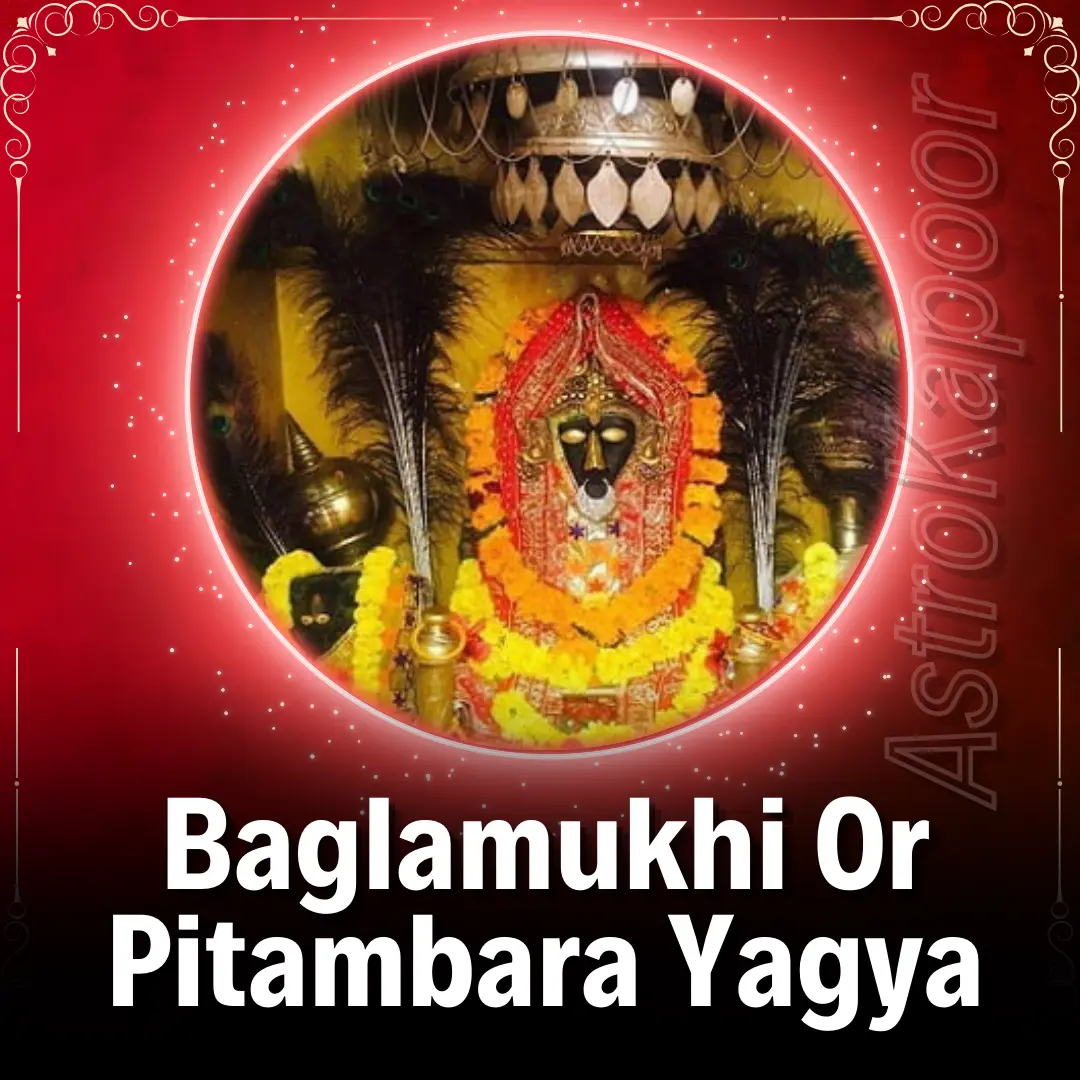
- Baglamukhi Yagya (बगलामुखी यज्ञ)
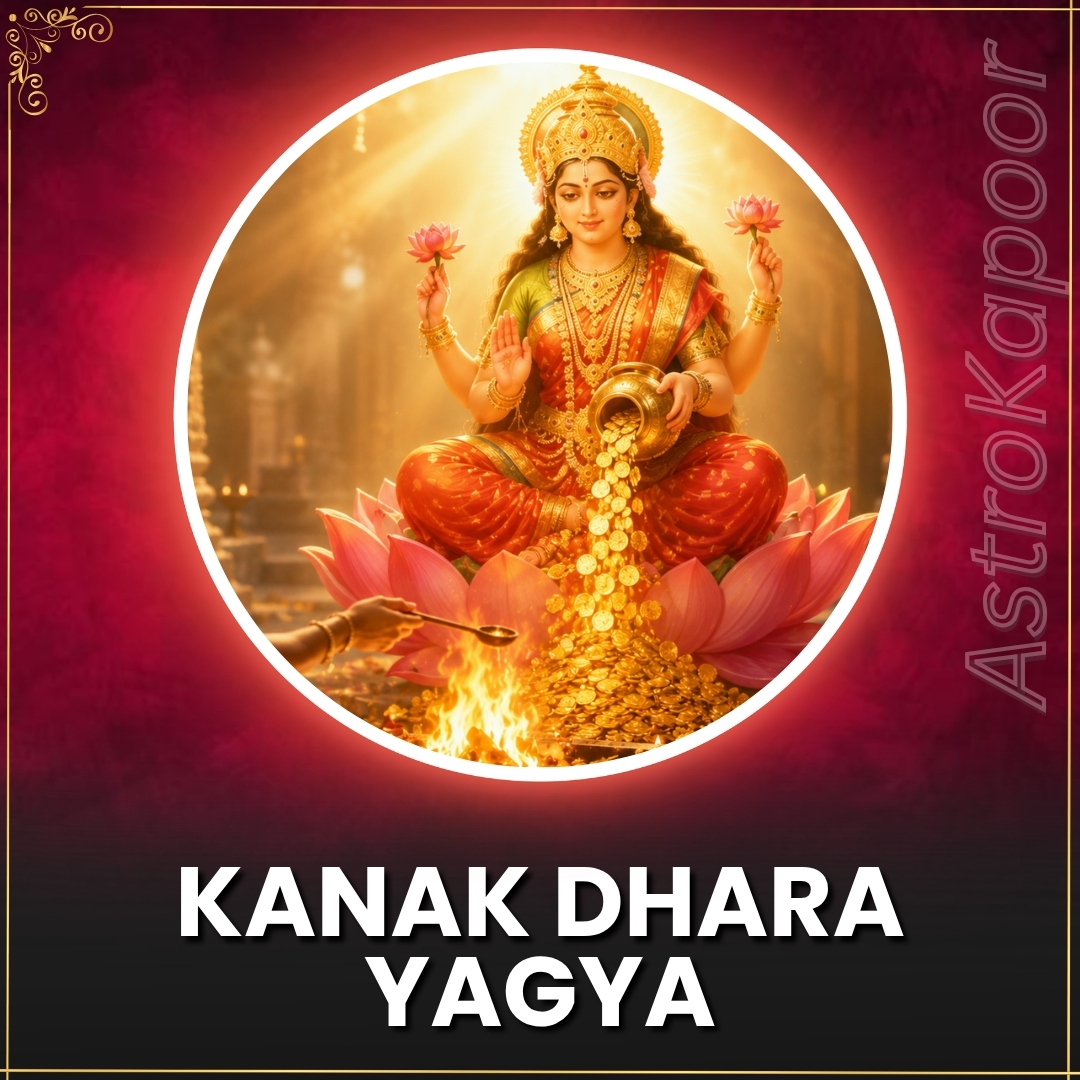
- Shree Sukt Kanak Dhara (श्री सूक्त कनक धारा यज्ञ)
The four are chosen because they cover four different kinds of blockage rather than four versions of the same one. Bhugarbh Vidya addresses wealth that exists but is not reaching you. Shatchandi addresses protection and overall strength. Baglamukhi addresses opposition, disputes and hostile intent. Shree Sukt Kanakadhara addresses the flow of money itself. This is what makes Manmohini Yagya a composite anushthan rather than a single ritual — and why it is undertaken by people facing several difficulties at once rather than one specific problem.
At AstroKapoor, these Yagyas are performed under the divine guidance of Astrologer Prashant Kapoor, who has conducted extensive astrological research on their benefits.
Which Yagya Do You Actually Need?
A single-purpose yagya is the right choice when the difficulty is clearly identified — a specific planetary affliction, one court matter, one delayed marriage, one health concern. A composite maha yagya of this scale is considered when several areas are under pressure simultaneously and the underlying cause appears to be one continuous adverse period rather than separate unrelated events.
The honest answer for most enquirers is that this should be decided from the horoscope before anything is booked, not from the description of the ritual. An adverse Mahadasha, a Sade Sati in progress or a heavily afflicted chart calls for a different response than a single stalled matter, and we will say so if a shorter and less expensive yagya is the appropriate one.
The Four Components of Manmohini Yagya
1. Bhugarbh Vidya Mantra (भूर्गव विद्या मंत्र)
Meaning & Significance
Bhugarbh means "Womb of the Land." This Yagya is performed to retrieve hidden treasures such as gold, gems, or other valuable items buried beneath the Earth. It is also useful for removing the effects of Tantrik Prayog (black magic) on hidden wealth.
In contemporary practice, "hidden wealth" is understood far more broadly than buried valuables, and this is where most enquiries actually sit: ancestral or family property that cannot be released, land or a plot caught in dispute or in the records, an inheritance that never reaches the person entitled to it, payments and dues that are acknowledged but never paid, and money locked in a settlement or a case. The common thread is wealth that exists on paper and does not arrive. The Yagya is performed as spiritual support for its release, alongside the legal and documentary work that any such matter requires.
Mantra & Its Meaning
Mantra:
या देवी सर्वभूतेषु विद्या रूपेण संस्थिता नमस्तस्यै-नमस्तस्यै, नमस्तस्यै नमो नम:
*Ya Devi Sarvabhuteshu Vidya Rupena Sansthita Namastasyai, Namastasyai, Namastasyai Namo Namah:
Meaning:
Salutations to the Goddess who resides in all beings in the form of Knowledge.
This verse belongs to the Devi Mahatmya, the Durga Saptashati, where a sequence of such invocations addresses the Goddess as she abides in all beings in one form after another — as knowledge, as intelligence, as forbearance, as power. Its use here is deliberate: what is being invoked first is not wealth but the discernment to find what is hidden, which is why a Vidya invocation opens a Yagya concerned with concealed things.
2. Shatchandi Maha Yagya Mantra & Path (शतचंडी महा यज्ञ मंत्र और पाठ)
Purpose & Benefits
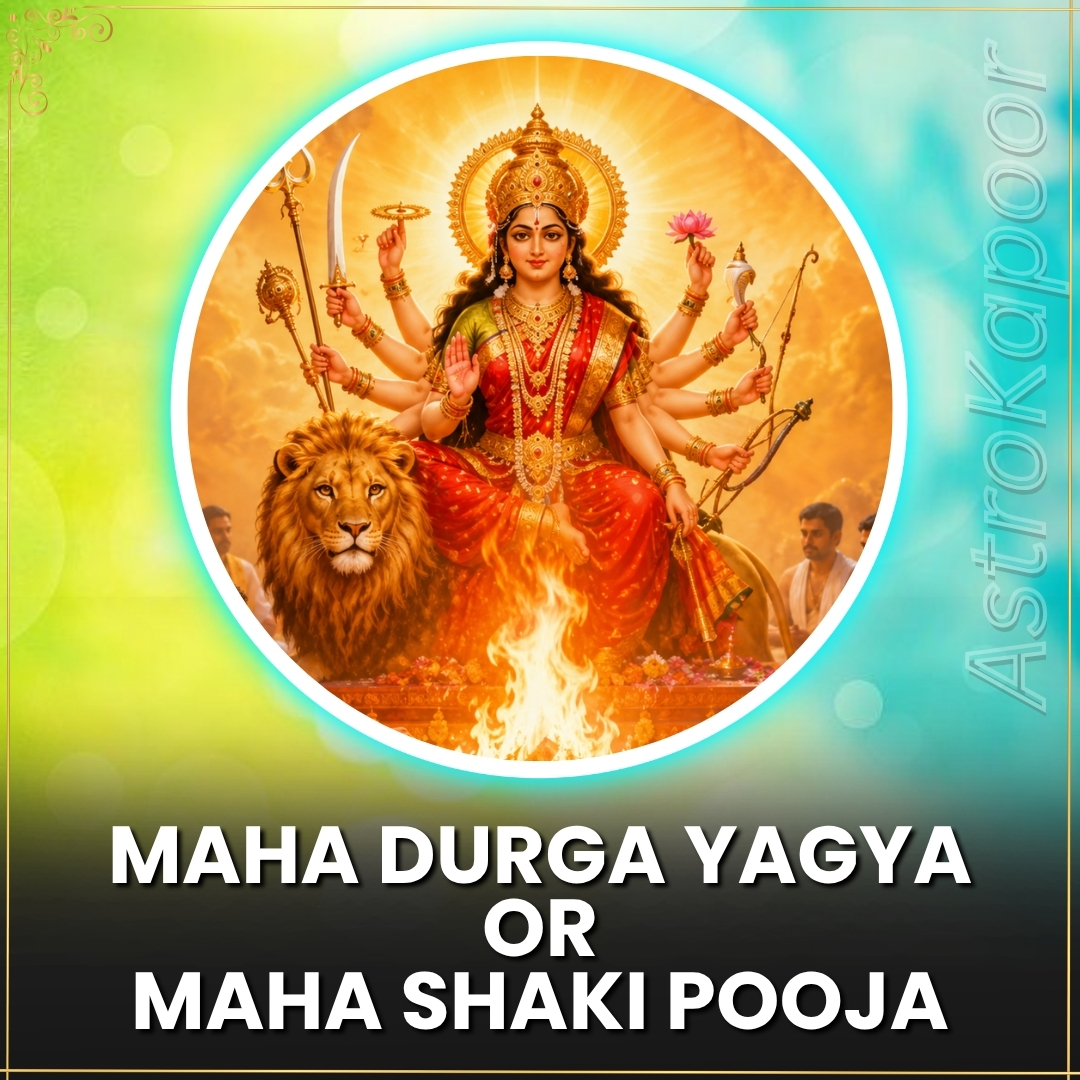
Shatchandi Maha Yagya is dedicated to Maa Chandi, a divine manifestation of Maa Durga, who is the ultimate protector of humanity. This Yagya is commonly performed during Navratri to invoke the blessings of Goddess Chandi for success, good health, protection, and wish fulfillment.
The prefix shat means one hundred: a Shatchandi anushthan is the recitation of the Durga Saptashati one hundred times, completed with a havan. This is why it cannot be performed in an afternoon and why a panel of pandits is required — the count itself is the practice. Navratri is the traditional window because the nine nights are held to be the period in which Shakti upasana carries its greatest force, though the anushthan is undertaken at other times when a chart or a situation calls for it.
Mantra & Meaning
Mantra:
ॐ ऐं ह्रीं क्लीं चामुण्डायै विच्चे
Om Aim Hrim Klim Chamundayai Vichche
Meaning:
- ॐ (Om) – Universal sound
- ऐं (Aim) – Seed mantra of Mahasaraswati (Goddess of Wisdom)
- ह्रीं (Hrim) – Seed mantra of Mahalaxmi (Goddess of Wealth)
- क्लीं (Klim) – Seed mantra of Mahakali (Goddess of Power)
- चामुण्डायै विच्चै (Chamundayai Vichche) – Invocation of Goddess Chamunda, the concentrated power of all Shakti Peethas.
This is the Navarna mantra — the nine-syllable mantra of the Durga Saptashati, also called the Chandi Navakshari — and it is the mantra with which the Saptashati recitation is framed. Its structure is the reason for its standing: the three seed syllables invoke wisdom, wealth and power together, so the mantra addresses the three forms of Shakti in a single breath rather than petitioning one of them. Nine syllables and nine nights of Navratri are traditionally read as the same number, and the mantra is chanted in multiples of 108 under the guidance of a qualified acharya.
Purpose & Benefits
This Yagya is performed to invoke Goddess Baglamukhi, an incarnation of Maa Durga, known for removing obstacles, winning legal battles, and protecting against black magic (Removal) and enemies.
It also helps in delayed marriage issues and brings positive transformations in life.
Baglamukhi is the eighth of the ten Mahavidyas and is known as Pitambara, the one clothed in yellow, which is why yellow cloth, turmeric and yellow flowers are used in her worship. Her characteristic power is stambhan — the stilling or arresting of what is in motion. Traditionally this is invoked in matters of speech and contention: litigation, false accusation, defamation, hostile campaigns and organised opposition. The purpose is protective, not aggressive. What is sought is that the harm directed at the devotee should come to a stop, and this is the sense in which the Yagya is performed at AstroKapoor.
On legal matters specifically, one thing must be said plainly. A yagya is spiritual support during proceedings and nothing more. It is performed alongside your advocate's work, your documentation and your own conduct in the matter. Nobody can promise the outcome of a case, and no ritual replaces competent legal representation.
Mantra & Meaning
Mantra:
ॐ ह्रीं बगलामुखी सर्व दुष्टानां वाचं मुखं पदं स्तम्भय जिह्वां कीलयं बुद्धिं विनाशय ह्रीं ॐ स्वाहा।
Om Hreem Baglamukhi Sarva Dushtanam Vaacha Mukham Padam Stambhaya Jihvaam Keelayam Buddhim Vinashaya Hreem Om Swaha.
Meaning:
- Stop the actions of negative people.
- Silence their negative speech.
- Block their harmful thoughts.
The traditional reading of the mantra is defensive throughout: it asks that the speech, movement and hostile intention aimed at the devotee be arrested. It is invoked against those already acting against the person, and only for that. Because this mantra is powerful and easily misrepresented, it is chanted in an anushthan of this kind under the supervision of a qualified acharya, with the sankalp stated openly, and never for an intention that would be improper to state aloud.
4. Shree Sukt Kanak Dhara Yagya (श्री सूक्त कनक धारा यज्ञ)
Purpose & Benefits
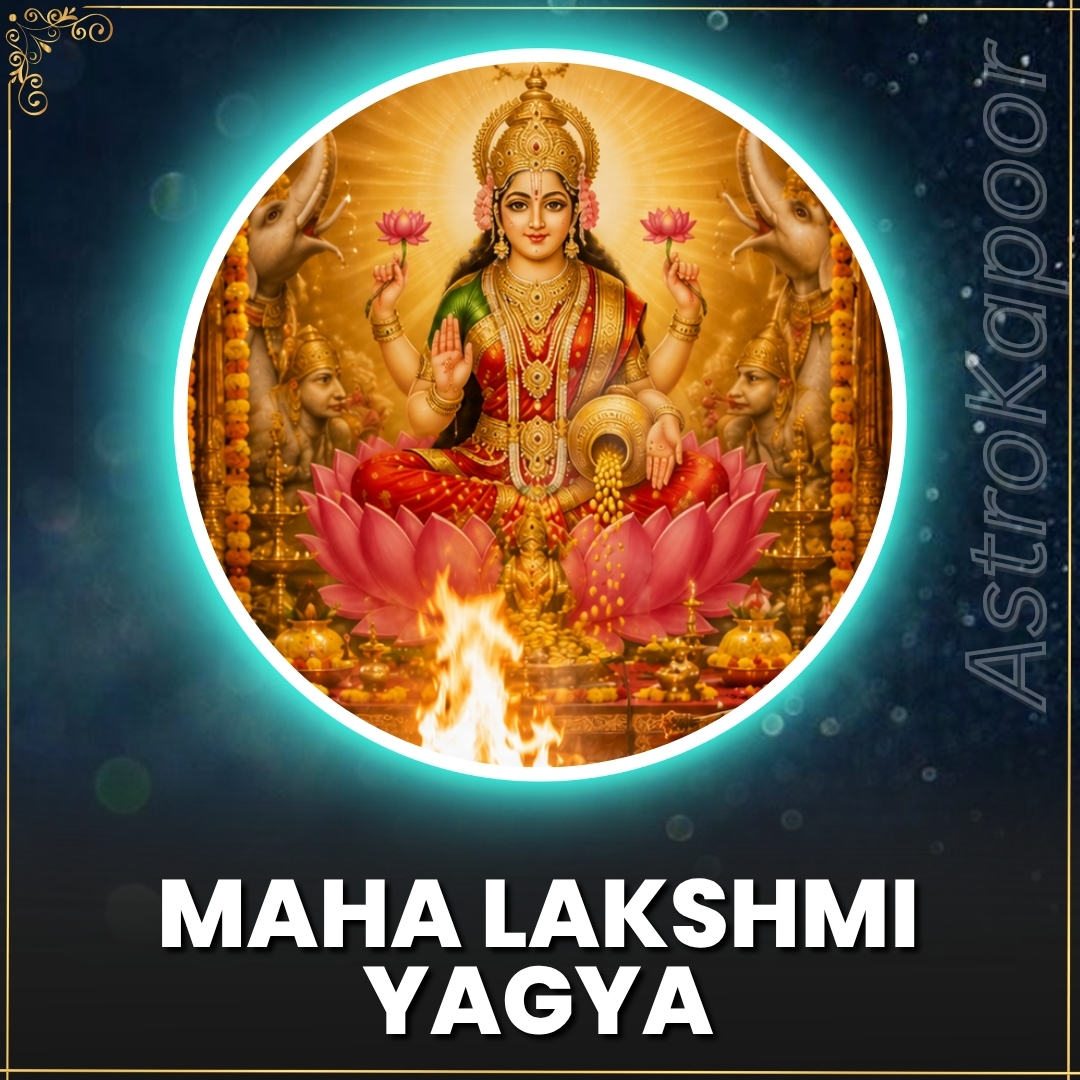
This Yagya is specifically for financial gains, debt relief, and prosperity. It is beneficial for those facing money blockages, delayed payments, or business losses.
It includes Shree Sukt Path and Kanak Dhara Path, invoking Goddess Lakshmi to bless devotees with abundance and wealth.
Both texts are ancient and well known. The Shri Suktam is a Vedic hymn to Lakshmi, recited for prosperity and abundance and traditionally accompanied by offerings of lotus, ghee and bilva. The Kanakadhara Stotram is attributed to Adi Shankaracharya, composed — as the tradition records it — for a poor woman who had nothing to offer him but a single amla fruit, upon which a shower of golden amla is said to have fallen in her home. The name itself means "a stream of gold". The two are recited together here because one invokes abundance and the other invokes its flow, which is the distinction that matters to anyone whose problem is not the absence of income but the fact that it never arrives or never stays.
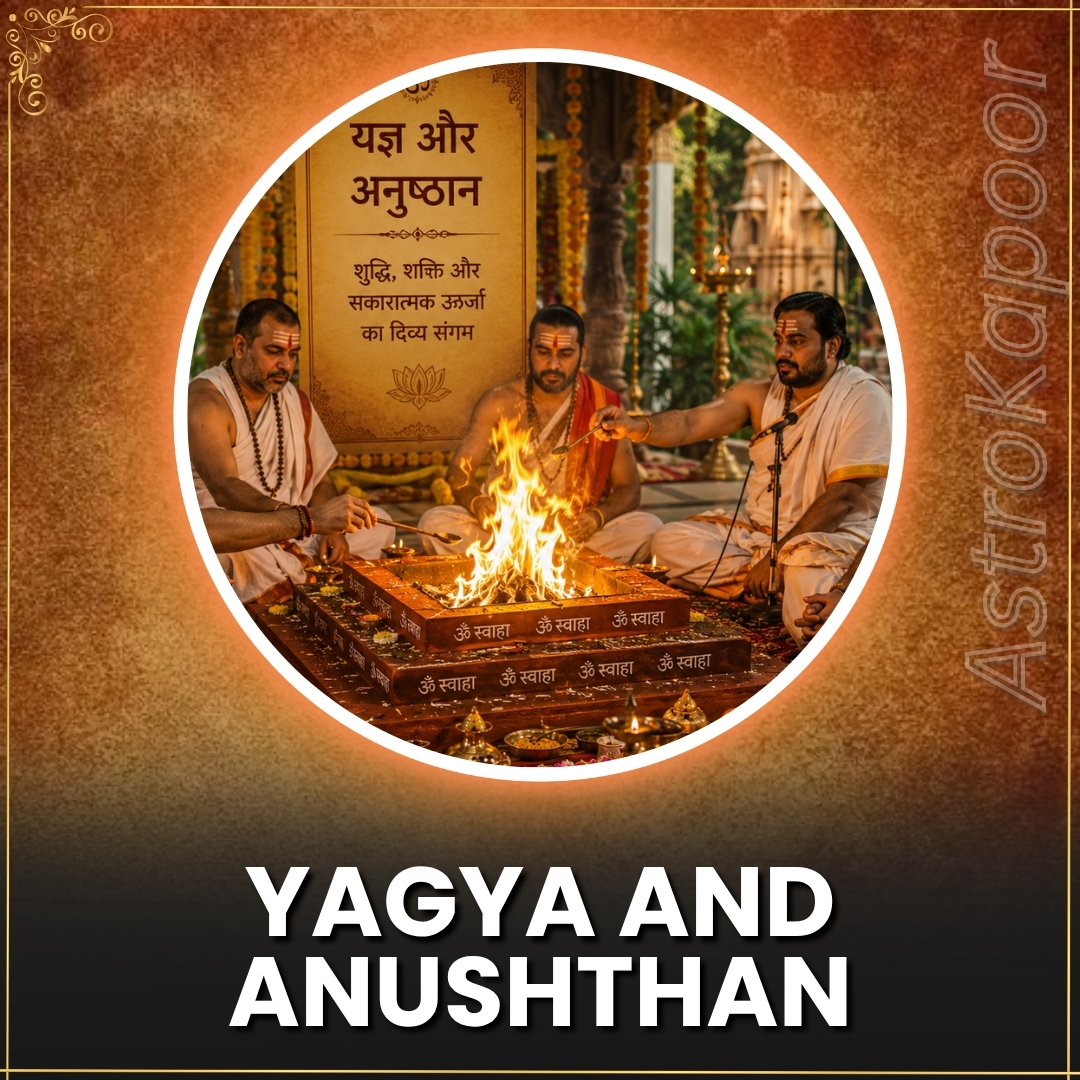
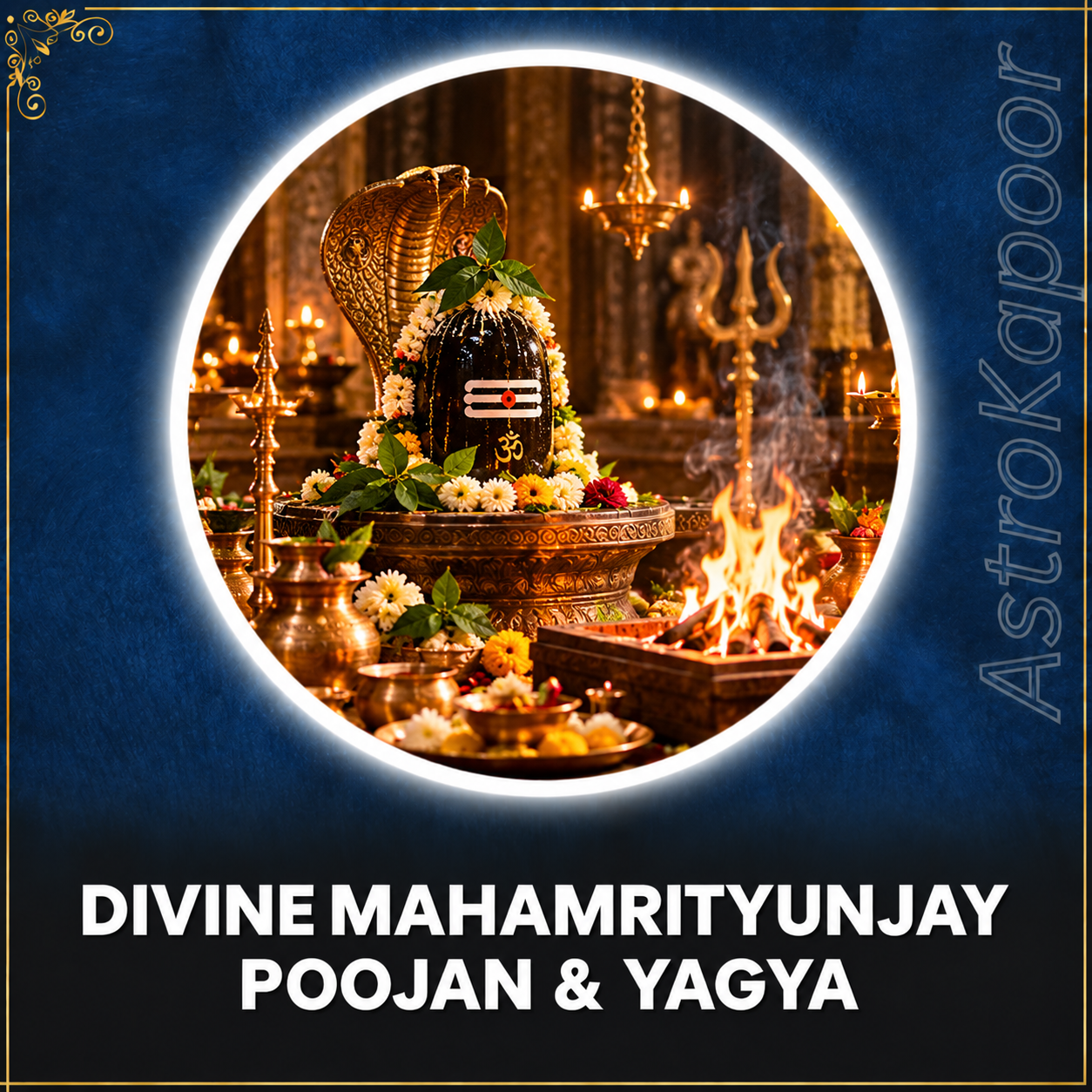
At AstroKapoor, Manmohini Yagya is performed under the guidance of Astrologer Prashant Kapoor and experienced Vedic Pandits who follow traditional Vedic procedures and scriptural guidelines. Every ritual is conducted with proper sankalp, mantra chanting, havan procedures, and sacred mandala formations to maintain authenticity and spiritual discipline.
Our objective is to provide genuine Vedic ritual services while preserving the sanctity and traditional methodology described in ancient scriptures.
The Process of Manmohini Yagya
This Yagya requires 85 Man-Days, meaning for 5-6 Panditas, it takes 15-16 days to complete.
A man-day is one pandit working for one full day, so 85 man-days is a measure of total effort rather than of elapsed time. Divided among five or six acharyas it becomes roughly a fortnight of continuous work. The figure is given here because it is the only honest way to describe the scale of an anushthan of this kind: the recitation counts and the ten mandala formations cannot be compressed, and any provider who offers the same composite yagya in two or three days is not performing the same thing.
Setup & Ritual Preparations
- 10 Chaukis (2x2 feet) covered with white cloth and tied with red thread.
- 10 Chakras created using different lentils and colored rice.
The chauki is the raised wooden seat on which each mandala is drawn, and the chakra is the geometric diagram itself, laid out in coloured grains rather than painted. White cloth denotes purity and the red thread, moli, marks the space as consecrated. Each of the ten mandalas is a seat prepared for a specific set of deities, and each must be completed correctly before the invocation belonging to it can be made.
Mandal Formation
- Ganesha Peeth – For Lord Ganesha's blessings before starting the Yagya.
- Sarvatobhadra Mandal – Represents 33 Koti Gods & Goddesses.
- Chatur Linga Bhadra Mandal – Dedicated to Lord Shiva.
- Navgrah Mandal – Balances 9 planetary influences.
- Chetrapal Mandal – Worship of regional deities.
- Shodash Matrika Mandal – Invocation of 16 Goddesses.
- Chausath Yogini Mandal – Represents 64 divine powers.
- Satghrit Matrika Mandal – Honors seven divine mothers with Annapurna Mata Kalash in the center.
- Ashtadal Kamal Mandal – Dedicated to Goddess Lakshmi for prosperity.
- Lingto Bhadra Chakra Mandal – Represents Lord Shiva's supreme power.
The order is not decorative. Ganesha is invoked first in every Vedic ritual as the remover of obstacles, so the first mandala prepares the ground for the rest. The Sarvatobhadra follows as the universal seat, the one on which the whole assembly of deities is invited. The Navgrah mandala addresses the nine planets, which is the point at which the ritual connects directly to the individual's own horoscope. The Shodash Matrika and Chausath Yogini mandalas invoke the Divine Mother in her sixteen and sixty-four aspects, forms of Shakti long associated with protection and with the fulfilment of a sankalp. The Ashtadal Kamal, the eight-petalled lotus, is Lakshmi's own seat and carries the prosperity portion of the anushthan. The two Shiva mandalas open and close the sequence, which is why the arrangement holds together as one ritual rather than ten separate pujas performed side by side.
Mantras Chanted in Manmohini Yagya
During Japa and Havana, Panditas chant the following three mantras:
1. Mohini Mantra
ॐ नमोः मोहिनी महामोहिनी अमृतवासिनी नमः /स्वः
Om namoh mohini mahamohini amritavasini namah /swaha
2. Baglamukhi Mantra
ॐ ह्रीं बगलामुखी सर्व दुष्टानां वाचं मुखं पदं स्तम्भय जिह्वां कीलयं बुद्धिं विनाशय ह्रीं ॐ स्वाहा।
Om Hreem Baglamukhi sarva dushtanam vacham mukham padam stambhay jivham kilayam budhdhi vinashay hreem om swaha
3. Padmavati Mantra
ॐ ह्रीं पद्मावति त्रैलोक्य वार्ता कथय कथय ह्रीं ॐ स्वाहा॥
Om Hreem Padmavati Trilokya Varta Kathay Kathay Hreem Om Swaha॥
The three are chanted together because each carries a different function within the same sankalp. The Mohini mantra addresses attraction in the sense described at the top of this page — the drawing near of favourable circumstance, the epithet amritavasini indicating that which abides in the nectar of immortality. The Baglamukhi mantra carries the protective, arresting function. Padmavati, seated on the lotus, is invoked for knowledge of the three worlds — for clarity about what is actually happening in one's situation, which in practice is often the part that is missing. Japa is performed for the prescribed counts first, and the havan follows, in which the offerings are made into the consecrated fire with the same mantras.
Materials Required for Manmohini Yagya
- Lentils (different types)
- Colored Rice (for Chakra formation)
- Haldi (Turmeric) Powder
- Chandan (Sandalwood) Powder
- Kumkum & Sindoor
- Moli (Red Sacred Thread)
- Camphor & Ghee (for Havana)
Alongside these, the havan samagri, wood, flowers, fruits, cloth and kalash items are arranged by us, so nothing needs to be procured by the client. Turmeric and yellow items belong specifically to the Baglamukhi portion, and lotus and ghee to the Lakshmi portion, which is why the material list for a composite yagya is considerably longer than for a single one.
Who Should Consider Manmohini Yagya
- Several areas of life — money, litigation, family, health, reputation — under pressure at the same time, over an extended period.
- Wealth or property that exists but cannot be released: an inheritance, a disputed plot, a settlement, dues that are acknowledged and never paid.
- A prolonged legal matter or an organised campaign of opposition, where spiritual support is wanted alongside the legal process.
- Persistent financial blockage — income arriving and never accumulating, debt that will not clear, payments perpetually delayed.
- A difficult Mahadasha, Sade Sati or a heavily afflicted chart, where a single-planet remedy has already been tried without visible change.
- A major sankalp taken for the family, undertaken with the intention of a large and complete anushthan rather than a short one.
Ethical Scope of This Yagya
Because the name of this Yagya invites a particular kind of enquiry, our position is stated openly. It is performed for the person requesting it and for the circumstances of their own life. It is not performed to attract, control, influence or restrain any named individual, to interfere with anyone's marriage or relationship, or to cause loss to a competitor, an opponent or a family member. Requests of that nature are declined, however they are phrased, and the Baglamukhi portion is invoked only defensively — against harm already being directed at the person, never as an instrument against someone else.
Two further points belong here. A yagya is a spiritual practice undertaken alongside your own effort, your professional advice and, where health is concerned, your doctor's care — never in place of any of them. And no outcome is guaranteed: not a court result, not a recovery of money, not a marriage. A practitioner who guarantees any of those should be treated with caution, and that caution is worth exercising with anyone quoting a large sum for a ritual on the promise of a specific result.
How the Manmohini Yagya Is Arranged
To begin, share the date, time and place of birth of the person for whom the Yagya is to be performed, along with their full name, gotra where known, and a description of the situation. The horoscope is examined first, both to confirm that this composite anushthan is the appropriate response and to fix the muhurat for the commencement. Once that is settled we confirm the schedule, the material arrangements and the total cost before anything is begun.
Attendance is not a requirement. The sankalp can be taken in the name and gotra of the person on whose behalf the Yagya is performed, which is how it is arranged for clients outside Delhi and for those overseas, and the prasad is sent afterwards. Given the fifteen to sixteen day duration and the panel of acharyas involved, dates need to be reserved in advance, particularly around Navratri when the Shatchandi portion is most sought after.
Conclusion
Manmohini Yagya is a powerful Vedic ritual that helps in:
Winning court cases
Resolving financial issues
Late marriage solutions
Overcoming enemies & black magic
Enhancing prosperity & business growth
However, this Yagya should be performed only for ethical purposes and not for harming others.
At AstroKapoor, our expert Panditas & Acharyas perform this Yagya with utmost devotion and accuracy.
For more details or to book your Manmohini Yagya, contact AstroKapoor today!
Frequently Asked Questions
What is Manmohini Yagya?
It is a composite Vedic anushthan combining four yagyas — Bhugarbh Vidya, Shatchandi Maha Yagya, Baglamukhi Yagya and Shree Sukt Kanakadhara — performed over 85 man-days with ten mandalas. It is undertaken for protection, for the release of blocked wealth, for relief from opposition and litigation, and for prosperity.
What does "Manmohini" actually mean here?
It carries the sense of captivating or drawing near, and in this ritual what is drawn near is favourable circumstance — opportunity, support, resolution and goodwill. It is not performed to attract, influence or control a specific person, and requests of that kind are declined.
Why are four yagyas combined into one?
Because each addresses a different kind of obstruction: hidden or blocked wealth, overall protection and strength, hostile opposition, and the flow of money. A composite anushthan suits someone facing several of these at once, where separate single yagyas would neither cover the ground nor share one continuous sankalp.
What does 85 man-days mean?
A man-day is one pandit working for one full day, so 85 man-days measures total effort rather than calendar time. With five or six acharyas working together it comes to roughly fifteen to sixteen days. Anyone offering the same composite yagya in two or three days is not performing the same ritual.
What is the Navarna mantra and what does it mean?
Om Aim Hreem Kleem Chamundayai Vichche is the nine-syllable mantra of the Durga Saptashati. Aim is the seed syllable of Mahasaraswati and invokes wisdom, Hreem of Mahalakshmi and invokes wealth, and Kleem of Mahakali and invokes power; the closing invokes Goddess Chamunda. It addresses all three forms of Shakti in a single mantra, which is the source of its standing.
What is a Shatchandi Maha Yagya?
Shat means one hundred: it is the recitation of the Durga Saptashati one hundred times, completed with a havan, which is why a panel of pandits is needed. It is most often performed during Navratri, and it forms one of the four components of this anushthan.
What is Baglamukhi stambhan, and is it used against people?
Stambhan means the stilling or arresting of what is in motion, and in the Baglamukhi tradition it is invoked in matters of speech and contention — litigation, false accusation, defamation, organised opposition. It is used defensively, to stop harm already being directed at the devotee. It is not performed as an instrument against a named person, and we decline such requests.