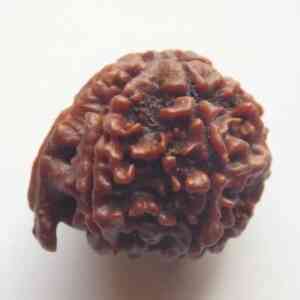
Ganesha Rudraksha
Ganesha Rudraksha bears a trunk-like elevation, as present on the face of Lord Ganesha, the son of Lord Shiva and Goddess Parwati. It is associated

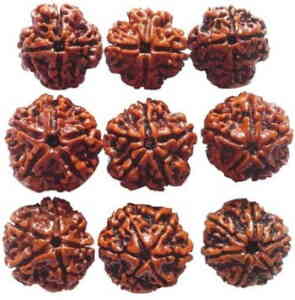
Looking to buy original Rudraksha online in India? AstroKapoor supplies genuine, lab-certified Rudraksha beads — from the rare Ek Mukhi to the widely worn Panchmukhi, plus Gauri Shankar, Ganesh Rudraksha and hand-knotted malas — at fair wholesale pricing and backed by expert Vedic guidance.
Every bead is X-ray tested and certified before dispatch, so what reaches you is an authentic Rudraksha rather than a carved seed, a bead-drilled imitation or a low-Mukhi bead sold as a rare one. Because the market for real Rudraksha is genuinely difficult to navigate, this page also explains exactly how to identify an original Rudraksha yourself — whether or not you buy from us.
Buying online Rudraksha should not be a gamble. Whether you are searching for a genuine Rudraksha for daily wear, an authentic Rudraksha for a specific planetary remedy, or original Rudraksha in India at a fair certified price, the same three things decide the outcome: verified Mukhi count, stated origin, and a laboratory report you can check yourself.
Rudraksha is the seed of the Elaeocarpus ganitrus tree, grown mainly in Nepal and Indonesia. The word comes from Rudra (Lord Shiva) and Aksha (teardrop) — literally “the tears of Shiva.” In South India the same bead is known as ruthratcham, and original ruthratcham is sought for the identical reasons. For thousands of years, sages and seekers have worn Rudraksha for spiritual growth, protection, concentration and peace of mind.
Each Rudraksha carries natural clefts or faces on its surface called Mukhis. The number of Mukhis decides the bead’s ruling deity, planet and specific benefits — which is why choosing the right Mukhi matters as much as choosing a genuine one.
Buyers in Tamil Nadu and among Tamil-speaking communities worldwide search for ruthratcham original rather than Rudraksha, and the two are the same seed. Everything on this page applies equally: an original ruthratcham is identified by the same unbroken Mukhi lines, the same natural surface texture, and the same X-ray verification of face count. Our certificates state the Mukhi count in a form recognised by any laboratory, whichever name you know the bead by.
A Rudraksha bead is a naturally charged, electromagnetic seed. Worn against the body, it is believed to stabilise the wearer’s bio-energy, calm the nervous system and shield the aura from negative influence. In Vedic tradition each Mukhi resonates with a particular planet and deity, so a Rudraksha can be used much like an astrological remedy — to strengthen a weak planet, remove obstacles, or bring focus, wealth and harmony. Our guide to healing the planets with Rudraksha explains this planetary correspondence in detail.
Unlike astrological gemstones, Rudraksha is considered safe and auspicious for almost everyone, which is why it is worn by beginners and advanced practitioners alike. A gemstone worn against a hostile chart can amplify the wrong planet; a Rudraksha carries no comparable risk. This is the single strongest practical argument for starting with beads.
The market is flooded with fakes, and the counterfeits have become considerably better than they were a decade ago. Knowing what to look for protects you regardless of where you buy.
Before the detail, the short version. Trace every Mukhi line from the top hole to the bottom hole under magnification. If each line runs unbroken, varies naturally in depth, and the surface is rough with intact thorns, the bead is very likely real. Rudraksha real enough to trust will also vary from its neighbours in a batch — uniformity across several beads is a warning sign, not a quality sign.
An original Rudraksha has natural, continuous Mukhi lines running unbroken from the top hole to the bottom hole. The lines are irregular in width and depth, because nature does not produce uniform grooves. The surface carries a rough, uneven texture with natural thorn-like protrusions, and no two beads are ever identical in shape, size or grain.
Under magnification, a real Rudraksha shows fibrous internal structure where the Mukhi lines meet the surface. A carved bead shows tool marks: lines of even depth, symmetrical spacing, and a fine dust residue inside the grooves.
Type of Fake | How It Is Made | How to Spot It |
Carved bead | Grooves cut into a plain low-Mukhi bead | Uniform line depth, tool marks in grooves, suspiciously symmetrical faces |
Joined or glued bead | Two halves fused to fake a Gauri Shankar or high Mukhi | Visible seam, glue residue, unnatural join line under magnification |
Plastic or resin imitation | Moulded and painted | Feels light and warm, mould seam, uniform texture, floats readily |
Bead-drilled substitute | Bhadraksha or Rudrakshi seed sold as Rudraksha | Smoother surface, different grain, fewer natural thorns |
Two checks are genuinely useful. Examine the bead under 10x magnification and trace each Mukhi line from hole to hole — a break, a join or a tool mark tells you what you need to know. And compare beads: buy from a batch and inspect several, since natural variation between them is itself a good sign.
The popular tests are far less reliable than the internet suggests. The water sink test fails often, because a genuine dried bead can float and a dense fake can sink. The copper coin rotation test is not repeatable. The milk colour test proves nothing. Treating any of these as proof is how people end up confident about a fake.
Mukhi count is the one thing you cannot verify by eye with certainty, and it is precisely what determines price. A skilled carver can add a convincing line; only an X-ray reveals the internal compartments, which correspond to the true Mukhi count and cannot be faked.
A genuine certificate names the testing laboratory, carries a verifiable report number, and states the Mukhi count and origin. Ask for it before payment, not after. Every authentic Rudraksha supplied by AstroKapoor is X-ray verified and certified before it reaches you, which is what separates original Rudraksha in India from the uncertified beads sold at temple stalls and marketplace listings.
Price is where most buyers get misled, in both directions — paying too much for a common bead, or being pulled in by a rare bead priced impossibly low. Rudraksha price for original certified beads follows a consistent logic, and once you know it, an implausible listing is easy to spot.
Factor | Effect on Price |
Mukhi count | The dominant factor. 5 Mukhi is common and inexpensive; 1, 14 and 21 Mukhi are genuinely rare and priced accordingly |
Origin | Nepali beads are larger, deeper-grooved and command a premium over Indonesian (Java) beads |
Size | Larger beads of the same Mukhi cost more; size is measured in millimetres |
Surface condition | Unbroken thorns, no cracks or worm holes, natural shape |
Certification | X-ray tested beads cost more than uncertified ones — and are worth it |
Bead | Rarity | Indicative Price Range |
5 Mukhi (Panchmukhi) | Very common | [insert current rate] |
6 to 11 Mukhi | Moderately available | [insert current rate] |
1 Mukhi (Ek Mukhi, round Nepali) | Extremely rare | [insert current rate] |
14 Mukhi (Dev Mani) | Rare | [insert current rate] |
Gauri Shankar | Uncommon | [insert current rate] |
Rudraksha mala (108 beads) | Common | [insert current rate] |
[Insert your current live prices before publishing. Price ranges materially improve rankings for “rudraksha price original” and are strong AI-answer citation material.]
One rule protects you from most of the market: if a rare high-Mukhi bead is priced close to a common one, the Mukhi count is almost certainly false. Genuine scarcity has a floor, and no honest seller sells below it. When comparing rudraksha price, original certified beads and uncertified beads are not the same product and should never be compared on price alone.
The Mukhi determines the bead’s power. Here is the complete guide to the main types, their ruling deity and planet, and what each is worn for.
Rudraksha | Ruling Deity | Planet | Primarily Worn For |
1 Mukhi (Ek Mukhi) | Lord Shiva | Sun | Focus, wealth, leadership & spiritual awakening |
2 Mukhi | Ardhanareshwar | Moon | Relationships, harmony & emotional balance |
3 Mukhi | Agni | Mars | Confidence, energy & releasing past guilt |
4 Mukhi | Brahma | Mercury | Knowledge, communication & creativity |
5 Mukhi (Panchmukhi) | Kalagni Rudra | Jupiter | Peace, health & overall well-being (most popular) |
6 Mukhi | Kartikeya | Venus | Willpower, focus, charm & luxury |
7 Mukhi | Mahalakshmi | Saturn | Wealth, prosperity & good fortune |
8 Mukhi | Lord Ganesha | Rahu | Removing obstacles & success |
9 Mukhi | Maa Durga | Ketu | Courage, energy & fearlessness |
10 Mukhi | Lord Vishnu | — | Protection & warding off negative energy |
11 Mukhi | Lord Hanuman | — | Courage, wisdom & confidence |
12 Mukhi | Surya (Sun) | Sun | Leadership, vitality & radiance |
13 Mukhi | Indra / Kamdev | Venus | Charm, attraction & fulfilment of desires |
14 Mukhi (Dev Mani) | Lord Hanuman / Shiva | Saturn | Intuition, sixth sense & protection |
Gauri Shankar | Shiva–Parvati | Moon | Marital harmony & loving relationships |
Ganesh Rudraksha | Lord Ganesha | — | Removing obstacles & new beginnings |
For Saturn-ruled beads in particular, the 7 and 14 Mukhi pair well with other Shani remedies — see the benefits of the Shani mantra for the fuller remedial picture.
Higher Mukhi beads (6 to 21) serve wealth, protection, career and spiritual growth. Browse the full range by origin: Nepali Rudraksha beads and Indonesian Rudraksha beads. Nepali beads are larger with deeper, more clearly defined Mukhi lines; Indonesian beads are smaller and more affordable, and both are authentic when correctly certified.
A Rudraksha mala is traditionally strung with 108 beads plus one extra “Bindu” or Meru bead, used for japa, meditation and daily wear. AstroKapoor offers original 5 Mukhi malas, mixed-Mukhi malas and combination malas, each hand-knotted and certified for authenticity. Browse the full range of Rudraksha malas and rosaries.
Wearing or chanting on a genuine Rudraksha mala is believed to steady the mind, deepen meditation and keep the wearer’s energy protected through the day. When you buy original Rudraksha online as a mala, certification matters even more than with single beads — 108 beads give a dishonest seller 108 opportunities to substitute a cheaper one, which is why every authentic Rudraksha mala we supply is certified as a complete strand.
The 5 Mukhi suits almost everyone, but the strongest results come from wearing the bead matched to your birth chart, planetary weaknesses and personal goals. A reasonable starting point is your sign — our guide to Rudraksha for different zodiac signs maps each rashi to its ruling planet and Mukhi.
For greater accuracy, selection is made from your nakshatra and Moon sign rather than sun sign alone; see Rudraksha for nakshatra and birth rashi. Multiple beads can also be combined for compounded effect — our Rudraksha power combination guide explains which pairings work and which cancel each other out.
Not sure which bead you should wear? A personalised Rudraksha therapy consultation with Astrologer Prashant Kapoor studies your kundali and recommends the exact Mukhi, combination and wearing method for you.
A Rudraksha is traditionally worn on a Monday, Lord Shiva’s day, after cleansing it and chanting “Om Namah Shivaya” 108 times. It can be strung in red or black thread, or set in silver or gold, and worn at the neck or wrist.
Keep the bead clean, avoid lending it to others, and oil it occasionally so it does not dry out and crack. Rudraksha is auspicious for all — men, women and children — and, unlike some gemstones, carries no negative side effects when worn correctly.
Buying online Rudraksha from a certified source removes the single biggest risk in this market. An uncertified counter sale leaves you with no recourse; a certified purchase leaves a verifiable paper trail with the laboratory, not just with the seller.
If you would like the chart read before choosing a bead, start with a free astrology consultation or book a detailed astrology consultancy session.
A genuine Rudraksha has natural, unbroken Mukhi lines running from the top hole to the bottom, irregular line depth, a rough uneven surface with natural thorns, and no two beads alike. Carved fakes show uniform grooves and tool marks. Because Mukhi count cannot be confirmed by eye, an X-ray laboratory certificate with a verifiable report number is the only conclusive proof.
Yes, provided the seller supplies an independent laboratory certificate stating the Mukhi count and origin, and the report number can be verified. Buying online Rudraksha from a certified source is often safer than an uncertified local purchase, since certification creates accountability that a counter sale does not.
Rudraksha price for original certified beads depends chiefly on Mukhi count, origin, size and certification. Common 5 Mukhi beads are inexpensive, while rare 1, 14 and 21 Mukhi beads command significantly higher prices. If a rare bead is priced close to a common one, the stated Mukhi count is almost certainly false. Original Rudraksha in India is never the cheapest listing on a marketplace.
No. A genuine dried bead can float and a dense fake can sink, so the water test produces false results in both directions. The same applies to the copper coin and milk tests. Magnified inspection of the Mukhi lines and an X-ray certificate are the reliable checks.
No. Rudrakshi, also sold as Bhadraksha, is a different seed with a smoother surface, a different grain and fewer natural thorns. It is frequently sold as original Rudraksha to buyers who do not know the difference. A genuine Rudraksha has pronounced natural thorns and irregular Mukhi lines; if the surface looks unusually smooth and even, check the certificate before paying.
Trace each Mukhi line from the top hole to the bottom under 10x magnification. Unbroken lines of naturally varying depth, a rough thorned surface, and clear variation between beads in a batch all indicate a real Rudraksha. Uniform grooves, tool marks or a visible seam indicate a carved or joined fake. Only an X-ray certificate confirms the Mukhi count conclusively.
Both are authentic. Nepali beads are larger with deeper, clearer Mukhi lines and cost more; Indonesian (Java) beads are smaller and more affordable. Neither is fake — the difference is size, definition and price, not authenticity.
The 5 Mukhi Panchmukhi suits almost everyone and is the safest starting point for peace and health. For targeted results in wealth, career, protection or relationships, the ideal Mukhi is chosen from your birth chart, so a short consultation is recommended.
Rudraksha is believed to calm the mind, improve concentration, stabilise energy, protect the aura from negative influence, and strengthen the planet linked to its Mukhi — supporting health, peace, focus and prosperity. These are traditional beliefs; a Rudraksha is not a substitute for medical care.
Traditionally it is advised to maintain purity and avoid alcohol and non-vegetarian food while wearing Rudraksha for maximum spiritual benefit, though many people wear it daily without strict observance. Follow the guidance given by your astrologer.
Ganesha Rudraksha bears a trunk-like elevation, as present on the face of Lord Ganesha, the son of Lord Shiva and Goddess Parwati. It is associated

Twenty One Mukhi/21 Mukhi Nepali Rudraksha represents Lord Kuber, the God of wealth. Kuber is the lord of wealth. He is one of the Ashtha-Dipkala

21 Mukhi Rudraksha, also known as Twenty One Mukhi Rudraksha, is traditionally associated with Lord Kuber or Kubera, the Hindu deity connected with wealth, treasures

The 20 Mukhi Indonesian Rudraksha, also known as Twenty Mukhi Rudraksha or 20 Face Rudraksha, is a rare high-mukhi Rudraksha valued in modern spiritual and

19 Mukhi Indonesian Rudraksha, also known as Nineteen Mukhi Rudraksha, is a rare spiritual bead characterised by nineteen naturally formed mukhi lines or faces running

Nineteen Mukhi/19 Mukhi Nepali Rudraksha represents Lord Narayana, the supreme of all lords. This Rudraksha blesses the wearer with all the comforts of life and

“Eighteen Mukhi Nepali Rudraksha” represents Goddess Earth/Bhumi Devi. This Rudraksha is traditionally associated with fulfillment of desires, strength, stability, patience, and a victorious life. This

Seventeen Mukhi/17 Mukhi Rudraksha is traditionally associated with Devi Katyayani, the sixth form of Goddess Durga. This powerful Rudraksha is believed to provide strength, confidence,

Sixteen Mukhi/16 Mukhi Rudraksha is a symbol of Mahakaal, the form of Mahamrityujaya Shiva. This Rudraksha helps to attain victory at all levels of life.

Fifteen Mukhi/15 Mukhi Nepali Rudraksha is a symbol of Lord Pashupati Shiva. This Rudraksha is considered an ideal spiritual bead and is very beneficial for

Fourteen Mukhi Nepali Rudraksha is a symbol of Lord Hanuman and is considered Deva Mani, the most precious of all radra gems. This Nepali Rudraksha

Thirteen Mukhi/13 Mukhi Nepali Rudraksha is a symbol of Indra and Kamadeva. The wearer of this rudraksha gets all the material wealth, growth and prosperity.
