
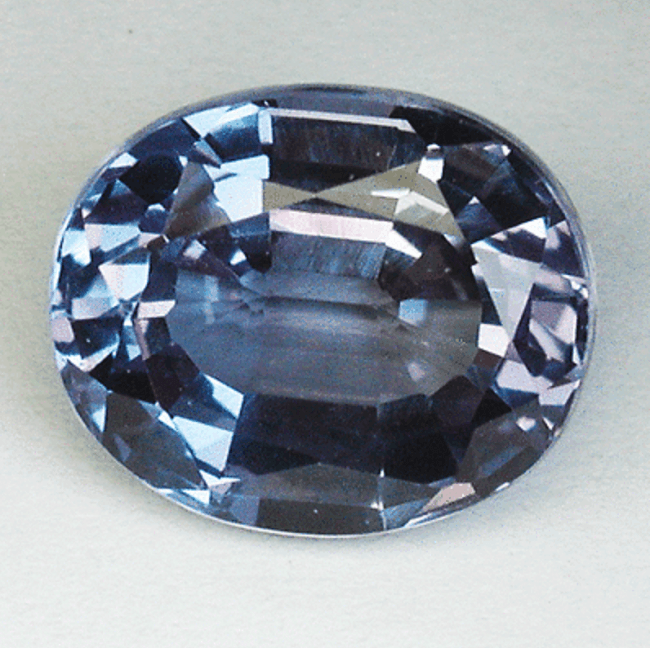
Certified Alexandrite Gemstone
Alexandrite is a fascinating transparent gem that appears green in daylight, and raspberry red under artificial light. It is a variety of Chrysoberyl. The mineral Chrysoberyl is aluminates of beryllium. It was reputedly discovered in Russia in 1834 on the day the future czar, Alexander II reached its majority and thus it was named in his honor. Alexandrite is an extremely pleochroic gem, and exhibit emerald green, red and orange yellow colors, which depends on polarization of light from different refractive index. Alexandrite color change from red to green is due to strong absorption of light in the yellow and blue portion of the spectrum. It is very rare, due to its unique chemical composition. Though it is a form of chrysoberyl, it has an extra trace amount of iron and titanium.
Alexandrite is especially valued for its remarkable colour-changing effect, which can make the gemstone appear green, bluish-green, or other shades in daylight and reddish or raspberry tones under incandescent or artificial lighting. The strength and quality of this colour change can vary significantly between individual stones.
Alexandrite main source is Ural Mountain in Russia, though it has also been mined in Burma, Sri Lanka, and Tanzania.
It is the birth stone for the person born in the month of June and is associated with the planet Mercury. Mercury is a planet of education, mind, intelligence and wisdom. It provides the wearer, the capacity to communicate properly and gain maximum in the field of knowledge and education.
Alexandrite Gemology
Color-Red, Golden yellow, Blue
Appearance-It appears as tabular transparent crystals. It shows green color in natural light and red in artificial light.
Rarity-Rare
Source-Australia, Brazil, Myanmar, Russia, Canada
Category-Oxide minerals
Luster-Vitreous
Crystal structure-Orthorhombic
Mohs scale hardness-8.5
Formula-BeAl2O4
The quality of Alexandrite can be evaluated according to its colour change, clarity, transparency, cut, carat weight, origin, and overall appearance. A strong and clearly visible colour change is one of the most important characteristics of this gemstone.
Alexandrite Color Change Effect
One of the most distinctive features of Alexandrite is its ability to display different colours under different light sources. This phenomenon is commonly referred to as the Alexandrite effect.
Under natural daylight, a good Alexandrite may appear green to bluish-green, while under incandescent or warmer artificial light it can display red, raspberry, or purplish-red tones. The quality of the colour change can influence the value and desirability of the gemstone.
Alexandrite Metaphysical and Healing Powers
Alexandrite is a strong wealth attracter; it helps to open up your heart’s desire. It opens intuition and metaphysical abilities, creates a strong will and personal magnetism. It is a stone of regeneration, builds self-respect and supports rebirth of the inner and outer self. It centers, reinforces, and realigns the mental, emotional and spiritual healers. This stone brings joy and expands creativity. It stimulates imagery, including dreams.
In healing, Alexandrite cures the nervous system, spleen, pancreas, male reproductive organs and neurological tissue. It treats non assimilation of proteins, side effect of leukemia, and relieves tension from neck muscles. It stimulates liver.
Traditionally, Alexandrite is also associated with transformation, intuition, confidence, creativity, emotional balance, self-awareness, regeneration, and positive change. These metaphysical and healing properties are traditional gemstone beliefs.
The health-related claims associated with Alexandrite should not be considered a substitute for professional medical diagnosis or treatment. Any health condition should be evaluated by a qualified healthcare professional.
Alexandrite in Vedic Astrology
Alexandrite is associated with Mercury (Budh) according to the information provided. In traditional Vedic astrology, Mercury is connected with intelligence, communication, education, analytical thinking, learning, and wisdom.
The suitability of Alexandrite for astrological purposes may vary according to an individual’s birth chart, planetary positions, ascendant, and planetary periods. Personalized consultation is recommended before choosing a gemstone specifically for astrological use.
Alexandrite Gemstone and Jewelry
Alexandrite is a hard and durable stone, so it is very ideal for making jewelry in the form of rings, pendants, necklace and bracelets. Since they are usually small and expensive, they are studded as accent stone rather than the center stone. They are perfect for creating halo jewelry design and anniversary jewelry.
It is hard and durable stone, so it can be cleaned using soap and water. Its jewelry should be protected from any harsh chemicals and physical injury.
Because of its rarity and value, Alexandrite is often used in carefully designed jewellery pieces. The colour-change effect can be especially attractive in rings and pendants where the gemstone can be viewed under different lighting conditions.
How to Choose a Natural Alexandrite Gemstone
When purchasing Alexandrite, buyers should consider:
- Strength and quality of colour change
- Natural body colour
- Clarity and transparency
- Cut and brilliance
- Carat weight
- Origin
- Treatment or enhancement status
- Gemological certification
Because natural Alexandrite is rare and valuable, a reputable laboratory certificate can be particularly useful for verifying the gemstone’s identity and characteristics.
Note: Corporate Supplies and Wholesale Requirement
Note: Corporate supplies and wholesale requirement: Please click here
We at Astrokapoor offer natural and certified gemstones of excellent quality. Each gemstone is passed from various tests by the team of our own gemologist and finally certified by government approved laboratories and best quality is picked for our clients. You can directly buy natural Alexandrite/Jamunia gemstones from our online store by sending us your details and requirements. We offer best competitive rates to our clients. Kindly provide your requirement filling up the given form.
The Six Key Steps in Examining a Stone
Whenever possible, examine stones unmounted.
Make sure the gem is clean.
Hold the unmounted stone so that your fingers touch only the girdle.
View the gem under proper lightning.
For Alexandrite, observing the stone under both natural daylight and artificial light is particularly useful because the colour-changing effect is one of its defining characteristics.
Vedic Mantra for Wearing
“Om Sah budhaya namah”
Pran Pratishtha of Alexandrite Gemstone
Please note that all Gems are already energized (Pran Pratishtha) before sending to our clients by special Pundits and Purohits having in-depth knowledge of Vedas.
An auspicious day and Nakshatra is chosen by client Name, Date of birth and Place by our Purohits.
A Matt is placed with its face towards East, North or North east while performing Pooja
The gemstone is washed with holy Gangajal applied Kum Kum.
An incense stick is lighted in front of the gemstone and mantra is enchanted along with marigold flowers in according to the concerned gemstone.
The Name of the person, Date of birth is enchanted by closing the eyes by Purohits according to the concerned gemstone.
This completes the Pran Pratishtha of the gemstone and the person can directly wear this as it has already been energized.
Frequently Asked Questions
What is Alexandrite gemstone?
Alexandrite is a rare variety of Chrysoberyl known for its distinctive colour-changing effect. It can appear green or bluish-green in daylight and reddish or raspberry tones under warmer artificial light.
Why is Alexandrite considered rare?
Natural Alexandrite is rare because of its limited occurrence and distinctive optical properties. High-quality stones with a strong, attractive colour change are especially valuable.
What is the Alexandrite colour-change effect?
The Alexandrite effect is the gemstone’s ability to display different colours under different light sources. A typical example is green or bluish-green in daylight and red or raspberry under incandescent light.
Which planet is associated with Alexandrite in astrology?
According to the information provided on this page, Alexandrite is associated with Mercury (Budh), which is traditionally connected with intelligence, education, communication, and wisdom.
How do I choose a good-quality Alexandrite gemstone?
A good-quality Alexandrite can be evaluated based on its colour-change strength, clarity, transparency, cut, carat weight, origin, treatment status, and certification. A reputable gemological certificate can help document the characteristics of the individual stone.


