
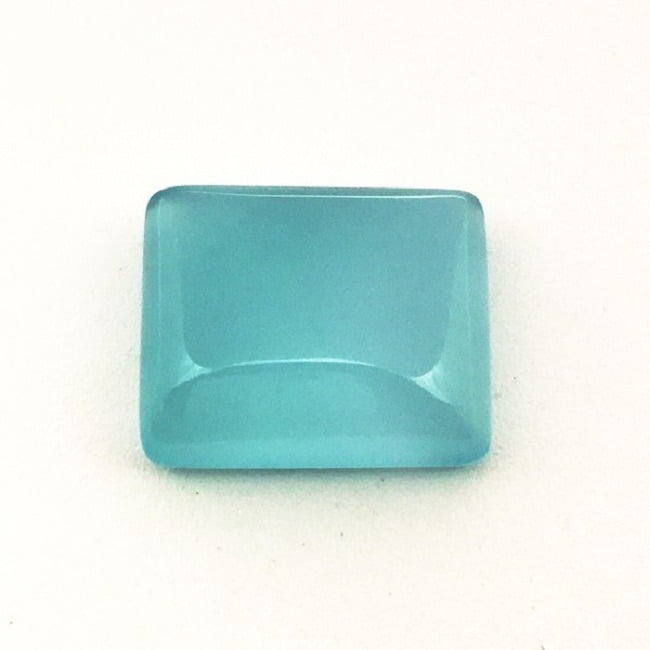
Chalcedony is a semiprecious nurturing stone. Chalcedony is transparent or opaque, and sometimes banded. It is found in all sizes and often seen as geode or small tumbled stone. It is found in white, pink, blue and red grayish in color. It is a stone of transmission and telepathy. It is a form of quartz variety. It is a cryptocrystalline form of silica, having an intergrowth of mineral quartz and morganite. It has dense fine crystallization. The actual name chalcedony is derived from the Latin word “chalcedonus”. It has a hardness of 7 in the Mohs scale finding.
An important mineralogical correction is required here: the silica mineral occurring with Quartz in Chalcedony is Mogánite, not Morganite. Morganite is an entirely different pink variety of Beryl. Modern mineralogical references describe Chalcedony as microscopic or submicroscopic silica material consisting mainly of Quartz, often with small quantities of Mogánite. Most Chalcedony contains approximately 1–20% Mogánite, although the amount can vary and may decrease as the material ages.
Natural Chalcedony is generally translucent, although particular varieties and heavily included material may become nearly opaque. It occurs in colorless, white, grey, blue and many other colors depending on impurities and included minerals. Its typical Mohs hardness is approximately 6.5–7 rather than always exactly 7.
Origin and Sources of Chalcedony
Origin: It is mainly found in USA, Austria, Mexico, Brazil, Morocco, Russia, New Zealand and Turkey.
Chalcedony occurs widely around the world and is not restricted to these countries. It commonly develops in cavities, fractures and veins in volcanic, sedimentary and other rocks. Brazil, Mexico, the United States, Turkey, India, Madagascar and numerous European and African locations are important sources of different Chalcedony varieties.
The name has a long history. Mindat notes that Agricola mentioned the name in 1546 in connection with Chalcedon, the ancient town now represented by Kadıköy in modern Istanbul, Turkey.
Geographic origin alone does not determine gemstone quality. Color, translucency, uniformity, natural pattern, polish, treatment and the specific Chalcedony variety are generally more useful factors when choosing a stone.
Chalcedony Gemological Properties
Chalcedony is a finely crystalline silica aggregate rather than the large visible crystals commonly associated with Rock Crystal Quartz. Its microscopic structure contributes to its toughness and characteristic waxy appearance.
- Gem material – Chalcedony
- Main composition – SiO₂
- Principal mineral – Microcrystalline Quartz
- Minor component – Commonly Mogánite
- Color – Colorless, white, grey, blue and many colors caused by inclusions or impurities
- Mohs hardness – 6.5 to 7
- Specific gravity – Approximately 2.55–2.70
- Refractive index – Approximately 1.530–1.543
- Transparency – Usually translucent; some varieties opaque
- Lustre – Waxy or dull naturally; vitreous when highly polished
- Cleavage – None
- Fracture – Conchoidal to uneven
- Streak – White
- Tenacity – Relatively tough but technically brittle
- Structure – Fibrous to fine-grained cryptocrystalline aggregate
Gemdat records Chalcedony with hardness 6.5–7, specific gravity approximately 2.55–2.70 and refractive index around 1.530–1.543. Mindat similarly records hardness 6.5–7 and density around 2.6.
Chalcedony, Agate and Other Varieties
The word Chalcedony is used in more than one way. Broadly, it can describe microcrystalline varieties of silica, including materials such as Agate, Onyx, Carnelian, Sard, Chrysoprase, Bloodstone and several other ornamental stones. In a narrower commercial sense, “Chalcedony” is often used for relatively uniform, unbanded translucent material.
Agate is specifically distinguished by obvious banding. GIA describes Agate as banded fibrous Chalcedony consisting mainly of microscopic α-Quartz intergrown with Mogánite. Therefore, not every Chalcedony should be described as banded, although banded Chalcedony is extremely common and commercially important.
Blue Chalcedony is prized for soft blue to bluish-grey shades, while Chrysoprase is an attractive green variety. Carnelian is orange to reddish Chalcedony, Sard is generally browner and darker, and Onyx traditionally displays straight contrasting bands.
Chalcedony Metaphysical Properties
Chalcedony is a highly positive gemstone. It removes negative vibrations from the life of the wearer. In ancient time, it was used to prevent poisoning. It brings mind, body, emotions and spirit into a perfect harmony. Chalcedony releases self doubt and increases the self-esteem of the wearer. It absorbs and removes negative emotions, negative thoughts and bad dreams.
In contemporary crystal traditions, Chalcedony is associated with calm communication, emotional balance, confidence, harmony and maintaining a positive outlook. Different colors are also connected with different chakras and spiritual practices.
Claims involving telepathy, negative-energy absorption, protection from poisoning and energetic cleansing belong to historical or metaphysical traditions rather than scientifically demonstrated mineral properties. Chalcedony should not be relied upon for protection against actual toxic substances or poisoning.
Why Semi Precious Stone Chalcedony?
Chalcedony can be used to enhance the beneficial aspect of positive vibes in your life. Green Chalcedony can be used in place of precious stone emerald. Semiprecious gems are cheaper than the precious stone. These are very soothing and can be worn, even if you don’t have any birth chart. This heals the mind and body and balances all the chakras of the body.
The terms “precious” and “semi-precious” are traditional commercial classifications rather than scientific measures of gemstone quality or effectiveness. Chalcedony is valued for its color, toughness, polish and wide variety of attractive natural forms.
Green Chalcedony and Emerald are also mineralogically very different. Chalcedony consists mainly of microcrystalline silica, while Emerald is chromium- or vanadium-colored Beryl with the formula Be₃Al₂(Si₆O₁₈). Green Chalcedony may be considered an affordable visual or astrological alternative in some traditions, but it is not a gemological substitute for Emerald.
Benefits of Chalcedony
This is a soothing stone. It calms the mind and heals the base and crown chakra; Chalcedony removes hostility and transforms melancholy into joy. This stone helps the wearer to instill power of correct decision in an emergency It balances the mind, body and soul in a perfect platform. This is a stone of challenge. It eases the challenging situation in the life of the wearer.
In crystal traditions, Chalcedony is commonly associated with communication, patience, emotional calmness, confidence and balanced decision-making. These symbolic associations can make Chalcedony meaningful for meditation or personal spiritual practices.
Chakra healing and direct psychological effects are not scientifically established properties of the gemstone. Significant emotional difficulties should be addressed with appropriate professional support when necessary.
Chalcedony Helpful in Career and Profession
This stone is very helpful for the students and professionals. It soothes the mind and increases the mental power of the students. It increases concentration power. It is very helpful for the students, lawyer, teachers, administrators, writers, scientist and the person in public domain.
Because Chalcedony is traditionally associated with calm communication and confidence, it may be used symbolically by students, teachers, lawyers, writers, administrators, speakers and other professionals.
However, improved examination results, concentration or professional success cannot be guaranteed by wearing a gemstone. These outcomes depend on study, preparation, skills, experience and working conditions.
Gems Therapy and Medical Astrology
It is traditionally used as a powerful cleanser. It open sores. It is very useful for the lactating mother. This combats mineral build up in veins. This stone lessens the effect of dementia and senility. It increases the physical energy and balances the body, emotions, mind and spirit. It heals the gall bladder, bones, spleen, blood and the circulatory system.
These statements represent traditional gemstone-healing and medical-astrology beliefs. There is no reliable scientific evidence that Chalcedony treats open sores, dementia, circulatory disorders, gallbladder disease, bone conditions, blood disorders or spleen problems, or that it removes mineral buildup from blood vessels.
Claims involving breastfeeding also require particular caution. Lactation difficulties can involve nutrition, medication, hormonal factors and health conditions affecting either mother or child. Chalcedony should not replace advice from an appropriate healthcare professional.
Dementia and significant cognitive decline also require qualified medical assessment and should never be treated primarily with crystals or gemstones.
Natural and Dyed Chalcedony
Treatment disclosure is particularly important when buying brightly colored Chalcedony. Because the material can accept dyes, artificially colored Chalcedony has been produced for a very long time. GIA lists Chalcedony among gemstones commonly subjected to dyeing and demonstrates that natural colorless material can be dyed into many intense colors.
GIA has also scientifically examined blue Chalcedony dyed with copper salts. In those samples, chemical mapping showed a higher concentration of copper near the surface, confirming that the blue color had been artificially introduced.
Not every strong blue or green Chalcedony is treated. Naturally colored material exists, and GIA has documented natural bluish-green Chalcedony whose color and gemological characteristics were verified through microscopy, spectroscopy and chemical analysis.
For valuable stones, certification or clear seller disclosure can therefore help determine whether color is natural or enhanced.
How to Buy Certified Natural Chalcedony
When buying Certified Chalcedony, first identify which variety is being offered. Plain Blue Chalcedony, Agate, Carnelian, Chrysoprase and Onyx can all belong to the wider Chalcedony family but have different appearances and market values.
Consider color, translucency, polish, size, fractures, natural pattern and treatment status. Attractive translucent Blue Chalcedony should show an appealing soft color and smooth polish, while patterned material such as Agate is judged more strongly by banding and design.
Very intense and uniform colors should not automatically be assumed natural because dyeing is an established Chalcedony treatment. A laboratory report can be particularly useful when a seller makes specific claims about natural color or absence of treatment.
Wholesale Prices of Chalcedony: Visit Astrokapoor office for buying it in a wholesale price. We provide certified natural gemstone.
Chalcedony Jewelry and Care
With Mohs hardness around 6.5–7 and no cleavage, Chalcedony is suitable for pendants, bracelets, earrings, beads, rings, cabochons, carvings, seals and ornamental pieces. Its fine-grained structure generally gives it better toughness than large single crystals of Quartz.
For routine cleaning, use lukewarm water, mild soap and a soft cloth or brush. Natural untreated Chalcedony is reasonably durable, but treated stones require more care. Avoid prolonged high heat, aggressive chemicals and harsh cleaners when treatment history is unknown because dyes, fillers or other enhancements may be affected.
GIA has also documented epoxy-filled Blue Chalcedony, demonstrating that fracture or cavity filling can occasionally occur. Such treatments should be properly disclosed because they can influence cleaning requirements and durability.
Store Chalcedony separately from harder gemstones such as Topaz, Sapphire and Diamond to reduce scratching.
Frequently Asked Questions
What is Chalcedony?
Chalcedony is a cryptocrystalline to microcrystalline silica material composed mainly of microscopic Quartz and commonly containing small amounts of Mogánite.
Is Chalcedony made from Morganite?
No. The correct mineral is Mogánite, not Morganite. Morganite is a pink variety of Beryl and is completely different from Chalcedony.
What is the hardness of Chalcedony?
Chalcedony generally has a Mohs hardness of approximately 6.5 to 7, making it suitable for many types of jewelry.
What are the traditional benefits of Chalcedony?
In crystal traditions, Chalcedony is associated with calmness, communication, confidence, emotional balance and positive thinking. These are traditional beliefs rather than scientifically proven medical effects.
Can Chalcedony be dyed?
Yes. Chalcedony can readily be dyed into many colors, so treatment disclosure or certification is useful when natural color is important.


