Fossil Coral is a type of natural gemstone formed by ancient Corals. It’s name has been derived from ‘ agatized coral’ or ‘agatized fossil coral’ because during its formation, the coral remains were gradually replaced by the agate, a variety of natural chalcedony. It shouldn’t be mistaken with an endangered or protected reef coral or precious coral. It is generally a variety of agate rather than the coral due to the presence of silicon dioxide.
Coral deposits are mined and commercialized for their high calcium, magnesium, potassium and sodium content for making health and drug supplements. It is also used in industrial fertilizers and water chemical filters because it can remove the impurities of the water.
Natural Fossil Coral used as a gemstone is commonly agatized coral. During fossilization, the original coral structure is preserved while much of its calcium-carbonate material is replaced by silica in the form of Chalcedony or Agate.
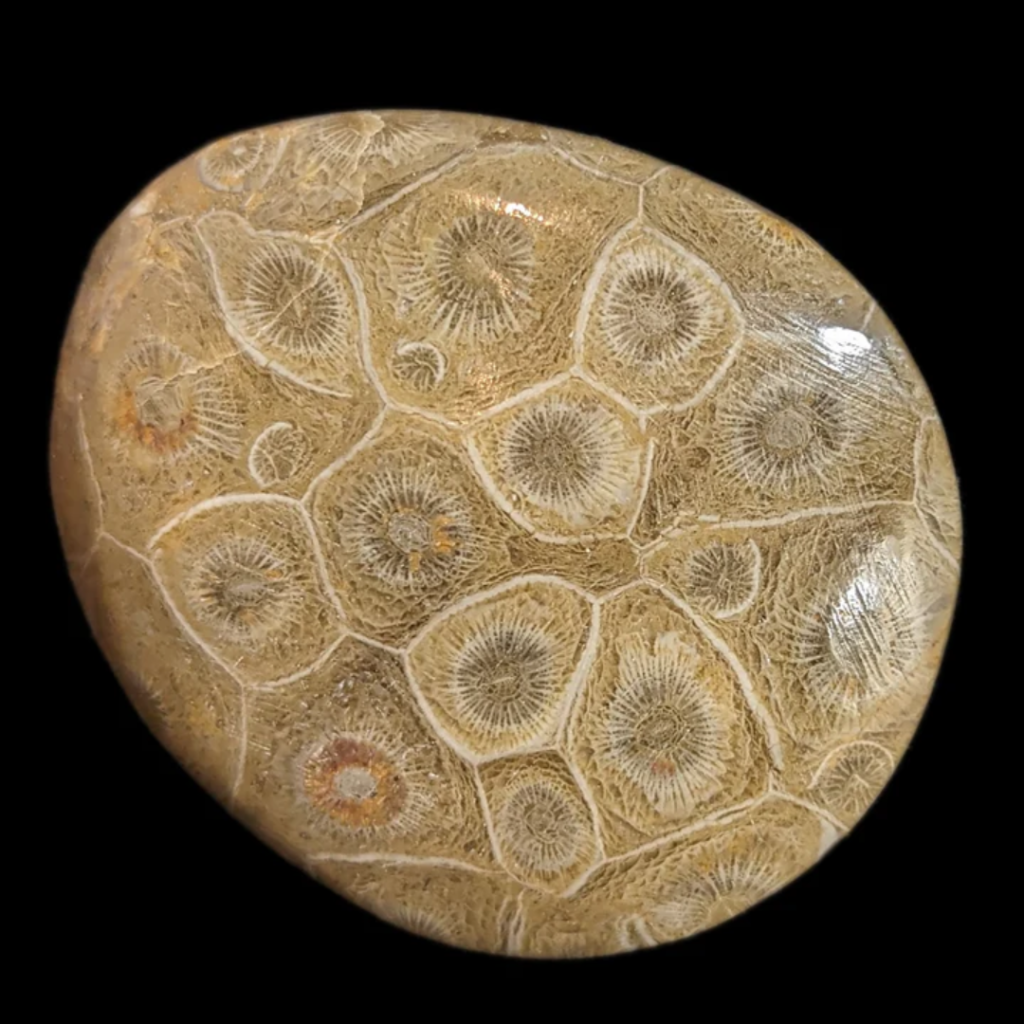
This process can preserve the original coral’s distinctive flower-like, honeycomb or cellular patterns while creating material durable enough to polish into cabochons, beads and decorative stones.
For clarity, agatized Fossil Coral should not be confused with modern reef coral or precious coral harvested for jewelry. It should also not be assumed to have the nutritional properties of calcium-rich coral products because agatized material is primarily silica.
Fossil Coral Meaning and Natural Appearance
Fossil Coral meaning is traditionally associated with stability, transformation, wisdom, patience and a connection with Earth’s ancient history.
The preserved coral patterns can resemble flowers, stars or small honeycomb structures. Depending on mineral content and geological conditions, Fossil Coral may occur in grey, white, cream, brown, reddish, pink, black and multicolored varieties.
Its combination of biological history and mineral replacement makes it interesting to gemstone collectors, fossil enthusiasts and jewelry designers.
Identifying Fossil Coral
It is created through the process of replacement. In this the calcium carbonate is replaced by silica. The presence of silica is little amorphous to dense form of chalcedony. Thus the composition of fossil coral may vary slightly due to amount of mineral composition. Fossil Coral is harder than precious coral. Most agatized fossil coral exhibit a dull to waxy luster.
One of the most important characteristics of Agatized Fossil Coral is its preserved biological structure. When the material is cut across the former coral colonies, individual coral structures can often be seen as repeated flower, star or honeycomb-like patterns.
Agatized Coral is mineralogically considered a variety of Agate or Chalcedony replacing pre-existing coral structures. The principal mineral composition is therefore silicon dioxide, SiO₂.
How Fossil Coral Is Formed
Fossil Coral forms through a gradual mineral-replacement process.
After ancient coral colonies become buried, mineral-rich groundwater can move through the porous skeletal structure. Over geological time, silica may replace the original calcium-carbonate material while preserving much of the coral’s shape and internal pattern.
In some specimens, cavities may also become filled with banded Agate, botryoidal Chalcedony or crystalline Quartz.
This mineralization is why polished Fossil Coral can show highly detailed natural patterns while behaving more like Agate than modern coral.
Buying Fossil Coral and Value
Fossil Coral Color – The color of this coral exhibit light to dark shadows. It is found in white, pink, brown, gray, black and red color. Coral color depends on the weathering of the rocks and its treatment.
Fossil Coral value depends on several characteristics rather than color alone. Pattern definition, preservation of coral structures, polish, size, color contrast and overall appearance can all influence desirability.
Stones with clearly visible flower-like coral structures and attractive natural color combinations may be particularly appealing for cabochons and collector specimens.
Factors Affecting Fossil Coral Value
When choosing Natural Fossil Coral, consider:
- Definition of fossil coral patterns
- Color and contrast
- Size and shape
- Quality of polish
- Surface condition
- Natural cavities or inclusions
- Treatment disclosure
- Overall visual appearance
For collectible material, reliable information about locality and geological origin can also add interest.
Fossil Coral Cut and Shape
Fossil Coral is often polished and shaped as cabochons. It is frequently used as gemstone carving. Most common shapes in which it is shaped are oval, round and cushion.
Cabochon cutting is particularly suitable for Fossil Coral because a broad polished surface helps reveal the natural coral structures.
It may also be fashioned into beads, pendants, palm stones, carvings, polished slabs and decorative specimens.
Oval, round, cushion and freeform shapes are common because cutters can adapt the shape to preserve the most attractive fossil patterns.
Fossil Coral Gemological Properties
Crystal Structure – Hexagonal
Density – 2.60 – 2.64
Luster – waxy to dull
Color – Mostly gray; all colours and multicolor
Cleavage – None
Chakra Healing – Root or Base Chakra
Because agatized Fossil Coral is composed mainly of Agate or Chalcedony, its physical characteristics generally follow those materials.
Typical properties include:
- Composition – Silicon dioxide, SiO₂
- Mineral family – Quartz / Chalcedony
- Mohs hardness – Approximately 6.5 to 7
- Specific gravity – Approximately 2.60 to 2.64
- Refractive index – Approximately 1.530 to 1.543
- Cleavage – None
- Lustre – Waxy, sub-vitreous to vitreous
- Transparency – Commonly opaque to translucent
- Crystal system – Trigonal for its Quartz/Chalcedony component
The original coral structure is biological, but the gem material itself has largely become silica through fossilization. Therefore, describing agatized Fossil Coral simply as having the properties of modern coral would be inaccurate.
Fossil Coral Healing Properties
Fossil Coral relaxes the emotional temper of its wearer. It further motivates one to heal the negative emotions of the body. It creates an inner peace within the aura of the body. A jewel globule makes one free from the physical and psychological pain. Fossil Coral is an excellent companion for supporting the calm nature of the person. It supports one to have a feeling of brotherhood and companionship.
Physical Healing- Fossil Coral removes the poison from the body and protects the physical torso of the body. It also helps in digestion and re calms the brittle bone of the body. It treats the kidney, gall bladder, liver and other internal part of the body. Further it treats menstrual cramps, delivery, operational pain and improves the eyesight.
Traditional Fossil Coral healing properties are commonly associated with emotional calmness, patience, stability and maintaining a positive mindset.
Claims involving detoxification, digestion, kidney or liver conditions, menstrual pain, eyesight, bone disorders or other health conditions are not scientifically established medical treatments. Fossil Coral should not replace qualified medical advice, diagnosis or prescribed healthcare.
Fossil Coral Metaphysical Benefits
In metaphysical traditions, Fossil Coral is associated with grounding, ancient wisdom, personal growth and emotional stability.
Its transformation from an ancient biological structure into a mineralized fossil is sometimes viewed symbolically as representing endurance and the ability to adapt through change.
Some people keep Fossil Coral as a meditation stone or wear it as jewelry according to personal spiritual beliefs.
Heals and Balances Chakra
Fossil Coral Agatized heals and balances the heart chakra. It clears the pessimism caused by the negativity of the soul. It triggers the solar plexus which is the distribution centre of the spouse and relationship.
Fossil Coral may be associated with different chakras depending on its color and the spiritual tradition being followed.
Some practices associate earthy Fossil Coral with the Root Chakra for grounding, while other traditions use it with the Heart or Solar Plexus Chakra for emotional awareness and personal confidence.
These chakra associations are traditional spiritual beliefs rather than scientifically measurable gemstone effects.
Fossil Coral Facts
• It shows Trigonal system of colors.
• They were created through a biological progression of the coral reef.
• Fossil Coral is more often than a natural coral.
• Fossil Coral is opaque in nature.
Agatized Fossil Coral is particularly interesting because it combines paleontological structure with the physical properties of Chalcedony.
The fossil pattern is derived from the original coral colony, while silica replacement gives the stone its hardness and polished gemstone appearance.
It is therefore both a fossil material and, when sufficiently agatized and polished, an ornamental gemstone.
Fossil Coral vs Precious Coral
Fossil Coral and Precious Coral are different materials.
Precious Coral used in traditional jewelry consists primarily of calcium carbonate from certain marine coral skeletons. Agatized Fossil Coral, by contrast, represents ancient coral structures that have undergone mineral replacement and are now composed mainly of silica.
This distinction is important for mineral identification, gemstone care and responsible purchasing.
Fossil Coral Jewelry and Care
Fossil Coral can be used for pendants, necklaces, bracelets, earrings, rings, beads and polished cabochons.
Larger cabochons can be especially attractive because they provide enough surface area to display the original coral structures.
With a hardness similar to Agate, agatized Fossil Coral offers reasonable durability for jewelry. However, it should still be protected from hard impacts and abrasive surfaces.
Clean it with mild soap, lukewarm water and a soft cloth. Avoid harsh chemical cleaners and aggressive cleaning methods.
Frequently Asked Questions
What is Fossil Coral Gemstone?
Fossil Coral Gemstone is ancient coral material that has undergone fossilization and mineral replacement. In agatized Fossil Coral, much of the original coral skeleton has been replaced by Chalcedony or Agate while preserving its natural structure.
Is Fossil Coral the same as modern coral?
No. Agatized Fossil Coral is ancient mineralized material and should not be confused with living reef coral or Precious Coral used in traditional jewelry.
What is Fossil Coral made of?
Agatized Fossil Coral is composed mainly of silicon dioxide in the form of Agate or Chalcedony. The silica replaces much of the original calcium-carbonate coral structure during fossilization.
What are the traditional benefits of Fossil Coral?
In crystal traditions, Fossil Coral is associated with grounding, patience, emotional balance, ancient wisdom and personal transformation. These are traditional beliefs rather than scientifically proven health effects.
Is Fossil Coral suitable for jewelry?
Yes. Agatized Fossil Coral generally has the hardness and durability of Chalcedony or Agate and can be polished into cabochons, beads, pendants, bracelets and other jewelry.


