
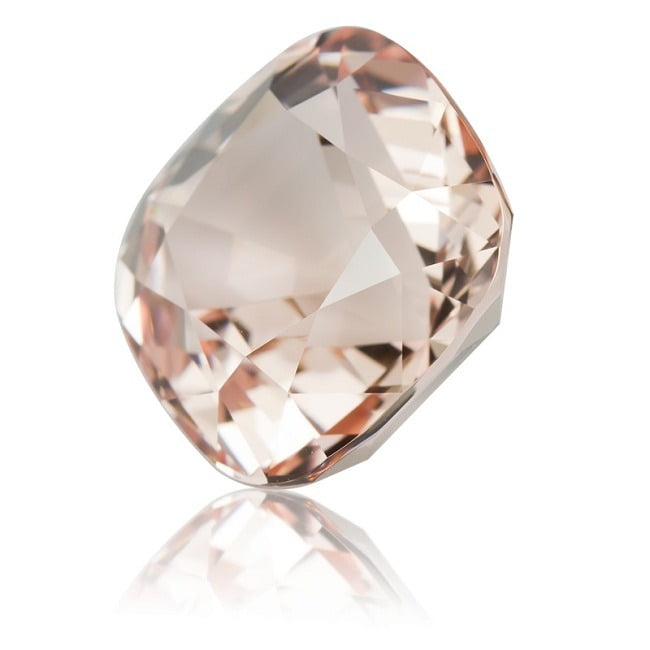
Morganite Meaning – Morganite is often called as Pink Emerald. Morganite belongs to the same gemstone family of beryl, emerald, aquamarine and bixbite. Morganite is called as Pink emerald, because both of these are the variety of beryl. Morganite carries an excellent metaphysical property than Emerald. It is a lovely pink crystal and vibrates at both the heart and the thymus chakra. Morganite belongs to the same family as emeral and aquamarine. It is also similar to golden beryl and bixite. In comparison to other beryl morganite has a very good harness on the Moh’s scale. Sometimes it is routely ttreated to remove the yellow color. Morganite carries excellent healing properties.
Gemologically, Morganite is the pink to orange-pink variety of Beryl, the same mineral family that includes Emerald and Aquamarine. However, “Pink Emerald” is a marketing expression rather than an accepted gemological name. GIA recommends using Morganite or Pink Beryl because Emerald specifically refers to green gem-quality Beryl colored mainly by chromium and/or vanadium.
Morganite was named in the legendry of the financier and the gem collector, J.P Morgan. But, American gemologist, Kunz suggested newly discovered beryl after Morgan. Like the other members of the family, Morganite is aluminum and beryllium silicate. It color can vary from soft pink to violet, salmon and peach. Morganite is not quite rare, but still it is very rare in the nature. It is a hexagonal crystal. It has a hardness of 7 to 8.5 on the Mohs scale.
Morganite was discovered as a gem variety in Madagascar in the early twentieth century. Gemologist George Frederick Kunz proposed the name in honour of financier and gemstone collector J. P. Morgan. Morganite’s characteristic pink to peach coloration is mainly associated with manganese within the Beryl structure. Its correct Mohs hardness is approximately 7.5–8 rather than 8.5.
Morganite Gemology
Color – Pink
Hardness – 7 to 7.5 on the Moh’s scale
Crystal structure – Hexagonal
Transparency – Transparent to Opaque
Luster – Vitreous to waxy
Formula – Alumunium Beryl Silicate
For greater gemological accuracy, Morganite normally has a hardness of 7.5–8 and belongs to the hexagonal crystal system. Natural gem-quality material is usually transparent to translucent and is prized for soft pink, peach, salmon, orangy-pink and purplish-pink shades. Beryl has the chemical formula Be₃Al₂(Si₆O₁₈).
- Mineral species – Beryl
- Variety – Morganite
- Chemical formula – Be₃Al₂(Si₆O₁₈)
- Color – Pink, purplish pink, peach, salmon to orangy pink
- Mohs hardness – 7.5 to 8
- Crystal system – Hexagonal
- Specific gravity – Approximately 2.7–2.9
- Lustre – Vitreous
- Transparency – Transparent to translucent
- Cleavage – Imperfect
- Main coloring element – Manganese
Why Is Morganite Called Pink Emerald?
Morganite is an excellent variety of beryl and a very good choice for the gemstone jewelry and the metaphysical purposes. Like green emerald stone, Morganite stone carries true love. This is a very rare crystal found till now. Sometimes the dark bixbite stones are labeled as Morganite to get the attention of the people, and the color of the light pink stone may be heated to get the dark pink color. Peach Morganite comes from Thailand and it occurs there in a lovely natural pink stones. It has different metaphysical properties than to the dark pink Morganite.
Morganite and Emerald are related because both belong to the Beryl mineral family, but they are different gemstone varieties. Morganite is pink to orange-pink, while Emerald is green. GIA does not accept “Pink Emerald” as a proper name because it may cause consumers to believe Morganite is a type of Emerald.
The name Bixbite is an older commercial term for Red Beryl, which is also different from Morganite. Red Beryl normally owes its red color to manganese in a different oxidation state and should not be relabeled as Morganite.
The statement about natural Peach Morganite mainly coming from Thailand also needs clarification. Important documented Morganite sources include Brazil, Madagascar, Mozambique, Afghanistan, Namibia and the United States. Brazil’s Minas Gerais region currently supplies much of the market.
Sources of Natural Morganite
Source: Morganite is mainly found in Brazil and Madagascar. It is also found in the China, Russia, Mozambique and USA.
Brazil is currently the most important commercial source of Morganite, especially Minas Gerais. Madagascar is historically significant because early Morganite was discovered there and its magenta-colored material established a high quality standard. Afghanistan, Mozambique, Namibia and the United States have also produced Morganite, while additional occurrences are documented elsewhere.
Morganite Color, Quality and Treatment
Morganite is most famous for delicate pastel shades ranging from peach and salmon to soft pink, purplish pink and stronger magenta-pink. GIA notes that strong pink to purplish-pink stones are generally among the rarest and most valuable, while untreated Brazilian material commonly displays a salmon-like orangy-pink appearance.
Heat treatment is routinely used for Morganite. It can reduce an orange or yellow component and produce a purer pink color, and this change is generally stable. Therefore, a strongly pink Morganite should not automatically be assumed to have completely natural untreated color. A gemological report can identify whether detectable treatment is present.
Morganite Metaphysical Properties
Morganite is a pink stone of love and romance. It is a stone for opening the heart chakra. It has excellent properties to bring warmth and love between the two souls. It is a stone of purity and potential. Morganite removes the unwanted and unnecessary fear in a person. It helps to create a balanc between the spiritual and the present world. This pink stone increases self awareness and self confidence in a person.
For women, Morganite encourages feeling of independence from men. It brings harmony with the masculine energy. In men, it balances the masculine and the feminine energy. Physically, this stone helps to heal asthma, heart and the lung disorders.
In contemporary crystal traditions, Morganite is associated with love, compassion, emotional openness, confidence, forgiveness and the Heart Chakra. These are metaphysical beliefs rather than scientifically established psychological or medical effects. There is no reliable evidence that wearing Morganite treats asthma, heart disease or lung disorders.
Facts About Pink Beryl or Morganite
For women, this pink beryl can help to dominate the male energy. It increases the grace and the divine beauty in the women. People of both the sexes can experience the divine love by wearing this gemstone. The pink crystal enhances both the heart chakra and the thymus chakra. It has a very powerful heart centered energy that resonates with the spiritual soul.
Pink Beryl is an acceptable descriptive name for Morganite because it accurately identifies the mineral family and color. Morganite can be worn by anyone based on personal preference, and gender-specific energetic effects belong to metaphysical traditions rather than gemology.
Why Would You Use Morganite?
Although, Morganite comes in the category of semiprecious gemstone, it can help to connect one with the divine love. It increases the sexual pleasure between the two people. It is a highly effective gemstone for those, who practice tantric love and Kundalini sexual practices. The peach Morganite is a very powerful stone which brings feminine love energy to the navel chakra for a memorable experience. The deep blue morganite excites the third eye chakra. It stimulates wisdom, creativity and the past life experience. Wearing Morganite in a jewelry as a pendant and earrings can cure inner conflict and trauma in a person.
An important gemological correction is required for “deep blue Morganite.” Morganite is defined by its pink to orange-pink color. Naturally blue Beryl is classified as Aquamarine or another blue Beryl variety, not Morganite.
Traditional spiritual practices may associate Morganite with affection, relationship harmony and emotional reflection, but claims involving trauma or psychological healing are not scientifically proven treatments. Significant emotional trauma should be addressed with appropriate professional support.
How to Buy Certified Natural Morganite
When buying Certified Morganite, color should be one of the first quality factors to examine. GIA identifies strong pink to purplish-pink as particularly desirable, although peach and salmon-colored Morganite are also popular. Look for attractive saturation, good transparency, balanced cutting and minimal eye-visible inclusions.
Morganite often forms large crystals, so sizable faceted gemstones are more readily available than they are for many other rare colored gems. Synthetic Morganite also exists, although it is not produced in large commercial quantities, so laboratory testing can be useful when natural origin is important.
Wholesale Price of Morganite – Buy Morganite gemstone in a whole sale price from our astrostore. We provide certified and tested gemstones.
Morganite Jewelry and Care
Morganite’s Mohs hardness of 7.5–8 makes it durable enough for rings, earrings, necklaces, bracelets and pendants, including regular wear when reasonable care is taken. GIA considers Morganite suitable for all types of jewelry, although rough handling should still be avoided.
Clean Morganite with warm water, mild soap and a soft brush. Avoid strong impacts and unnecessary exposure to harsh chemicals or extreme heat, especially when treatment history is unknown. Morganite should also be stored separately from harder gemstones such as Sapphire and Diamond to reduce scratching.
Frequently Asked Questions
What is Morganite?
Morganite is the pink to orange-pink variety of the mineral Beryl. It belongs to the same mineral family as Emerald and Aquamarine.
Is Morganite really a Pink Emerald?
No. “Pink Emerald” is a marketing term and is not accepted by GIA. Morganite or Pink Beryl is the correct gemological description.
What causes the pink color of Morganite?
Morganite’s pink, peach and salmon colors are mainly associated with trace manganese within the Beryl crystal structure.
Is Morganite heat treated?
Morganite is commonly heat treated to reduce orange or yellow tones and produce a purer pink appearance. Both treated and untreated stones occur in the market.
Where does natural Morganite come from?
Brazil is currently the largest commercial source, while Madagascar is historically important. Morganite is also found in Mozambique, Afghanistan, Namibia, the United States and other locations.


