
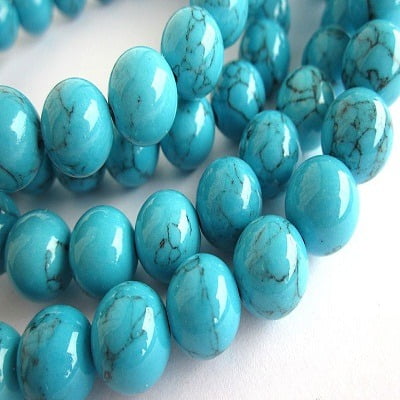
Turquoise Mala, also known as Firoza Mala or Turquoise Rosary, is made from natural Turquoise beads sourced from Iran. Iranian Turquoise, often referred to as Persian Turquoise, has a long history and is especially admired for its beautiful blue to blue-green colour.
Turquoise has been treasured for thousands of years by different cultures as a gemstone, ornamental material and symbolic stone. Iran, particularly the Nishapur region, is one of the world’s historically important sources of fine Turquoise.
The AstroKapoor Natural Turquoise Rosary-Firoza Mala combines the beauty of Turquoise beads with the traditional use of a mala for meditation, prayer, japa and personal spiritual practice.
Turquoise Rosary-Firoza Mala Product Details
- Product Name: Natural Turquoise Rosary-Firoza Mala
- Gemstone: Turquoise / Firoza
- Product Type: Gemstone Mala / Rosary
- Material: Turquoise Beads
- Stated Origin: Iran
- Common Trade Name: Persian Turquoise
- Colour: Blue to blue-green
- Suitable For: Meditation, prayer, japa and personal spiritual practice
If the Iranian origin and natural status are supported by supplier or laboratory documentation, those details should be displayed prominently with the product.
What Is a Turquoise Mala?
A Turquoise Mala is a rosary or string of beads made from Turquoise stone.
In India, Turquoise is widely known as Firoza, Feroza or Firoza Stone. Therefore, people may search for the same general product using terms such as:
- Turquoise Mala
- Firoza Mala
- Feroza Mala
- Turquoise Rosary
- Firoza Rosary
- Turquoise Beads Mala
- Natural Turquoise Mala
- Persian Turquoise Mala
- Iranian Turquoise Mala
- Turquoise Japa Mala
- Firoza Japa Mala
A gemstone mala may be used during meditation, prayer, mantra repetition or other spiritual practices according to individual traditions.
What Is Turquoise Stone?
Turquoise is a naturally occurring hydrated copper and aluminium phosphate mineral. It generally occurs in blue to green colours and is usually opaque.
GIA gives Turquoise a Mohs hardness of approximately 5 to 6 and notes that it is commonly fashioned into beads and cabochons.
Its colour can range from:
- Sky blue
- Light blue
- Greenish blue
- Blue-green
- Green
The colour, matrix pattern, origin and presence or absence of treatment can all influence the appearance and value of individual Turquoise pieces.
What Is Firoza Stone?
Firoza is a name commonly used for Turquoise in India and other parts of South Asia.
The names Firoza, Feroza, Firuzeh and similar variations have historical connections with Persian terminology for Turquoise.
Therefore:
Firoza Stone = Turquoise Stone
Firoza Mala = Turquoise Mala
Firoza Rosary = Turquoise Rosary
Using both English and Indian terminology on this product helps users understand exactly what the mala contains while also improving topical relevance for search engines.
Iranian Turquoise Mala
Iran has an exceptionally long association with Turquoise.
The Nishapur region of Iran has produced Turquoise for more than a thousand years, and archaeological evidence shows that Turquoise was valued in ancient Iran thousands of years ago.
Fine material from the region has traditionally been admired for an intense, even blue colour sometimes described in the gemstone trade as Persian blue.
For this reason, an Iranian Turquoise Mala may also be described as a Persian Turquoise Mala when the geographical origin has been properly verified.
Natural Turquoise Mala
A Natural Turquoise Mala is made using Turquoise of natural mineral origin rather than ordinary glass, plastic or imitation material.
Natural Turquoise may display variations in:
- Colour
- Matrix pattern
- Surface
- Bead shape
- Tone
- Texture
- Porosity
- Natural inclusions
These differences can contribute to the individual appearance of a gemstone mala.
However, natural origin and treatment status are two different things. Turquoise may be natural but still treated to improve colour, durability or surface appearance.
Treatments such as waxing, oiling, impregnation and dyeing are known in the Turquoise market.
For maximum transparency, the exact treatment status should be disclosed whenever it is known.
Turquoise Mala Benefits
Turquoise Mala benefits described in traditional crystal and spiritual practices are commonly associated with protection, communication, positive intention, friendship and emotional balance.
People may traditionally use Turquoise Mala with intentions connected with:
- Meditation
- Inner calm
- Positive thinking
- Communication
- Friendship
- Self-expression
- Emotional awareness
- Spiritual reflection
- Personal confidence
- Mindfulness
These are traditional spiritual and metaphysical associations rather than scientifically established medical benefits.
Firoza Mala Benefits
Firoza Mala has been valued within different spiritual and gemstone traditions.
Traditional Firoza Mala benefits are often associated with good fortune, protection, peaceful communication, positive relationships and self-awareness.
A person may choose to wear or meditate with a Firoza Mala as a symbolic reminder to encourage:
- Patience
- Calm communication
- Positive relationships
- Personal awareness
- Courage
- Gratitude
- Mindfulness
- Spiritual discipline
These benefits should be described as traditional beliefs rather than guaranteed outcomes.
Turquoise – A Traditional Symbol of Protection
Turquoise has been regarded as a meaningful symbolic stone by many cultures throughout history.
Modern crystal traditions frequently describe Turquoise as a protection stone.
Within these traditions, people may carry or wear Turquoise as a personal symbol of safety, positivity or spiritual protection.
However, Turquoise should not be described as something that guarantees protection from:
- Road accidents
- Aviation accidents
- Violence
- Workplace hazards
- Physical injury
- Other real-world dangers
Practical safety precautions must always remain the priority.
Turquoise Mala for Meditation
A Turquoise Mala for meditation provides a physical set of beads that can help structure a meditation or mantra practice.
A practitioner may hold the mala comfortably and move through the beads while repeating a mantra, prayer or affirmation.
Turquoise may be chosen by people whose meditation practice focuses on:
- Peace
- Awareness
- Communication
- Positive intention
- Gratitude
- Self-reflection
- Mindfulness
The gemstone’s distinctive blue colour can also provide a visual focus during quiet contemplation.
Turquoise Japa Mala
A Turquoise Japa Mala may be used to count mantra repetitions according to an individual’s spiritual tradition.
Japa involves repeating a mantra, sacred phrase or prayer, and mala beads provide a physical counting method.
Current Turquoise and Firoza mala products commonly use 108 or 108+1 bead formats for japa and meditation.
Do not describe this particular AstroKapoor mala as a 108-bead mala unless its actual bead count has been confirmed.
If it does contain 108 or 108+1 beads, add that information prominently to the product specifications.
Turquoise Mala for Friendship and Relationships
Turquoise is sometimes called a symbolic stone of friendship in modern crystal traditions.
Because communication and emotional awareness are also commonly associated with the stone, a Turquoise Mala may be used during personal reflection focused on relationships.
It may symbolically remind a person to:
- Communicate clearly
- Listen patiently
- Respect personal boundaries
- Show gratitude
- Avoid impulsive reactions
- Build healthier relationships
The gemstone itself should not be claimed to guarantee love, marriage or relationship success.
Firoza Mala for Marriage
Some gemstone traditions promote Firoza for people looking for marriage or relationships.
This should be presented carefully.
Rather than saying that Firoza causes marriage or removes marriage delays, it is more appropriate to say that some spiritual traditions associate the stone with positive communication, relationships, confidence and harmonious interaction.
A gemstone cannot guarantee marriage or determine when a relationship will occur.
Turquoise and Communication
Turquoise’s blue colour has contributed to its modern spiritual association with communication and self-expression.
People interested in crystal meditation may choose Turquoise when focusing on:
- Speaking thoughtfully
- Expressing feelings
- Listening
- Confidence
- Honest communication
- Personal boundaries
These are symbolic spiritual practices rather than scientifically proven cognitive effects.
Turquoise and the Throat Chakra
In modern chakra traditions, Turquoise is frequently associated with the Throat Chakra or Vishuddha.
The Throat Chakra is symbolically connected with communication, expression and speaking one’s truth.
A Turquoise Mala may therefore be used during meditation focused on communication and self-expression.
Chakra associations belong to spiritual traditions and are not established medical properties of gemstones.
Turquoise Mala and Astrology
Firoza is used in several modern astrological and gemstone traditions, but its planetary association is not interpreted identically by every astrologer.
Because of these differences, the suitability of a Turquoise or Firoza Mala for a particular planet should not be presented as universal.
If the mala is being purchased specifically for astrological purposes, individual horoscope analysis is recommended before selecting it as a planetary remedy.
Is Turquoise a December Birthstone?
Yes. Turquoise is one of the recognized December birthstones, along with Tanzanite and Zircon.
GIA identifies Turquoise as an important December birthstone and also highlights the historic Turquoise deposits of Nishapur, Iran.
This makes Turquoise Mala relevant not only for spiritual use but also for people looking for a gemstone connected with December.
Does Turquoise Change Colour?
Turquoise can change in appearance over time, but this should not be interpreted as a reliable prediction of illness or danger.
Turquoise is relatively porous. GIA notes that some Turquoise can gradually darken when it absorbs natural skin oils. Cosmetics, chemicals, perspiration, heat and other substances can also affect colour.
Therefore, the old claim that Turquoise changes colour because the wearer is ill or because something unpleasant is about to happen should be removed.
It is a traditional belief, not a reliable physical indicator.
Persian Turquoise Quality
High-quality Persian Turquoise has historically been admired for strong and even blue colour.
When selecting Iranian or Persian Turquoise beads, consider:
- Colour
- Uniformity
- Matrix
- Bead quality
- Surface finish
- Size
- Shape
- Treatment status
- Origin documentation
- Overall appearance
GIA notes that colour, matrix pattern, origin and treatment can all be important considerations in Turquoise evaluation.
Natural vs Treated Turquoise
Treatment disclosure is particularly important with Turquoise.
Turquoise may be treated to improve durability, colour or appearance. Techniques documented in the gemstone market include waxing, oiling, impregnation, dyeing and other stabilization methods.
When shopping for a Natural Turquoise Mala, buyers should consider:
- Whether the material is natural
- Whether it is treated
- Type of treatment, if known
- Geographic origin
- Bead size
- Mala length
- Bead count
- Weight
- Product photographs
- Certification or laboratory information
If AstroKapoor’s beads are confirmed natural, untreated Turquoise from Iran, that is valuable product information and should be stated clearly.
How to Identify a Good Turquoise Mala
When buying a Turquoise Mala online, review the actual specifications rather than relying only on spiritual claims.
Important details include:
- Turquoise origin
- Natural or imitation status
- Treatment disclosure
- Bead size
- Bead count
- Mala length
- Total weight
- Colour
- Matrix pattern
- Thread quality
- Product photographs
- Authenticity documentation
Because Turquoise treatments are common, accurate disclosure increases customer trust.
How to Use a Turquoise Mala
For Meditation
Hold the mala comfortably and move through the beads while concentrating on breathing, awareness or your chosen intention.
For Japa
Move one bead at a time while repeating a mantra or prayer according to your spiritual tradition.
For Mindfulness
Use the beads as a physical point of focus during quiet breathing or reflection.
For Personal Wear
Depending on its construction, a Turquoise Mala may also be worn as a gemstone rosary or spiritual accessory.
For Spiritual Practice
Keep the mala respectfully in a meditation, prayer or spiritual space when not in use.
How to Care for a Turquoise Mala
Turquoise requires more careful handling than many harder gemstones.
GIA ranks Turquoise around 5–6 on the Mohs hardness scale and advises protecting it from chemicals, cosmetics and excessive heat.
For regular care:
- Handle the mala gently.
- Avoid perfumes and cosmetics directly contacting the beads.
- Keep it away from household chemicals.
- Avoid prolonged exposure to strong heat.
- Do not use steam cleaners.
- Do not use ultrasonic cleaners.
- Clean gently with warm soapy water when appropriate.
- Dry carefully.
- Store separately from harder gemstone jewellery.
Proper care helps maintain the appearance of both the Turquoise beads and the stringing material.
Frequently Asked Questions
What is a Turquoise Mala?
A Turquoise Mala is a gemstone rosary made using Turquoise beads. It may be used for meditation, prayer, japa, mindfulness or personal spiritual practice.
What is Firoza Mala?
Firoza Mala is another commonly used name for a Turquoise Mala. Firoza or Feroza refers to Turquoise in Indian and Persian-influenced gemstone terminology.
What are Turquoise Mala benefits?
Traditional crystal practices associate Turquoise Mala with communication, positive intention, friendship, protection symbolism, meditation and emotional balance. These are spiritual beliefs rather than medically proven effects.
What are Firoza Mala benefits?
Firoza Mala is traditionally associated with good fortune, peaceful communication, confidence, friendship and spiritual protection. These should be understood as traditional symbolic associations.
What is Persian Turquoise?
Persian Turquoise generally refers to Turquoise associated with Iran. Nishapur is one of the world’s historically significant Turquoise-producing regions.
Is Iranian Turquoise valuable?
Fine Iranian Turquoise has historically been highly valued, particularly material showing attractive and even blue colour. The value of an individual piece also depends on quality, treatment, matrix, size and provenance.
Is Turquoise a natural gemstone?
Yes. Turquoise is a naturally occurring hydrated copper and aluminium phosphate mineral. It occurs naturally in blue-to-green shades.
Can Turquoise Mala be used for meditation?
Yes. Turquoise Mala beads can be used as a physical focus during meditation or to count mantra repetitions.
Can Firoza Mala be used for japa?
Yes. Firoza or Turquoise Mala may be used for japa according to personal religious and spiritual traditions.
Is Turquoise a December birthstone?
Yes. Turquoise is one of the recognized December birthstones.
Why does Turquoise sometimes change colour?
Turquoise can absorb oils, perspiration and other substances because it can be porous. Cosmetics, chemicals and heat can also alter its appearance. Colour change should not be interpreted as proof of illness or future danger.
Is all natural Turquoise untreated?
No. A gemstone can be natural in origin but still be treated. Turquoise treatments may improve colour, stability or surface appearance, so treatment disclosure is important.
Does Turquoise protect against accidents?
Turquoise has historically been regarded as a symbolic protection stone in some traditions, but it cannot guarantee protection from accidents or physical harm.
Does Firoza cure depression or other diseases?
No medical treatment claims should be made for Firoza or Turquoise. It should not be promoted as a cure for depression, infections, rheumatism, gout, stomach disease or neurological conditions.
Natural Turquoise Rosary-Firoza Mala from AstroKapoor
The AstroKapoor Natural Turquoise Rosary-Firoza Mala is made from Turquoise beads stated to originate from Iran and is designed for people interested in meditation, prayer, japa and traditional gemstone practices.
Whether you are searching for Turquoise Mala, Firoza Mala, Natural Turquoise Mala, Iranian Turquoise Mala, Persian Turquoise Mala, Turquoise Rosary, Firoza Rosary, Turquoise Beads Mala or Firoza Japa Mala, evaluate the mala according to gemstone authenticity, origin, treatment status, bead quality and intended use.
For spiritual use, Turquoise is traditionally associated with communication, positive intention, friendship and protection symbolism. For gemstone buyers, accurate origin, treatment disclosure and product specifications are especially important.


