
Purpolite Meaning
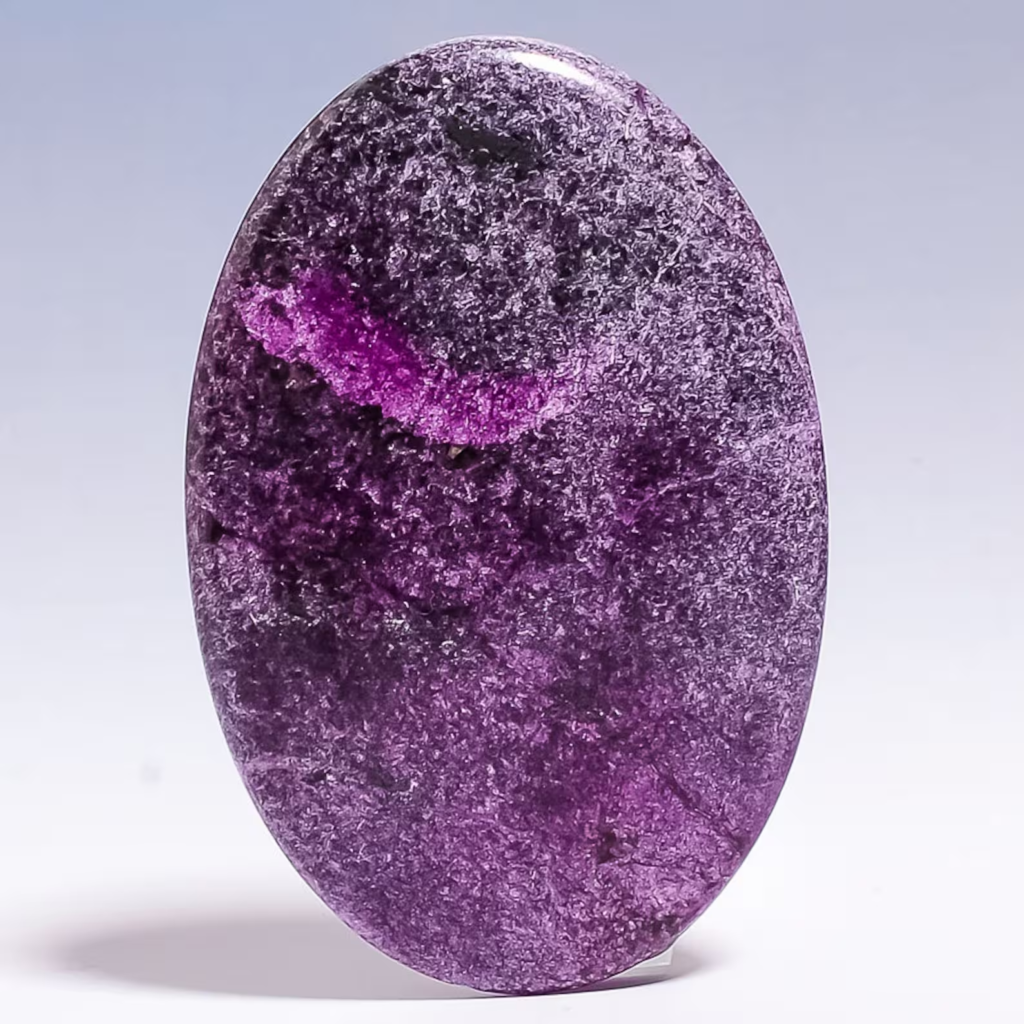
Purpoliote is an incredible purple stone. It is a core of manganese phosphate stone, and it has ray of violet color due to various amount of manganese present in it. Normally, it is quite a deep purple, it is not crystalline but have a deep matt surface.
Although Purpolite is rare mineral, its name has been derived from the Latin word ‘ purpura’ which means purple. It is known to be the nature’s best dream stones and has an almost tangible movement of energy flow. As a complex gem, it grants admittance to the lesson learned in the pas t life, it unfolds the spiritual guidance for the future and heals the Crown and the third eye chakra.
Purple is the color of the good judgment and helps people to seek fulfillment. It is believed that if you surround yourself with purple, you will attain peace of mind as it is good for meditation.
Purpolite Stone is known for its distinctive violet to deep purple appearance and its popularity among mineral collectors and people interested in metaphysical crystals. The accepted mineralogical name of this mineral is Purpurite, while Purpolite is a name sometimes used when searching for or describing the stone.
Natural Purpurite is a manganese phosphate mineral. Its intense purple, violet, reddish-purple and sometimes darker coloration gives the material its recognizable appearance. Individual specimens can vary considerably in shade, texture and surface appearance.
Purpolite and Purpurite Gemstone
Purpolite and Purpurite are often used to refer to the same purple mineral in gemstone and crystal-related searches. Purpurite is the recognized mineral name and has the chemical formula Mn³⁺(PO₄).
The name Purpurite is derived from a Latin term referring to purple, an appropriate description of the mineral’s characteristic coloration.
Purpurite generally occurs as massive material rather than well-developed transparent gemstone crystals. Its unusual purple appearance is one of the main reasons it is valued by collectors.
Purpolite Metaphysical Properties
Purpolite symbolizes the magic and the mystery, as well as a life like royal. Being combined with red and blue, the warm and the cool colors, it is believed to be an ideal stone favored by artists. Violet is the color of purpose and associated with the Crown chakra.
The color violet is a combination of blue and red and focuses a dynamic and active energy while blue is cool and calming and expansive. Violet color of Purpolite brings a new dynamic and expands the blue realm of the body, and allows more and more creative energies to immerse in the body. Violet is associated with imagination and inspiration.
Purpolite metaphysical properties are traditionally associated with inspiration, personal freedom, confidence, spiritual awareness and clear communication. Its purple coloration has also contributed to its symbolic connection with intuition and higher awareness in modern crystal traditions.
Some crystal practitioners use Purpolite during meditation or periods of personal reflection. It may also be kept in a meditation space as a symbolic stone for creativity and spiritual development.
These metaphysical properties belong to crystal traditions and personal beliefs rather than scientifically established effects.
Purpolite and Crown Chakra
Purpolite is traditionally associated with the Crown Chakra because of its rich violet and purple coloration.
In chakra traditions, the Crown Chakra is symbolically linked with awareness, spiritual understanding and a broader sense of purpose. Purple stones are therefore frequently selected for meditation practices focused on these themes.
Purpolite may also be associated with the Third Eye Chakra in some crystal traditions because of its connection with intuition, imagination and inner reflection.
Chakra associations should be understood as part of spiritual traditions rather than medical science.
Source of Purpolite Gemstone
Source
This is a beautiful semiprecious gem composed of manganese phosphate. It’s color is caused by the presence of manganese and iron in various amount. It is sourced from Australia, Western Australia, Namibia, France, North Carolina and USA.
Purpurite occurs in phosphate-rich geological environments and is particularly associated with the alteration of manganese-bearing minerals. It can form through oxidation processes involving lithiophilite.
Purpurite specimens have been documented from several locations worldwide, including Namibia and the United States. North Carolina is especially significant because the mineral’s type locality is the Faires Mine in Gaston County.
The origin of an individual specimen may influence its appearance, but color, condition, texture and authenticity should also be considered when selecting a Purpolite Stone.
How Purpolite Gets Its Purple Color
The distinctive purple coloration of Purpolite is closely related to manganese within its mineral composition.
Natural specimens can range from dark purple and violet to reddish-purple. Some material may also show darker brown or nearly black altered surfaces.
Color intensity can vary significantly, which means that individual Purpurite specimens should be evaluated according to their own natural appearance rather than expecting every stone to have an identical shade.
Purpolite Gemstone Facts
It brings confidence, freedom and clarity in communication power.
It helps in refining the blood and improves the circulatory system.
It is a stone formed by an oxidation reaction with manganese ion, which is blending from a ( +2 ) charge in litjiophilite.
This violet stone helps in the house sale.
It helps to heal the sun burn and the heat burn.
From a mineralogical perspective, Purpurite is a manganese phosphate mineral with the formula Mn³⁺(PO₄). It generally has a dark purple to purplish-red appearance and a dull to earthy lustre.
Purpurite has a Mohs hardness of approximately 4 to 4.5 and belongs to the orthorhombic crystal system. It is generally opaque and brittle.
Purpurite is also related mineralogically to Heterosite. Purpurite represents the manganese-dominant member, while Heterosite is the iron-dominant counterpart.
Physical Properties of Purpolite
The mineral characteristics of Purpolite or Purpurite help distinguish it from other purple-colored stones.
Its important physical characteristics include a deep purple to purplish-red color, manganese phosphate composition, relatively moderate hardness, brittle nature and generally dull or earthy lustre.
Because different purple minerals can look similar, professional mineralogical testing is preferable when accurate identification of a valuable specimen is required.
Purpolite Healing
Purpolite aid the wearer to stay away from frustration and anger. It carries energy within it that help to remove the conflicts of the past life. This is a brilliant violet stone, and the vigor of this stone is highly ethical in nature and lifts all negativity from the surrounding. This stone works to create choices and connects spirituality with the soul. It facilitates one to work with total integrity and employ his powers for the good to others.
It is an excellent physical healer. It is a grounding stone with high-frequency energy into the physical system of the body and transmutes the illness of the body into health. It removes over exhaustion and stabilizes the pulse of the body. Purpolite heals the bleeding and bruises and releases the muscles spasm, relives migraine, headaches and other aches and pains of the body. It is also used for regulating blood pressure. If Purpolite bead is tied around the necklace, it helps to lower the blood flow to the brain. It is an excellent cleansing agent and it treats heart and autism syndrome. It also helps in providing proper transport to the blood to the lungs and also check the level of uric acid and steady the heartbeat rate.
Purpolite healing properties are discussed within traditional crystal-healing and metaphysical practices. In these traditions, the stone is mainly associated with emotional release, grounding, confidence, creativity and moving beyond previous frustrations.
Claims relating to bleeding, migraines, blood pressure, heart conditions, circulation, autism, uric acid levels, muscle spasms or other medical conditions have not been established as medical treatments. Purpolite should not be used as a substitute for professional healthcare, diagnosis or prescribed treatment.
Purpolite for Emotional Balance
Within crystal traditions, Purpolite is symbolically connected with releasing frustration, encouraging confidence and approaching difficult situations with greater clarity.
Some people use the stone during meditation or personal reflection when they want to focus on creativity, communication or emotional awareness.
The experience of using a crystal is personal, and traditional metaphysical associations should not be interpreted as scientifically proven psychological effects.
Purpolite Meaning for Creativity and Communication
Purpolite meaning is often associated with creativity because of its strong violet coloration and traditional metaphysical symbolism.
Artists, writers and people involved in creative activities may be attracted to Purpolite as a symbolic stone of imagination and self-expression.
It is also traditionally linked with communication and confidence. For this reason, some crystal enthusiasts keep it in workspaces or personal meditation areas.
Purpolite for Meditation
Purpolite Stone can be incorporated into meditation and spiritual practices according to personal preference.
A natural specimen may be held during meditation or placed nearby while concentrating on goals such as awareness, creativity, confidence and personal growth.
Its purple color also makes it visually suitable for crystal arrangements focused on the Crown or Third Eye Chakra.
How to Identify Natural Purpolite
Natural Purpolite or Purpurite is primarily recognized by its distinctive violet to dark-purple appearance.
However, color alone should not be used to identify a mineral because several other stones can have similar purple coloration.
Characteristics that may be considered include its dark purple to reddish-purple color, opaque appearance, earthy or dull lustre, brittle nature and mineral composition.
For valuable specimens, professional mineral identification provides greater confidence than visual inspection alone.
Purpolite vs Other Purple Stones
Purpolite can sometimes be confused visually with other purple minerals because color is often the first characteristic noticed by buyers.
However, Purpurite has its own manganese phosphate composition and mineralogical properties. This distinguishes it from better-known purple stones such as Amethyst, which is a variety of quartz.
Anyone purchasing a specimen primarily for mineral collection should therefore consider mineral identification rather than relying only on its purple color.
Natural Purpolite for Mineral Collections
Purpolite is particularly interesting for mineral collectors because of its distinctive coloration and relative rarity.
Unlike transparent faceted gemstones, Purpurite commonly occurs as massive or opaque material. Collectors may prefer specimens with strong natural purple coloration, interesting surface textures and documented locality information.
Each natural specimen can differ considerably, making Purpolite suitable for collectors who appreciate individual mineral formations rather than perfectly uniform stones.
How to Choose Purpolite Stone
When choosing Purpolite Stone, examine its color, surface condition, size, natural texture and overall appearance.
Deep purple and violet specimens can be visually attractive, but buyers should also consider whether the material has been identified correctly.
For collector-quality material, information regarding origin and mineral identification can be particularly useful.
How to Care for Purpolite Stone
Purpolite should be handled with care because Purpurite is relatively soft and brittle compared with many common jewelry gemstones.
Avoid strong impacts, abrasive surfaces and harsh chemical cleaning methods. A soft dry cloth is generally suitable for gently removing surface dust from a mineral specimen.
Store Purpolite separately from harder gemstones and minerals that could scratch or damage its surface.
For valuable or unusual specimens, professional mineral-care advice is preferable before attempting intensive cleaning.
Purpolite Stone for Spiritual Practices
Purpolite continues to attract people interested in violet crystals because of its unusual color and symbolic associations.
In metaphysical traditions, it is connected with spiritual awareness, creativity, communication and leaving behind emotional limitations. Its association with the Crown Chakra further contributes to its popularity for meditation.
For mineral enthusiasts, however, Purpolite is equally interesting for its manganese phosphate composition, natural formation process and distinctive purple appearance.
Frequently Asked Questions
What is Purpolite Stone?
Purpolite is a name used for the purple mineral more formally known as Purpurite. Purpurite is a manganese phosphate mineral recognized for its dark purple, violet and purplish-red coloration and is valued by mineral collectors and crystal enthusiasts.
Are Purpolite and Purpurite the same mineral?
Purpurite is the accepted mineralogical name. Purpolite is sometimes used as an alternative spelling in gemstone and crystal searches. When identifying the mineral scientifically, Purpurite is the appropriate name.
What are the traditional benefits of Purpolite?
In metaphysical traditions, Purpolite is associated with confidence, creativity, communication, emotional release, inner awareness and spiritual development. These benefits are based on traditional crystal beliefs rather than scientifically proven medical effects.
Which chakra is Purpolite associated with?
Purpolite is commonly associated with the Crown Chakra because of its violet and purple coloration. Some crystal traditions also connect it with the Third Eye Chakra and use it symbolically for intuition, imagination and meditation.
How should I care for Purpolite Stone?
Purpolite should be handled gently because Purpurite has a Mohs hardness of approximately 4 to 4.5 and is brittle. Avoid harsh chemicals, abrasive cleaning, scratches and strong impacts, and store the specimen separately from harder gemstones.


