
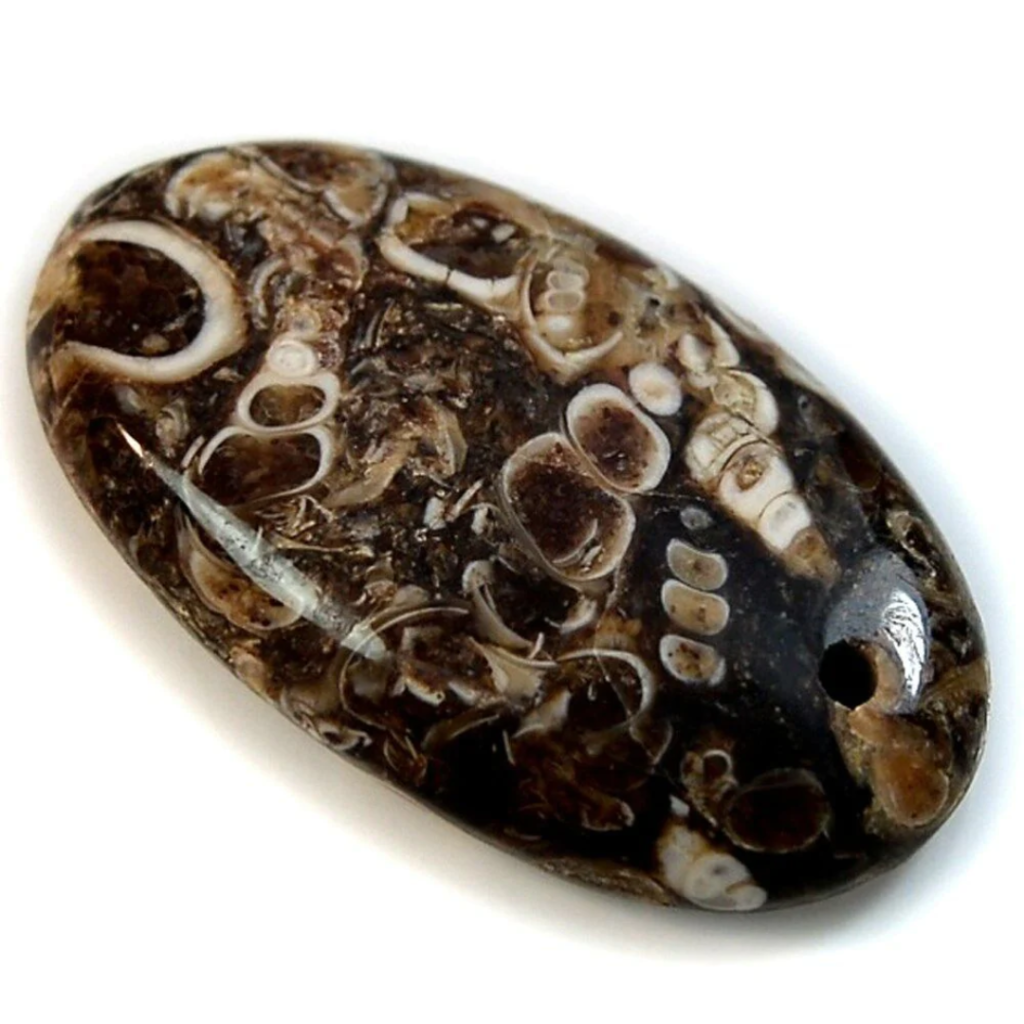
Turritella agate fossil is a variety of medium-sized sea snails with an operculum, marine gastropod mollusks in the family Turritellidae. They have tightly coiled shells overall shape is basically that of an elongated cone.
Turritella Agate is also the popular name used for a brown, translucent, fossiliferous agate found in the Green River Formation of Wyoming. It is easy to recognize it, because it contains large fossil snails found in the white-to-tan color that contrast with the brownish agate.
Turritella Agate Fossil is a distinctive fossil-bearing material appreciated by gemstone collectors, fossil enthusiasts and people interested in crystals with ancient geological origins. Its brown to dark brown background contains numerous spiral-shaped fossil shells that create naturally occurring patterns across polished pieces.
Although the name Turritella Agate has been used for decades, the fossil snails present in the well-known Wyoming material are now identified as Elimia tenera. For this reason, the material is also called Elimia Agate. However, Turritella Agate remains the widely recognized commercial and collector name.
Turritella Agate Fossil Appearance
Natural Turritella Agate is commonly brown, dark brown or earthy in appearance, with cream, white or tan fossil shell patterns clearly visible throughout the stone.
When cut and polished, the contrast between the fossil shells and surrounding chalcedony creates attractive natural designs. No two specimens have exactly the same arrangement of fossils, making individual pieces unique.
The stone can be shaped into cabochons, pendants, polished stones, decorative objects and collector specimens.
Where is Turritella Agate Fossil Found?
Where is it found?
During the Mesozoic (~245-65 million years ago) the ammonites, a relative of the modern chambered nautilus was found that are an important part of the fossil record, but they became extinct at the end of the Cretaceous period, the period of dinosaurs. The disappearance of these marine animals mollusk opened up environmental niches that were filled by a radiation of new species of animals in the Cenozoic era.
The Erminger (“Turritella plate of Ermingen”) near Ulm, Germany is a rocky fossil found in the outcrop situated in the northern part of the North Alpine Foreland Basin.
The material commonly sold as Turritella Agate Fossil is particularly associated with the Green River Formation in Wyoming, USA. The fossil-bearing deposits formed in an ancient freshwater lake environment during the Eocene Epoch approximately 50 million years ago.
Large numbers of freshwater snails accumulated in lake sediments. Over time, silica-rich material filled spaces within and around the shells, eventually producing the fossiliferous chalcedony commonly known today as Turritella Agate or Elimia Agate.
Turritella Agate and Elimia Agate
The term Turritella Agate became popular because the spiral-shaped fossils were originally believed to belong to the marine Turritella genus.
Later identification showed that the characteristic fossils in the Wyoming material belong to Elimia tenera, a freshwater snail. Therefore, Elimia Agate is scientifically more accurate, while Turritella Agate remains the better-known trade name.
This distinction is useful for collectors who want to understand both the commercial name and geological history of their fossil gemstone.
Metaphysical Properties of Turritella Agate
Metaphysical Properties of Turritella Agate
Turritella Agate (fossil ) is highly prized for its metaphysical properties. It overcomes negativity and bitterness, protect against danger. It also helps to adjust to transitions, and brings someone “down to earth.” It removes fear and alleviates self-confidence. It is the most renowned stone for keeping it at the time of emergency and fear.
In crystal traditions, Turritella Agate is strongly associated with grounding, stability, protection and connection with the past. Its ancient fossil content contributes to its symbolic association with ancestry, history and personal roots.
People interested in metaphysical crystals may keep Turritella Agate during meditation or use it as a symbolic reminder of stability and connection with nature.
These metaphysical properties are based on traditional crystal beliefs and personal spiritual practices rather than scientifically established effects.
Turritella Agate Meaning
Turritella Agate meaning is commonly connected with ancestry, grounding, personal history and stability. Because the stone contains visible fossils formed millions of years ago, it is often regarded symbolically as a link between the ancient Earth and the present.
Its earthy brown colors also contribute to its traditional association with security, strength and a grounded approach to change.
Turritella Agate Uses and Purposes
Turritella Agate Uses and Purposes
Turritella Agate is a stone of personal attachment with one’s past – ancestry and the homeland. It helps to make a connection from where our ancestors came. As a record keeper crystal, it can be used to get an access to the wisdom of past and the past worlds.
It opens communication between the plant and mineral kingdom, providing access to information beneficial in healing the planet. [Melody, 100]
If buried in land, neglected or polluted, Turritella Agate brings fertility to the land and cleanses, re-vitalizes.
If someone is a frequent traveller, then Turritella Agate removes the fear while travelling and boost the self-confidence of the same. It is very good, if worn as a pendant around the neck.
It is an excellent fertility stone and increases chances for a female for conceiving and enjoy a better sex life.
Turritella Agate can be used as a collector stone, fossil specimen, polished crystal, pendant, cabochon or decorative gemstone. The unusual combination of fossil preservation and agate-like material makes it appealing for both geological collections and lapidary work.
Its naturally occurring fossil patterns can also make each polished piece visually different, which increases its appeal for collectors.
Claims relating to fertility or other physical health effects belong to traditional crystal-healing beliefs and are not scientifically established medical treatments. Gemstones should not replace professional medical advice or healthcare.
Turritella Agate for Stability and Self-Confidence
Turritella Agate promotes inner stability, composure, maturity and self-confidence. Its warm, protective properties encourage security and self-confidence. This is a great crystal to use during pregnancy, and it removes the fear of “baby blues”.
Agate stops the worthless desires for things we do not need, and assists those juggling commitments. It helps writers express ideas in marketable and promoter form. It also helps young children learn to walk and balance their body
In traditional crystal practices, Turritella Agate is valued as a grounding stone and is symbolically associated with patience, emotional stability and confidence.
Because it contains ancient fossil material, some collectors also associate the stone with endurance and continuity through periods of personal change.
Pregnancy, postpartum concerns, childhood development and mental-health conditions should always be discussed with appropriately qualified healthcare professionals. Crystal traditions should be viewed as spiritual or symbolic practices rather than medical treatment.
Turritella Agate Fossil Formation
Turritella Agate Fossil is particularly fascinating because its recognizable shell patterns preserve evidence of an ancient freshwater ecosystem.
After the snails died, their shells accumulated in lake sediments. Over long periods of geological time, silica-rich material entered the spaces around and within these shells. This process preserved the fossil patterns in material that can now be cut and polished.
The resulting stone combines geological history, fossil preservation and decorative beauty in a single natural specimen.
How Old is Turritella Agate?
The famous Turritella Agate material from Wyoming’s Green River Formation dates to the Eocene Epoch and is approximately 50 million years old.
Its considerable geological age is one of the reasons the material attracts fossil collectors as well as gemstone enthusiasts.
Each specimen provides a visible record of organisms that lived within an ancient freshwater environment millions of years before humans appeared.
How to Identify Turritella Agate Fossil
Turritella Agate is generally recognizable by the numerous elongated spiral-shaped fossil shells visible throughout its brown matrix.
The shells are often white, cream or tan and contrast noticeably with the surrounding darker material. Polished pieces can display detailed cross-sections of individual fossil shells.
Important characteristics to consider include:
- Brown to dark brown background
- Cream, tan or whitish spiral fossil patterns
- Numerous visible fossil snail shells
- Natural variation from one specimen to another
- Attractive appearance after cutting and polishing
- Fossiliferous material associated with the Green River Formation
Professional geological or gemological examination may be useful when confirmation of identity or origin is required.
Turritella Agate Jewelry and Decorative Uses
Turritella Agate Fossil can be fashioned into pendants, cabochons, beads, polished stones and other decorative objects.
Its fossil patterns provide an organic appearance that differs significantly from conventional gemstones. Larger polished specimens may also be kept as display pieces in fossil, mineral or gemstone collections.
When choosing Turritella Agate jewelry, the arrangement and visibility of the fossil shells are often major aesthetic considerations.
How to Care for Turritella Agate
Turritella Agate jewelry and polished specimens should be handled carefully to maintain their surface finish and natural appearance.
For routine cleaning, use mild soap, lukewarm water and a soft cloth. Avoid aggressive chemicals, abrasive materials and unnecessary impacts.
Keeping fossil gemstone pieces separately from harder or sharp-edged objects can also help preserve their polished surfaces.
Why Turritella Agate Fossil is Popular Among Collectors
Turritella Agate Fossil combines several features that make it particularly interesting to collectors: visible fossils, ancient geological history, natural pattern variation and suitability for polishing.
Unlike a gemstone valued primarily for color or transparency, much of the visual attraction of Turritella Agate comes from the preserved spiral shells within the stone.
For fossil enthusiasts, it provides a tangible connection with an ancient ecosystem. For gemstone collectors, its patterns and earthy colors make each individual specimen distinctive.
Frequently Asked Questions
What is Turritella Agate Fossil?
Turritella Agate Fossil is the popular name for a brown fossiliferous material containing numerous visible spiral-shaped fossil snail shells. The best-known material comes from the Green River Formation in Wyoming and is also scientifically referred to as Elimia Agate.
Is Turritella Agate actually made from Turritella snails?
The well-known Wyoming material was originally named Turritella Agate because its fossils were thought to belong to the marine Turritella genus. They were later identified as Elimia tenera, an extinct freshwater snail. Turritella Agate nevertheless remains its widely recognized trade name.
How old is Turritella Agate Fossil?
Turritella Agate from Wyoming’s Green River Formation dates to the Eocene Epoch and is approximately 50 million years old. Its fossil shells preserve evidence of freshwater snails that lived in ancient lake environments.
What are the traditional benefits of Turritella Agate?
In metaphysical traditions, Turritella Agate is associated with grounding, stability, confidence, protection, ancestry and connection with the past. These are traditional spiritual beliefs rather than scientifically proven medical or therapeutic effects.
How can I identify Turritella Agate?
Turritella Agate can generally be recognized by its brown to dark-brown background containing numerous cream, tan or whitish spiral fossil shells. These fossil patterns become particularly noticeable when the material is cut and polished.


