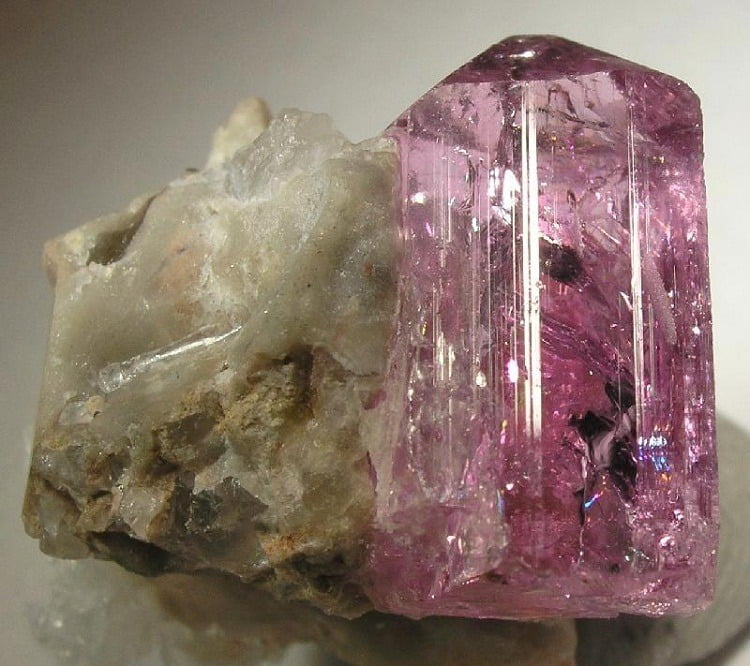
Topaz is a well-known mineral, which occurs in beautiful shapes and colours. Naturally, it occurs in various colours, but pink, blue and purple Topaz may be subjected to heat treatment. Topaz crystal which occurs in matrix structure is very rarely found as it contains the perfect basal cleavage. It is orthorhombic, prismatic, tabular and stubby crystals. It is colourless with a hardness of 8 on the Mohs scale. It is transparent to opaque with a specific gravity of 3.3-3.6.
Topaz is admired for its attractive colours, excellent hardness, transparency, and versatility in jewelry. Natural Topaz can occur in different shades, making it a popular gemstone for collectors, jewelry lovers, and those interested in traditional gemstone practices.
Interesting Facts About Topaz
Fact 1 – Topaz Mineral Composition
Topaz is a mineral (Aluminum fluoro-silicate). It is generally yellowish, colourless, green, and light bluish in colour.
Fact 2 – Origin of the Name Topaz
The name Topaz has been derived from the Greek word, Topazos, which was a small island in the Red Sea.
Fact 3 – Natural Colour of Topaz
The common colour of Topaz is yellow, but pure Topaz is naturally colourless.
Fact 4 – Topaz as a Birthstone
It is traditionally considered a birthstone for people born in November, and is also associated with the Scorpio zodiac in certain gemstone traditions.
Fact 5 – Alternative Birthstones for Scorpio
Other alternative birthstones for Scorpio, which are traditionally believed to give good results, are Beryl, Amethyst, Aquamarine, Tourmaline, and Opal.
Fact 6 – Topaz Symbolism
Loyalty, Friendship, and Faithfulness are among the symbols traditionally associated with Topaz.
Fact 7 – Topaz and Citrine
It can be difficult to differentiate Topaz from Citrine by the naked eye, particularly when the gemstones have similar colours. Professional gemological testing can help identify them accurately.
Fact 8 – Topaz Colour Characteristics
The colour of Topaz gems consists of three important components: tone, hue, and saturation. These factors influence the overall appearance and value of a coloured Topaz.
Fact 9 – Topaz Anniversary Gift
Topaz is traditionally considered a lucky gemstone to give as a gift on the 4th and 19th marriage anniversaries.
Fact 10 – Topaz Crystal Structure
Pure crystals of Topaz are also used in place of it. The crystal form of Topaz is orthorhombic.
Fact 11 – Topaz Gemstone Grading
Along with Topaz, gemstones are commonly evaluated according to factors such as colour, cut, clarity, and carat weight.
Fact 12 – Topaz Jewelry Tradition
The tradition of giving Topaz as jewelry dates back many years. Its attractive colours, durability, and symbolic significance have contributed to its continued popularity.
Benefits of Topaz
Topaz is traditionally associated with supporting digestive wellness. It is believed in traditional gemstone practices to support bowel movements and help maintain a healthy digestive system.
Topaz is also traditionally associated with the circulatory system and is believed to promote relaxation and ease in the body.
White Topaz is traditionally associated with completing new projects successfully, while Yellow Topaz is associated with positivity and is traditionally believed to help counter a spoiled mood.
These benefits are based on traditional gemstone beliefs and should not replace professional medical advice or treatment.
Charisma of Topaz
Topaz symbolizes pleasure, joy, loyalty, friendship, and faithfulness. It is traditionally believed to help individuals face the challenges of the new world with greater confidence.
Topaz is also associated with spiritual realization, inner awareness, positivity, and personal growth. Its beautiful appearance and range of colours make it a popular gemstone for both jewelry and traditional astrological purposes.
Topaz Colours & Varieties
Topaz can be found in a variety of colours, including:
- Colourless Topaz
- Yellow Topaz
- Blue Topaz
- Pink Topaz
- Purple Topaz
- Green Topaz
Some coloured Topaz varieties available in the gemstone market may be enhanced through treatment. Therefore, buyers looking for natural gemstones should consider obtaining appropriate certification.
Quick Facts About Topaz
- Found in: Ural Mountains, Southwestern Africa
- Colours: Dark to light yellow
- Availability: Cut jewelry and polished small stones
- Crystallization: Orthorhombic crystal
- Hardness: 8 on the Mohs scale
- Specific Gravity: 3.3–3.6
- Transparency: Transparent to opaque
Frequently Asked Questions
What is Topaz gemstone?
Topaz is a naturally occurring mineral and gemstone belonging to the aluminum fluoro-silicate group. It has an orthorhombic crystal structure and a hardness of 8 on the Mohs scale, making it a durable gemstone for jewelry.
What are the main colours of Topaz?
Topaz occurs naturally in several colours, including colourless, yellow, green, blue, pink, and purple. Some coloured varieties may undergo heat or other treatments to enhance their appearance.
What are the traditional benefits of Topaz?
Topaz is traditionally associated with positivity, joy, spiritual realization, relaxation, digestive wellness, and emotional balance. Different colours of Topaz may have different traditional astrological associations.
Is Topaz a birthstone?
Yes, Topaz is traditionally recognized as a November birthstone. It is also associated with Scorpio in some astrological and gemstone traditions.
How is Topaz different from Citrine?
Topaz and Citrine can have a similar appearance, particularly when both have yellow or golden colours. Because they can be difficult to distinguish visually, professional gemological testing and certification are recommended for accurate identification.
