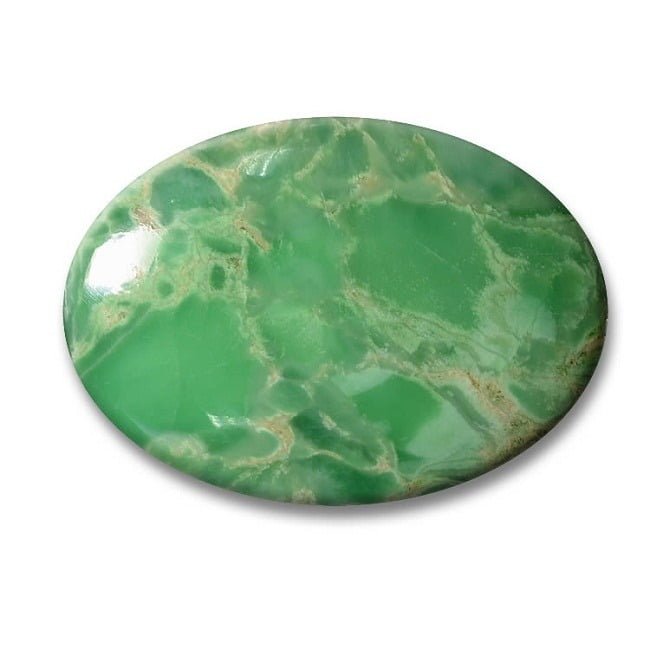
Variscite is a rare and beautiful green gemstone often mistaken for turquoise, yet prized in its own right for its soothing colour and gentle energy. A hydrated aluminium phosphate mineral (also called Utahlite), it has been used in jewellery and ornamental carving for generations. This guide covers what variscite is, its physical properties, where it comes from, and the metaphysical qualities that make it a favourite among crystal lovers. If you’re new to gemstones, our overview of what gemstones are is a helpful starting point.
What Is Variscite?
Variscite is an opaque green-to-white mineral first discovered in 1837 in Variscia (present-day Vogtland), Germany — the source of its name. Though it resembles turquoise, its typical apple-green to bluish-green hue and softer look set it apart. It usually appears as veined masses or as small deposits coating a rock matrix, giving each piece a unique, nature-painted character.
Variscite vs Turquoise
While the two stones look alike, variscite is generally greener, softer and rarer. Turquoise leans blue and is copper-based, whereas variscite is aluminium-phosphate based — a distinction that helps collectors and buyers tell them apart. Those drawn to green stones often also explore the classic emerald gemstone, the most celebrated green gem in Vedic astrology.
Physical Properties of Variscite
At a glance, here are the key gemmological details of variscite.
Variscite Properties Table
| Property | Detail |
|---|---|
| Mineral type | Hydrated aluminium phosphate |
| Colour | Green, grey or white |
| Hardness (Mohs) | 4.5 |
| Crystal system | Orthorhombic |
| Lustre | Vitreous to waxy |
| Streak | White |
| Transparency | Opaque |
| Also known as | Utahlite |
What This Means for Wear
With a hardness of around 4.5 on the Mohs scale, variscite is relatively soft, so it suits pendants, earrings and necklaces better than everyday rings, and should be protected from scratches, knocks and harsh chemicals.
Where Is Variscite Found?
Variscite is a collector’s stone sourced from a handful of locations worldwide, including the United States, Germany, Austria, the Czech Republic and Bolivia. Because fine, gem-quality material is uncommon, it is usually bought from specialist gemstone dealers rather than mainstream jewellers.
Uses of Variscite
Thanks to its calming colour and unique veining, variscite is used for pendants, necklaces and earrings, as well as ornamental carvings and decorative items. Its growing visual appeal has made it an increasingly popular semi-precious stone among designers and crystal collectors.
Metaphysical Properties of Variscite
In crystal healing traditions, variscite is regarded as a gentle “stone of encouragement.” It is associated with the heart chakra and is believed to:
- Encourage hope, courage and unconditional love.
- Calm the mind and support deep meditation.
- Enhance intuition and aid past-life recall.
- Promote peaceful, restful sleep.
These are traditional metaphysical beliefs valued for emotional comfort and mindfulness rather than proven scientific effects. To understand how astrological gemstones are believed to work more broadly, see our guide on the effects of gemstones.
Reputed Healing Benefits
Crystal practitioners also associate variscite with physical wellbeing — traditionally linking it to a calmer nervous system, better circulation and relief from minor digestive discomfort.
Important: These are traditional beliefs, not medical facts. Variscite is not a substitute for professional healthcare. For any health concern, please consult a qualified doctor.
Explore More at AstroKapoor
Discover our full Gemstones collection, learn what makes a stone astrologically powerful in What Is a Jyotish Gemstone, or buy gems online with expert Vedic guidance.
Frequently Asked Questions
What is variscite gemstone?
Variscite is a rare, opaque green gemstone and a hydrated aluminium phosphate mineral, also known as Utahlite. First discovered in Germany in 1837, it is often mistaken for turquoise but is generally greener and softer, and is valued for jewellery and crystal healing.
Is variscite the same as turquoise?
No. Although they look similar, variscite is an aluminium-phosphate mineral that tends to be greener, while turquoise is copper-based and leans blue. Variscite is also rarer and slightly softer, which makes it a distinct collector’s stone.
How hard is variscite and how should it be worn?
Variscite has a hardness of about 4.5 on the Mohs scale, making it relatively soft. It is best worn as pendants, earrings or necklaces rather than daily-wear rings, and should be protected from scratches, impacts and harsh chemicals.
What are the metaphysical benefits of variscite?
In crystal traditions, variscite is a heart-chakra stone believed to encourage hope, courage and unconditional love, calm the mind, deepen meditation, enhance intuition and promote peaceful sleep. These are traditional beliefs valued for emotional comfort.
Where is variscite found?
Variscite is a relatively rare gemstone found in the United States, Germany, Austria, the Czech Republic and Bolivia. Because gem-quality material is uncommon, it is usually purchased from specialist gemstone dealers.
