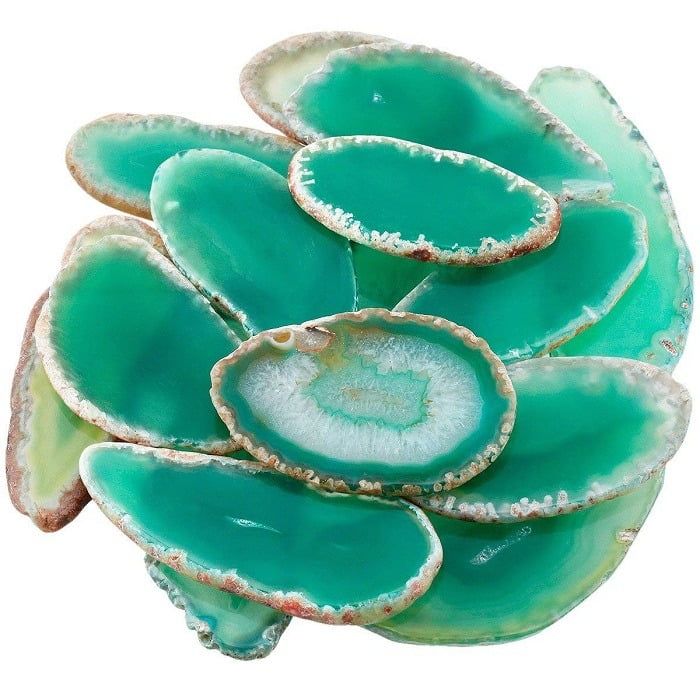
Jade gemstone is a green tumbled stone that is a symbol of love and purity. It is much prized in the east and signifies wisdom. This green stone is associated with the heart chakra and is traditionally believed to support and balance the same.
Jade gemstone stabilizes the personality and integrates the mind with the body. Mentally, it is very useful in releasing negative thoughts of the mind and the body. Jade is also called a ‘Dream Stone’, as it is traditionally believed to help the wearer pursue and fulfil their dreams.
Jade is not considered just a stone in China, but a symbol of significance, wealth, wisdom, and prosperity. In China, it has been stated that “Gold has a value, but jade is invaluable,” meaning its cultural and spiritual value cannot easily be defined.
There are two types of jade composed of different minerals: Jadeite and Nephrite. Nephrite is creamy with an oily luster, while Jadeite carries more value due to its glassy luster and hardness. Jadeite can be carved into beautiful artifacts and is particularly famous in Chinese art and culture.
Spiritual Significance of Jade
Spiritually, Jade is traditionally used for assisting in recognizing oneself and also helps the wearer connect with the deeper meaning of the human journey. It is believed to awaken hidden knowledge, encourage self-awareness, and support inner growth.
Jade is also famous as a cleansing stone and is traditionally associated with supporting the body’s filtration process. It is considered a stone of excellence for the traditional healing of the kidney. Jadeite and Nephrite are both traditionally believed to have similar healing properties.
Jade gemstone is considered an important cultural symbol of China. The Beijing Olympics medals were inlaid with Jade discs on the obverse side.
In the past, powerful and prosperous aristocratic people loved to wear Jade suits. These were made by joining pieces of Jade with the help of wire and covering the whole body without leaving any exposed part.
Jade is also known as a stone of protection and is therefore considered an ideal gift for someone you love. It is traditionally regarded as a powerful healer of the heart chakra and is also called Chinese Jade.
Jade Colors and Their Significance
Jade is mostly seen in green color, but it is also found in several other beautiful shades. Each color of Jade is traditionally associated with different symbolic and spiritual qualities.
Brown Jade
Brown Jade is considered a strongly grounding stone. It is traditionally associated with connecting a person with the earth and bringing a sense of comfort, stability, and reliability.
Orange Jade
Orange Jade is considered an energetic and stimulating stone. It is traditionally associated with enthusiasm, positive energy, motivation, and an active approach toward life.
White Jade
White Jade is traditionally believed to direct energy in the most constructive way. It is associated with clarity, peaceful thoughts, balance, and focused intentions.
Yellow Jade
Yellow Jade is an energetic and stimulating stone. It has a mellow quality and is traditionally associated with bringing joy, happiness, optimism, and emotional warmth to the wearer.
It also teaches and encourages interconnected well-being, helping create a sense of balance and positivity.
Green Jade
Green Jade is a symbol of love and peace. It is traditionally believed to bring inner peace and encourage steady progress in the life of the wearer.
Green Jade is also strongly associated with the heart chakra, emotional harmony, compassion, and positive relationships.
Lavender Jade
Lavender Jade is traditionally associated with emotional healing and calmness. It is believed to help alleviate emotional disturbances and calm the nervous system.
It is also traditionally used for clearing emotional boundaries and supporting the release of past emotional trauma.
Red Jade
Red Jade is considered the most passionate Jade of all. It is traditionally associated with love, courage, passion, and strong emotional energy.
It helps to let go of negative emotions, access anger constructively, and release emotional tensions.
Blue Jade
Blue Jade is a symbol of love and peace. It is traditionally believed to harmonize dysfunctional relationships and support the healing of past trauma and emotional experiences.
Blue Jade is also associated with calmness, communication, emotional balance, and peaceful relationships.
Frequently Asked Questions
What is the significance of Jade gemstone?
Jade is traditionally considered a symbol of love, purity, wisdom, protection, prosperity, and peace. It has a particularly important cultural and spiritual significance in China and other Eastern traditions.
What are the different types of Jade?
The two primary types of Jade are Jadeite and Nephrite. They differ in mineral composition, appearance, hardness, and value. Jadeite generally has a glassier luster and can be more valuable, while Nephrite commonly has a creamy appearance with an oily luster.
What does Green Jade symbolize?
Green Jade is traditionally considered a symbol of love, peace, harmony, and inner growth. It is also associated with the heart chakra and is believed to support emotional balance and peaceful relationships.
What are the different colors of Jade?
Jade is available in several colors, including Green, Brown, Orange, White, Yellow, Lavender, Red, and Blue. Different colors are traditionally associated with different qualities such as grounding, joy, emotional healing, passion, peace, and harmony.
Is Jade considered a protective gemstone?
Yes, Jade has traditionally been regarded as a stone of protection. It is believed to help promote harmony, emotional stability, positive energy, and inner peace, which is why it has historically been valued as both a spiritual stone and a meaningful gift.
