
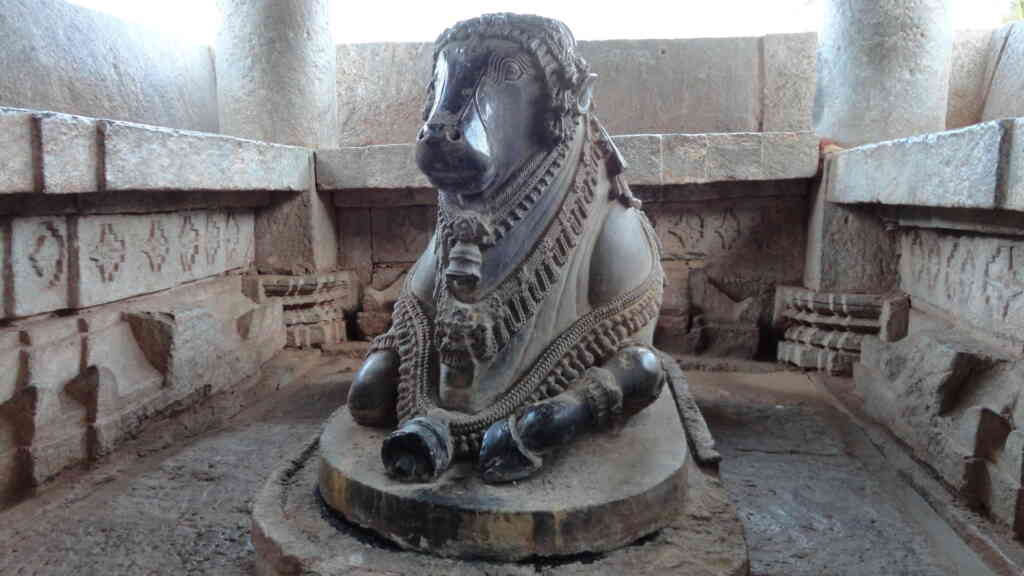
In every temple of Lord Shiva, seated calmly before the sanctum and gazing eternally at his lord, is Nandi, the sacred bull of Lord Shiva. Nandi is far more than Shiva’s mount — he is the god’s greatest devotee, his loyal guardian, his vahana (vehicle), and the very embodiment of faith and patience. Devotees traditionally bow to Nandi first, seeking his blessing before approaching Lord Shiva himself. Understanding the significance and beautiful mythology of Nandi reveals one of the most touching symbols of devotion in all of Hindu tradition.
Who Is Nandi?
Nandi is the divine bull who serves as both the guardian and vahana of Lord Shiva. He is always depicted seated before Shiva, facing the sanctum, symbolising the soul forever turned towards the divine. So central is he to Shiva worship that no visit to a Shiva temple is considered complete without first honouring Nandi. In Vedic tradition he is also linked to the Uttara Phalguni nakshatra, and is associated with qualities of service, higher purpose and steadfast devotion. His deep connection to Lord Shiva is the same devotional bond celebrated in the powerful Rudra mantra.
The Mythology of Nandi’s Birth
The story of Nandi is one of devotion rewarded. The sage Shilada, longing for a child who would be immortal, performed intense penance for a thousand years, enduring such hardship that insects consumed his body. Moved by his devotion, Lord Shiva restored the sage and blessed a sacred yagya (fire ritual), from which a radiant child named Nandi emerged — born not of nature but of divine grace and devotion.
From Boy to Divine Bull
When the deities Mitra and Varuna foretold that Nandi would not live beyond the age of eight, the young boy turned entirely to Lord Shiva in prayer. Shiva, delighted by his pure devotion, granted him immortality through a divine necklace and declared that Nandi would forever be worshipped alongside him. In that blessing, Nandi was transformed into his divine form — part human, part bull — endowed with sacred power and made the eternal companion and guardian of the lord. This story of faith rewarded echoes the protective devotion honoured in beads like the sixteen mukhi rudraksha, associated with Lord Shiva.
Why Devotees Pray to Nandi First
There is deep meaning in the custom of bowing to Nandi before Lord Shiva. As Shiva’s foremost devotee and gatekeeper, Nandi represents the ideal seeker — patient, loyal and entirely absorbed in the divine. By honouring him first, devotees express humility and seek his blessing to approach the lord. His steady gaze towards Shiva reminds every worshipper to keep their own attention fixed on the divine, undistracted by the world.
The Whisper Ritual: Sharing Your Wishes With Nandi
One of the most beloved beliefs surrounding Nandi is the tradition of whispering one’s wishes into his ear. Because Nandi sits closest to Lord Shiva and is his most trusted devotee, it is believed that a heartfelt wish whispered gently into Nandi’s ear is carried directly to the lord. The practice is done with reverence and a pure heart — a beautiful reminder that sincere devotion needs no grand gesture, only faith.
The Symbolism of Nandi
Nandi carries rich symbolic meaning that goes to the heart of spiritual life:
- Loyalty and devotion — the unwavering faith of a true devotee.
- Patience — sitting calmly, eternally, before the divine.
- Strength with restraint — the bull’s power held gently in service.
- Focus — the mind fixed steadily on the lord, undistracted.
- The ideal seeker — the soul forever turned towards the divine.
In this way, Nandi is not only Shiva’s companion but a living teaching on how to approach the sacred.
Honouring Nandi in Worship
Worshipping Nandi is a natural and meaningful part of Shiva devotion. Devotees offer prayers, flowers and gentle respect to him before entering the sanctum, and many spend a quiet moment sharing their hopes with him. This devotion pairs beautifully with Shiva worship through the Om mantra and a pooja or homan dedicated to Lord Shiva. For guidance on the most auspicious times for your worship and prayers, a personalised astrology consultation can help you deepen your practice.
Frequently Asked Questions
Who is Nandi in Hinduism?
Nandi is the sacred bull who serves as the guardian and vahana (vehicle) of Lord Shiva. He is Shiva’s greatest devotee, seated eternally before him, and symbolises loyalty, patience and devotion.
Why do devotees pray to Nandi before Lord Shiva?
Devotees bow to Nandi first because he is Shiva’s foremost devotee and gatekeeper. Honouring him expresses humility and seeks his blessing to approach the lord, following ancient temple tradition.
Why does Nandi face Lord Shiva?
Nandi faces Lord Shiva to symbolise the soul forever turned towards the divine. His steady gaze reminds every devotee to keep their attention fixed on the sacred, undistracted by worldly things.
What is the whisper ritual with Nandi?
It is the tradition of gently whispering one’s wishes into Nandi’s ear. Because Nandi is Shiva’s most trusted devotee, it is believed he carries a heartfelt, sincere wish directly to the lord.
What does Nandi symbolise?
Nandi symbolises loyalty, devotion, patience, strength held in service, and unwavering focus on the divine. He represents the ideal seeker whose mind is forever fixed on Lord Shiva.
