
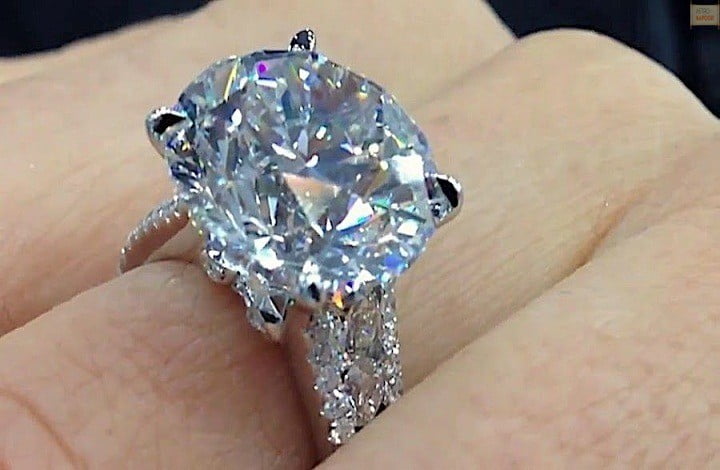
Diamonds are among the most sought-after gemstones — and, unfortunately, among the most faked. The market is full of counterfeit stones, and in smaller sizes fake diamonds are even more common than real ones. Before you buy, it helps to know how to spot fake diamonds using a few simple tests you can do at home, plus the professional checks that give you certainty.
Why You Should Check if a Diamond Is Real
A diamond is a major investment, and imitation stones like cubic zirconia and glass can look convincing to the untrained eye. Learning the basic real-vs-fake diamond tests protects you from overpaying and helps you shop with confidence — though for anything valuable, a laboratory certificate remains the final word.
At-Home Tests to Spot a Fake Diamond
The Water Test
Drop the loose stone into a glass of water. Because a real diamond is very dense, it sinks quickly to the bottom. If the stone floats or sinks slowly, it is likely a fake.
The Fog Test
Cup the stone in your hand and breathe on it to create a light fog. A real diamond conducts heat so well that the fog clears almost instantly. If the condensation lingers for a few seconds, the stone is probably fake.
The Newspaper (Read-Through) Test
Place the diamond flat-side down on a page of printed text. If you can read the letters through the stone, it is likely fake — a genuine diamond bends light so strongly that the text appears blurred or distorted.
The Dot Test
Draw a small black dot on a piece of paper and set the stone flat-side down over it. Look straight down through the top. If you can clearly see the dot or a circular reflection, the stone is probably not a real diamond.
The Heat and Ice Test
Real diamonds handle sudden temperature change without damage. In this test a loose stone is heated and then dropped into ice water — a fake may crack or shatter. Use this test with caution, as it can damage some stones, and never try it on set jewelry.
The Loupe Test
Examine the stone under a jeweller’s loupe (magnifier). Natural diamonds usually show tiny internal inclusions and slightly imperfect facets, while many fakes look flawlessly “perfect” or show rounded, worn edges.
Professional Tests to Confirm a Diamond
For a reliable answer, use a professional diamond tester, which measures how the stone conducts heat or electricity — you simply place the probe on the stone and read the result. Best of all, buy stones that come with a certificate from a recognised gem laboratory, which confirms the diamond is natural and grades its quality.
Diamond in Vedic Astrology: Always Buy Certified
In Vedic astrology the diamond (Heera) is the gemstone of Venus (Shukra), worn for love, luxury, comfort and relationships, as explained in our guide to Diamond and Vedic astrology. An astrological gemstone only works when it is genuine, so authenticity matters even more here. Before buying for astrological reasons, get a proper Vedic gemstone recommendation and choose only certified gemstones.
Frequently Asked Questions
How can I tell if a diamond is real at home?
Use quick tests like the water test (a real diamond sinks fast), the fog test (fog clears instantly on a real diamond), and the newspaper test (you cannot read text through a genuine diamond). For certainty, use a diamond tester or a lab certificate.
Does a real diamond sink in water?
Yes. A real diamond is dense and sinks quickly to the bottom of a glass of water, whereas many fakes float or sink slowly.
Does a real diamond fog up?
A real diamond disperses heat so well that fog from your breath clears almost immediately; if the fog stays for a few seconds, the stone is likely fake.
Can fake diamonds pass a diamond tester?
Basic testers that measure heat conductivity can distinguish most fakes, but moissanite can sometimes fool heat-only testers — a dual heat-and-electrical tester or a lab certificate is the most reliable.
Which is the safest way to confirm a diamond is real?
The safest method is buying a certified diamond with a report from a recognised gem laboratory, as at-home tests are only indicative.
