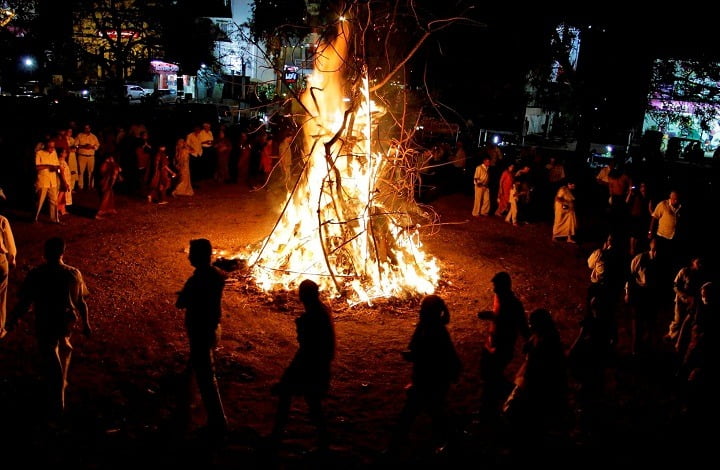
Holi is a very scared festival celebrated throughout India. It is believed to remove the evils and the sorrows from the society. Holi puja is performed to remove all the fears of people and the benefits of Holi puja is enormous, it brings prosperity and happiness in the life of the people. The demoness, Holika is worshipped along with Prahlad on the eve of Holi and the Holika dahan is performed day before the Holi festival. According to the belief these two rituals are done during the prescribed time and per the panchaang for the maximum benefits. It is also said not to perform this ritual during the daytime as it may attract misfortune and bad luck.The Hoil Puja should be performed properly top prevent ill luck and misfortune.
Holi Puja and Holika Dahan hold an important place in traditional Hindu rituals. The ceremony symbolically represents the victory of good over evil and is performed with prayers for peace, prosperity, happiness, and protection from negative influences.
Materials Required for Holi Puja
Before the puja, you need a bowl of water, beads made of cow dung, rice, roli, dhoop sticks, cotton threads, pieces of turmeric, Moong lentils (green gram), Batasha, coconut and Gulal powder and a newly harvested crop.
These materials are traditionally used during the Holi Puja and Holika Dahan ceremony. Preparing the required samagri in advance helps devotees perform the rituals in an organized manner.
Holika Installation
First clean the place where the puja is to be performed using cow dung and Ganga water. Keep a wooden pole and decorate it with garlands of toys and beads made of cow dung. Now on top of the heap, the idols of Holika and Prahlad are placed. The pile should be decorated with several items made from cow dung like swords, shields, stars, sun, moon and other toys. During Holika dahan (burning the effigy of Holika), the idol of Prahlad is taken out along with four beads of cow dung securing them one each for the sake of ancestors, Hanuman, Sheetala and the family of the performers.
The Holika installation is an important part of the traditional Holika Dahan ceremony. It prepares the sacred space where the subsequent puja and offerings are performed according to customary practices.
Sankalp Puja
Hold some water, rice, flower and some money in your right hand and do the sankalp stating the Hindu year, month, tithi, nakshatra, day. Family, name, surname, place of puja, purpose of puja and the deity to whom the puja is offered
The Sankalp establishes the purpose and intention of the puja. Devotees traditionally state their details and the purpose of the ritual before beginning the main worship.
Ganapati Puja
Chant the mantras of Ganapati and offer some fragrant flowers, roli, rice etc “Vakra Tunda Mahaakaaya Koti Suuryua Samaprabha Avignam Kurume Deva Sarva Karyeshu Sarvataa” “Om Gam Ganapataye Namah, Panchopacharartha Gandhakshada Pushpani Samarpayaami”
Ganapati Puja is traditionally performed at the beginning of auspicious ceremonies to seek blessings and remove obstacles before proceeding with the main Holi Puja rituals.
Ambika Puja
Chant the following mantra of Ambika “Aum Ambikaayai Namah, Panchopacharartha Gandhakshada Pushpani Samarpayaami”
Ambika Puja forms another important part of the traditional Holi worship and is performed with devotion and offerings.
Narasimha Puja
Chant the following mantra of Lord Narasimha and offer some fragrant flowers, roli etc. “Aum Narasimhaaya Namah, Panchopacharartha Gandhakshada Pushpani Samarpayaami”
Lord Narasimha is worshipped as a symbol of protection and the triumph of righteousness over negative forces.
Prahlada Puja
Chant the following mantra of Prahlad and offer some fragrant flowers, roli, rice and offering of your choce. “Aum prahlaadaaya Namah, Panchopacharartha Gandhakshada Pushpani Samarpayaami”
Prahlada Puja is associated with devotion, faith, courage, and the traditional story of Prahlada’s protection from Holika.
Holika Puja
Stand in front of Holi with your hands folded and chat the following mantra “Asukhpaabhaya Satrasthaih Krutaa Tvam Holi Baalishaih Athastvaam Puujayishyaami Bhute Bhutipradhaa Bhavah”. Collect some flowers, rice, fragrant substances, coconut, garlands made of cow dung to Holika. You may also use turmeric, Barbholiye and other fragrant offerings. Now move three to five rounds during the process and tie yarn around the Holika. The water pot should be now emptied in front of the Holika heap.
Holika Puja is performed with traditional offerings and prayers for protection from fear, negativity, misfortune, and difficulties. The circumambulation and offerings are considered important parts of the ritual.
Holika Dahan
After process the Holika fire is burnt. According to the usual custom, fire is got from the public bonfire to set Holika pile to flames. Some people remove idols of Prahalad along with the four dung garlands before setting fire to the pile, some people make an image of Prahalad in non-inflammable material. Therefore while burning the bonfire, Holika image is burnt to ashes while the image of Prahalad remains unblemished. Now following that people seek blessings around the fire and elders. New crops are raosted and distributed as a Prasad to the people and the relatives. The ash of the bonfire is distributed to the gathering and also smeared on the bodies for a happy and a wealthy life.
Holika Dahan symbolizes the victory of good over evil and the destruction of negativity. The traditional ceremony is followed by prayers, blessings, distribution of Prasad, and celebration with family members and relatives.
Significance of Holi Puja and Holika Dahan
Holi Puja is traditionally performed with the intention of seeking protection, peace, prosperity, and happiness. Holika Dahan represents the removal of negative influences and the beginning of a spiritually renewed phase.
Following the prescribed time according to the Panchang is traditionally considered important for performing Holika Dahan and related rituals.
Frequently Asked Questions
What is the significance of Holi Puja?
Holi Puja is traditionally performed to seek protection from negativity, fears, difficulties, and misfortune. It is also associated with peace, prosperity, happiness, and the victory of good over evil.
What is Holika Dahan?
Holika Dahan is the traditional ritual of burning the Holika bonfire on the eve of Holi. It symbolizes the destruction of evil and negativity and the victory of devotion and righteousness represented by Prahlada.
What materials are required for Holi Puja?
Traditional Holi Puja materials include water, cow dung beads, rice, roli, dhoop sticks, cotton threads, turmeric, Moong lentils, Batasha, coconut, Gulal powder, and newly harvested crops.
Why is Prahlada worshipped during Holika Puja?
Prahlada is worshipped because he represents devotion, faith, and righteousness. According to the traditional story associated with Holika Dahan, Prahlada remained protected despite Holika’s attempt to harm him.
When should Holika Dahan be performed?
Holika Dahan is traditionally performed on the eve of the Holi festival at the prescribed auspicious time according to the Panchang. The appropriate timing can vary according to the location and the Hindu calendar.
