
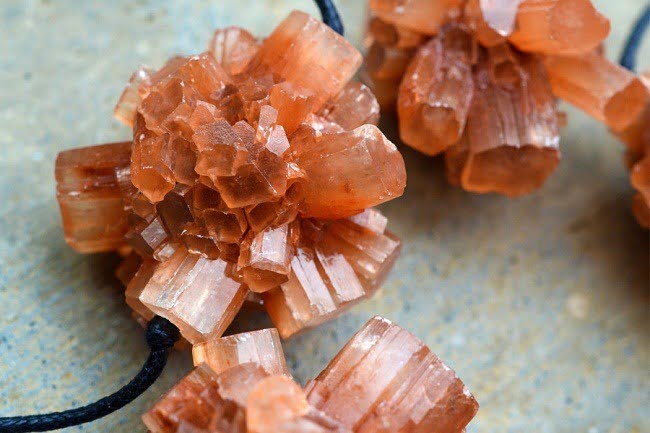
Aragonite Gemstone is a natural calcium carbonate mineral with the chemical formula CaCO₃. It occurs in marine deposits, caves, mollusc shells and other calcium-rich environments. Known for its beautiful natural formations, Aragonite is popular among mineral collectors and crystal enthusiasts. In traditional crystal practices, it is associated with grounding, stability, patience and concentration.
Source and Origin of Aragonite
Aragonite was named in 1797 after Molina de Aragón in Guadalajara, Spain. The mineral forms naturally through biological and geological processes and can occur in oceans, caves, shells and coral-related deposits.
Natural Aragonite is found in several colors, including white, brown, yellow, orange, blue and green. Its crystal system is orthorhombic, and its hardness is approximately 3.5–4 on the Mohs scale.
Properties of Aragonite Gemstone
The Aragonite stone is traditionally considered a grounding and stabilising crystal. Crystal practitioners associate it with patience, discipline, focus and a stronger connection with Earth energy.
Aragonite is especially popular among people who use crystals during meditation, study or mindfulness practices. Its traditional associations include improved concentration, emotional balance and maintaining a calm, organised mindset.
Aragonite Gemstone Benefits
Traditional Aragonite benefits are mainly associated with mental, emotional and spiritual balance. It is believed to encourage patience, tolerance and self-discipline while helping a person remain grounded during stressful situations.
Spiritually, Aragonite is commonly associated with the Root Chakra and grounding practices. It may be held during meditation or placed in a peaceful area of the home to support a calm environment.
These benefits belong to traditional crystal-healing and metaphysical belief systems and should not be considered scientifically established medical treatments.
Healing Properties of Aragonite
The term Aragonite healing properties is commonly used in crystal traditions to describe the stone’s symbolic connection with grounding, relaxation and energetic balance.
Aragonite should not be used to diagnose or treat health conditions. Anyone experiencing physical or mental health concerns should seek advice from a qualified healthcare professional.
How to Use Aragonite Stone
Aragonite can be kept near a study or work area, held during meditation or displayed as part of a crystal collection. Polished pieces may also be carried or worn as jewellery when suitable.
Because Aragonite is relatively soft, protect it from scratches, harsh chemicals and prolonged exposure to water.
FAQs About Aragonite Gemstone
1. What is Aragonite Gemstone?
Aragonite is a naturally occurring calcium carbonate mineral valued for its distinctive crystal formations and traditional grounding associations.
2. What are the benefits of Aragonite stone?
In crystal traditions, Aragonite is associated with grounding, patience, concentration, discipline and emotional stability.
3. Which chakra is associated with Aragonite?
Aragonite is most commonly associated with the Root Chakra because of its traditional connection with grounding and stability.
4. What is Aragonite used for?
Aragonite is used for mineral collections, decoration, meditation, mindfulness practices and traditional crystal work.
5. Is Aragonite the same as Calcite?
No. Both have the chemical formula CaCO₃, but Aragonite has an orthorhombic crystal structure while Calcite has a trigonal crystal structure.
