
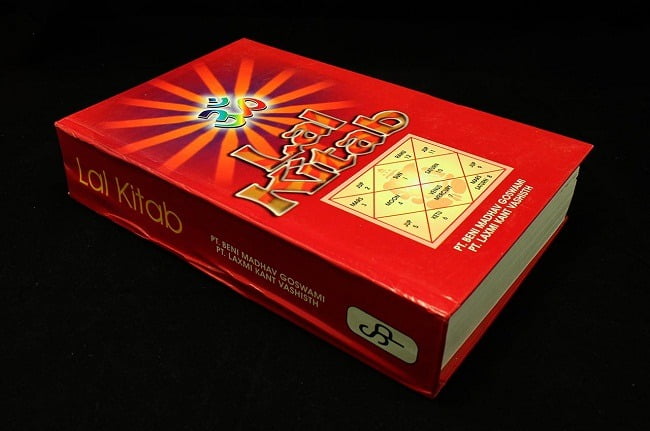
Lal Kitab is a book in the field of Vedic astrology. This book explains how certain planetary positions in one’s horoscope reflect the lines in the palm. In other words, this book has a detailed description of astro-palmistry and has mixed the two different arts of Palmistry and Jyotisha, Hindu astrology together.
This is the first book that explained how the planetary positions in one’s horoscope can affect man’s destiny and the lines of the palm. In other words, Lal Kitab is on astro-palmistry, that is, it has mixed part of palmistry and astrology. The book was printed and published in red hard-cover and both in the Hindi and the Urdu language.
In Hinduism, red color is considered to be very auspicious and as a symbol of Ganesha and Laxmi. The red Kum-Kum is also essential in all occasions and Hindu religious rites. The several volumes of Lal-Kitab were also bound in red because it is believed that this Kitab contains Duniyawi hisaab kitaab.
In fact, Lal-Kitab tells in a very clear term that any book apart from this with this system must be bound in non-shining, red color. The texts of Lal-Kitab are in the form of poetic verses which denote philosophy, nuances, etc., and also upayas and the farmans, i.e. recommended remedies.
It is also said that these have originated from Persian literature and astrology. In fact, through its origins, it has led to the formation of the new field of Lal Kitab remedies. These remedies are simple and very beneficial for all the planetary afflictions in one’s horoscope.
The Lal-Kitab astrology has become a part of the folklore of the regions of Northern India and Pakistan. Its unique combination of planetary interpretations, practical remedies, and traditional astrological concepts has made Lal Kitab an important subject for people interested in alternative approaches to Vedic astrology.
Origin and History of Lal Kitab
According to the thinkers, Ravan is the actual and the original author of Lal Kitab branch of astrology. The king of Lanka lost his power due to arrogance and in the war, he lost his Lal Kitab as well. This book was later resurfaced in a place called as Aaad in Arabia and here it was translated into Persian and then into Urdu.
As it has originated in the Persian language to the modern man, it is often considered as a part of Islam and the Arab culture. It may have been called the Red Book of Persia. However, according to Hindu scholars it belongs to Vedic astrology and follows planetary positions, so there is some difference in their opinion of origin of book from Arab culture.
The history and origin of Lal Kitab remain associated with different traditional accounts, and its development is particularly connected with the astrological traditions of North India and the Indian subcontinent.
Lal Kitab and Astro-Palmistry
One of the distinctive aspects of Lal Kitab is its connection between planetary positions and palm lines. Astro-palmistry combines concepts from astrology and palmistry to provide another perspective on an individual’s destiny and life patterns.
According to Lal Kitab traditions, planetary influences reflected in the horoscope can also have a relationship with the lines and signs found on the palm. This distinctive approach is one of the reasons Lal Kitab has developed a separate identity within traditional astrology.
Lal Kitab Remedies and Upayas
Lal Kitab is particularly known for its simple remedies and upayas for planetary afflictions. The texts contain farmans, or recommended remedies, that are traditionally followed to address challenging planetary influences.
These remedies are generally considered practical and easy to follow. Lal Kitab remedies are used by people seeking astrological guidance for different planetary conditions and life challenges.
Books of Lal Kitab by Pandit Roop Chand Joshi
These are the following names of the Lal Kitab astrology written by Pandit Roop Chand Joshi:
- Lal Kitab Ke Farman – The Edicts of Lal Kitab
- Lal Kitab Ke Arman – Ilm Samudrk Kee Lal Kitab Ke Armaan or The Aspirations of Lal Kitab, published in 1940
- Gutka – Ilm Samudrik Kee Lal Kitab
- Lal Kitab Ke Farmann – Lal Kitab – Tarmeen Shuda, published in 1942
- Ilm-e Samudrik ki buniyad par ki Lal Kitab – Lal Kitab, published in 1952
These works are traditionally associated with the development and documentation of Lal Kitab astrology and its distinctive approach to planetary remedies.
Importance of Lal Kitab Astrology
Lal Kitab continues to attract interest because of its unique combination of astrology, palmistry, planetary influences, and practical remedies. Unlike conventional horoscope interpretation, Lal Kitab places significant emphasis on specific planetary placements and the remedies associated with them.
Its simple approach to remedies and its distinctive interpretation system have helped it remain popular among people seeking traditional astrological guidance.
Get Vedic Astrology Consultation
Frequently Asked Questions
What is Lal Kitab astrology?
Lal Kitab astrology is a traditional astrological system that combines concepts of planetary astrology and palmistry. It is particularly known for its distinctive interpretations and practical planetary remedies.
What is the connection between Lal Kitab and palmistry?
Lal Kitab describes a relationship between planetary positions in a horoscope and lines on the palm. This combination is commonly referred to as astro-palmistry.
What are Lal Kitab remedies?
Lal Kitab remedies, also called upayas or farmans, are traditional practices recommended for addressing challenging planetary influences in a horoscope. They are generally known for being simple and practical.
Who wrote the Lal Kitab books?
The Lal Kitab works are commonly associated with Pandit Roop Chand Joshi, whose publications include Lal Kitab Ke Farman, Lal Kitab Ke Arman, Gutka, and other editions published during the 20th century.
Is Lal Kitab part of Vedic astrology?
Lal Kitab is widely discussed alongside Vedic astrology because it uses planetary positions and traditional astrological concepts. However, it has its own distinctive rules, interpretations, and remedy system.
