
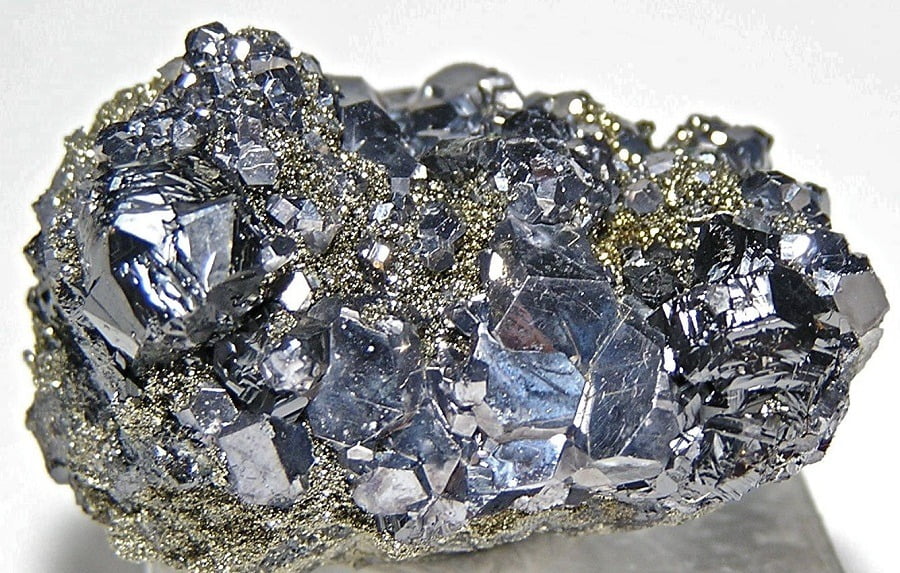
Galena is a striking, mirror-bright metallic mineral known as a “stone of harmony” — believed to balance the physical, etheric and spiritual planes. With its cubic silver-grey crystals, galena is a favourite among mineral collectors and crystal enthusiasts. But there’s one crucial thing to know first: galena is a lead mineral and must be handled safely. This guide covers the meaning and benefits of galena, plus the safety tips every owner should follow.
What Is the Galena Stone?
Galena is the primary ore of lead — a heavy, metallic mineral with a bright silver-grey shine and distinctive cube-shaped crystals. It is mined from hydrothermal ore veins, often alongside quartz and chalcopyrite. In crystal tradition it is regarded as a grounding, harmonising stone that connects and balances the different levels of one’s being.
The Meaning and Benefits of Galena
When kept safely as a specimen, galena is valued in crystal tradition for these qualities.
Grounding and Harmony
The core galena benefit is harmony and grounding — it is believed to balance the physical, etheric and spiritual planes and bring a sense of centred calm, much like other heavy metallic minerals.
Calm and Emotional Release
Galena is thought to help dissolve anger, ease fear and clear insecurity, bringing tranquillity during stressful times and a steadier emotional state.
Insight and Clear Thinking
It is also associated with opening the mind, expanding ideas, and promoting quick thinking and diplomacy — a stone of grounded mental clarity for planning and problem-solving.
Galena at a Glance
| Feature | Detail |
|---|---|
| Type | Lead sulfide mineral (ore of lead) |
| Colour | Bright metallic silver-grey |
| Crystal form | Cubic |
| Energy | Grounding, harmonising, calming |
| Chakra | Aligns/grounds the chakras |
| Safety | Contains lead — display specimen only |
Galena and the Chakras
Galena is used in crystal tradition to align and ground the chakras, and is sometimes placed in chakra layouts (over clothing, not bare skin). Its heavy, earthy energy is thought to anchor and harmonise the body’s energy centres, bringing everything back into balance.
How to Keep Galena Safely
Because of its lead content, galena is best enjoyed as a collector’s or display specimen. Keep it in a sealed box or case, handle it minimally and wash your hands afterwards, never soak it in water or make elixirs, and keep it out of reach of children and pets. Enjoy its beauty and grounding presence from a safe distance rather than wearing it.
Explore More at AstroKapoor
For wearable grounding stones, see our hematite gemstone guide, explore related crystals in our varieties of quartz guide, and browse our full Gemstones collection.
Frequently Asked Questions
What is the galena stone?
Galena is a heavy, metallic silver-grey mineral and the primary ore of lead, with distinctive cube-shaped crystals. In crystal tradition it is known as a grounding, harmonising stone that balances the physical, etheric and spiritual planes, but it must be handled safely because it contains lead.
Is galena toxic?
Yes. Galena is lead sulfide (PbS) and contains lead, which is toxic. It should never be licked, tasted, ingested or made into a water elixir, and hands should always be washed after handling it. Galena is best kept as a sealed display specimen, away from children and pets.
What are the benefits of galena?
In crystal tradition, galena is valued for grounding and harmony, calming emotions such as anger, fear and insecurity, bringing tranquillity during stress, and promoting clear thinking and diplomacy. These are traditional beliefs, and galena should be kept only as a specimen due to its lead content.
Can you wear galena?
It is not recommended to wear galena against the skin, because it is a lead mineral and prolonged skin contact or dust exposure carries a toxicity risk. Galena is best kept as a collector’s or display specimen rather than as wearable jewellery.
How do you handle galena safely?
Handle galena minimally, always wash your hands afterwards, and never lick, ingest or soak it in water. Store it in a sealed box or case away from children and pets, and keep it as a display specimen rather than wearing it or grinding it into dust.
