
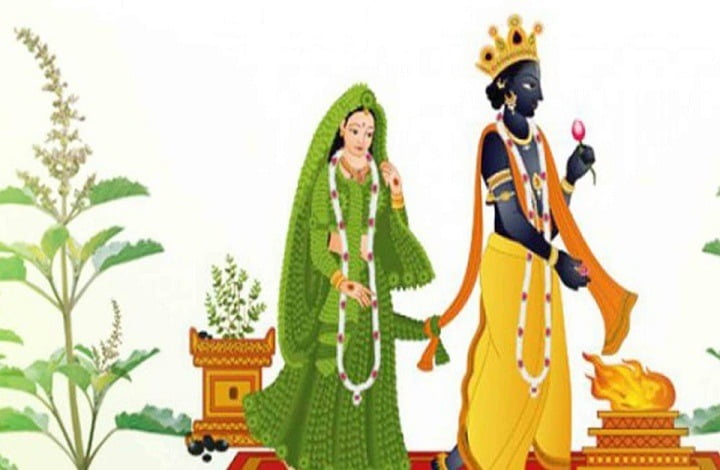
Tulsi Vivah is one of the most beloved Hindu festivals — the sacred, ceremonial marriage of the holy Tulsi (holy basil) plant to Lord Vishnu, worshipped in the form of the Shaligram stone. Marking the end of the harvest season and the beginning of the Hindu wedding season, Tulsi Vivah is celebrated with great devotion in homes and temples across India. This guide explores the significance, date, rituals and beautiful story behind Tulsi Vivah.
What Is Tulsi Vivah?
Tulsi Vivah is a symbolic wedding ceremony in which the Tulsi plant, revered as Goddess Tulsi (or Brinda), is ceremonially married to Lord Vishnu, represented by the sacred Shaligram stone. Performing this ritual is considered as spiritually meritorious as performing Kanyadaan — the giving away of one’s own daughter in marriage — making it deeply auspicious for families.
When Is Tulsi Vivah Celebrated?
Tulsi Vivah is celebrated in the holy month of Kartik, beginning on the eleventh day (Ekadashi) of the bright fortnight — known as Prabodhini (Dev Uthani) Ekadashi — and concluding on the full-moon day, Kartik Purnima. This usually falls in October or November each year. The festivities traditionally span these five auspicious days.
The Story Behind Tulsi Vivah
The festival is rooted in the devotional story of Brinda (Vrinda), the devoted wife of the Asura king Jalandhar, whose chastity made her husband invincible. To restore balance, Lord Vishnu is said to have brought an end to this invincibility, and a heartbroken Brinda, in her grief, was blessed rather than forgotten — Vishnu promised that a sacred Tulsi plant would grow from her, remaining eternally united with him in the form of Shaligram. This is why Tulsi is worshipped as a goddess and married to Vishnu each year.
Tulsi Vivah Rituals
The ceremony mirrors a traditional Hindu wedding.
How Tulsi Vivah Is Performed
- The Tulsi plant is dressed as a bride — in a red saree, with red and green bangles, bindi and kumkum.
- A mangalsutra is made from dried turmeric root.
- Sugarcane, amla and tamarind are planted beside the Tulsi.
- The marriage is solemnised in the evening with mantras, aarti and offerings.
- Devotees offer food adorned with Tulsi leaves, which Lord Vishnu is said to accept lovingly.
Spiritual Importance of Tulsi Vivah
Tulsi Vivah marks a sacred transition — the close of the harvest season and the opening of the auspicious wedding season. It celebrates devotion, purity and the eternal bond between the divine and the devotee. Performing or attending Tulsi Vivah is believed to bring blessings of marital harmony, prosperity and spiritual merit to the household.
Explore More at AstroKapoor
Explore more sacred traditions with our guide to worshipping Lord Ganesha and the significance of Vasant Panchami. Learn about ritual worship in our article on yagya and its benefits.
Frequently Asked Questions
What is Tulsi Vivah?
Tulsi Vivah is a Hindu festival celebrating the ceremonial marriage of the sacred Tulsi (holy basil) plant to Lord Vishnu, worshipped in the form of the Shaligram stone. Performing it is considered as meritorious as Kanyadaan, the giving away of a daughter in marriage.
When is Tulsi Vivah celebrated?
Tulsi Vivah is celebrated in the month of Kartik, starting on Prabodhini (Dev Uthani) Ekadashi — the eleventh day of the bright fortnight — and concluding on Kartik Purnima, the full-moon day. It usually falls in October or November each year.
What is the story behind Tulsi Vivah?
The festival is based on the story of Brinda (Vrinda), a devoted wife whose devotion is honoured by Lord Vishnu. According to tradition, a sacred Tulsi plant grew from her, eternally united with Vishnu as Shaligram, which is why Tulsi is worshipped as a goddess and married to him each year.
What are the main rituals of Tulsi Vivah?
In Tulsi Vivah, the Tulsi plant is dressed as a bride in a red saree with bangles, bindi and kumkum, and a mangalsutra of turmeric root. Sugarcane, amla and tamarind are placed beside it, and the marriage is solemnised in the evening with mantras, aarti and food offerings adorned with Tulsi leaves.
Why is Tulsi Vivah important?
Tulsi Vivah marks the end of the harvest season and the beginning of the Hindu wedding season. It celebrates devotion and purity, and performing or attending it is believed to bring blessings of marital harmony, prosperity and spiritual merit to the household.
