
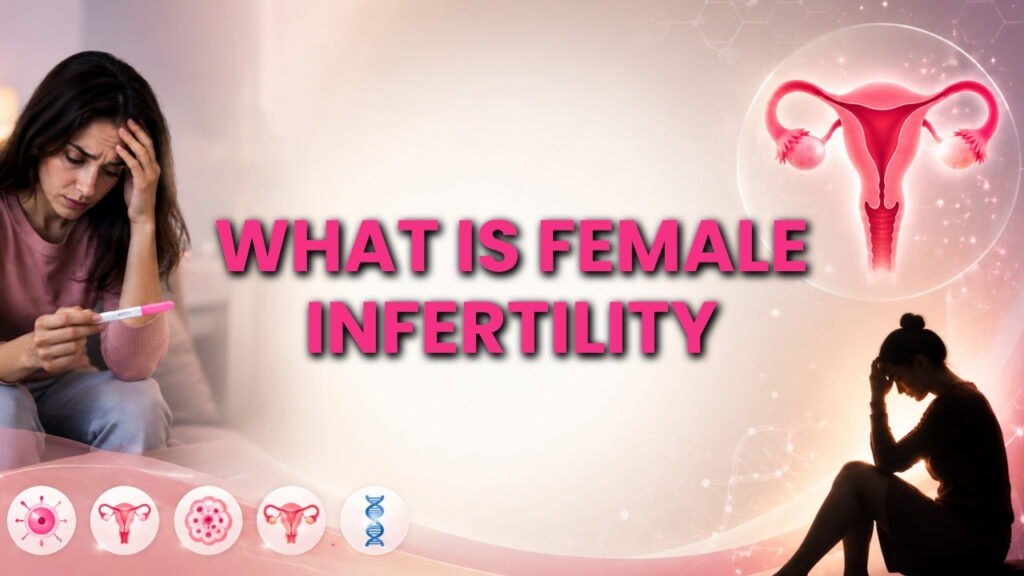
What Is Female Infertility?
A woman is generally considered to have fertility difficulties if she has not conceived after 12 months of regular, unprotected intercourse (or 6 months if she is over 35), or if she is unable to carry a pregnancy to term. It is common and, in many cases, treatable — and it is never a reflection of a woman’s worth.
The Female Reproductive System
Fertility depends on several organs working together:
- Ovaries — produce and release eggs (ovulation) and key hormones
- Fallopian tubes — carry the egg toward the uterus, where fertilisation usually happens
- Uterus (womb) — where a fertilised egg implants and a pregnancy develops
- Cervix & vagina — the pathway connecting the uterus to the outside
A problem at any of these stages — ovulation, the tubes, or the uterus — can affect fertility.
Common Causes of Female Infertility
- Ovulation disorders — such as PCOS (a very common cause)
- Blocked or damaged fallopian tubes — often from past infection
- Endometriosis
- Uterine or cervical issues
- Hormonal imbalances (including thyroid problems)
- Age and lifestyle factors (smoking, weight, stress)
How Is Female Infertility Diagnosed?
A doctor may use several tests to find the cause:
- Physical examination & medical history
- Blood tests — to check hormone levels and ovulation
- Thyroid function test — as thyroid issues can affect fertility
- Ultrasound — to examine the ovaries and uterus
- Hysterosalpingography (HSG) — an X-ray to check if the fallopian tubes are open
- Laparoscopy — a minor surgical look inside the pelvis (for conditions like endometriosis)
- Genetic testing — in certain cases
Based on the results, a specialist recommends the right, individualised next steps.
When Should You See a Specialist?
See a doctor or fertility specialist if you have been trying to conceive for 12 months or more without success — or after 6 months if you are over 35, or sooner if you have irregular periods, PCOS, endometriosis, thyroid issues or pelvic pain. Early evaluation gives the best chance of identifying and addressing the cause.
A Note on Support
Fertility challenges can be emotionally hard. Please be gentle with yourself and seek support from a doctor, counsellor, or people you trust. Astrology may bring some comfort during a difficult time, but it is emotional support only — real treatment must come from qualified medical professionals. For supportive guidance alongside your medical care, you can book an astrology consultation.
Frequently Asked Questions
What is female infertility?
Female infertility is when a woman of reproductive age has not conceived after about 12 months of regular, unprotected intercourse (or six months if over 35), or is unable to carry a pregnancy to term. It has many treatable causes and should be assessed by a doctor.
How is female infertility diagnosed?
It is diagnosed through a physical exam and history, blood and hormone tests, thyroid testing, ultrasound, hysterosalpingography (HSG) to check the fallopian tubes, laparoscopy, and sometimes genetic testing. A specialist interprets the results.
What is an HSG test?
Hysterosalpingography (HSG) is an X-ray procedure that checks whether the fallopian tubes are open and whether the uterus is normally shaped — a common test in evaluating female infertility.
What are the common causes of female infertility?
Common causes include ovulation disorders such as PCOS, blocked or damaged fallopian tubes, endometriosis, uterine or cervical issues, hormonal or thyroid imbalances, age and lifestyle factors.
When should a woman see a fertility specialist?
See a specialist after 12 months of trying without success, or after 6 months if you are over 35, or sooner if you have irregular periods, PCOS, endometriosis, thyroid issues or pelvic pain.
