
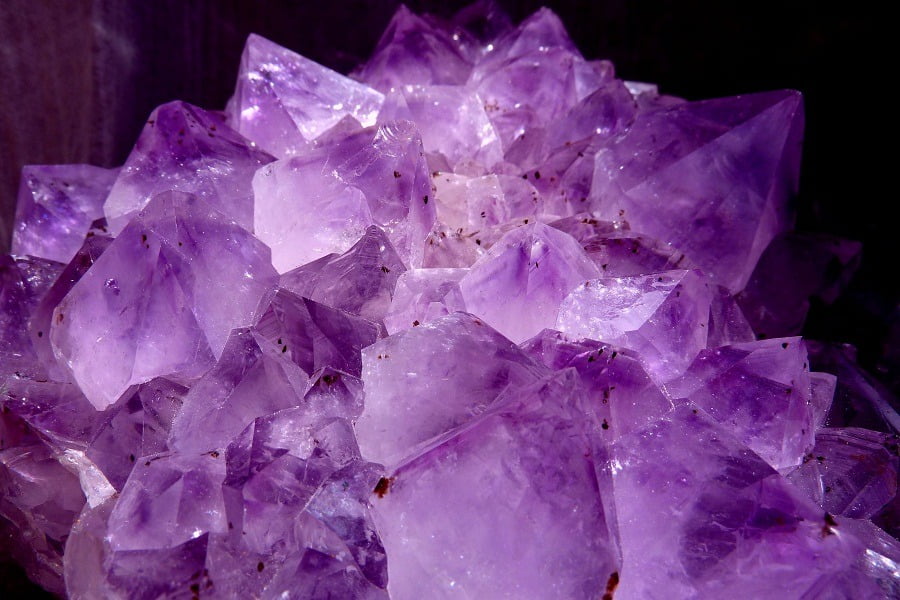
Amethyst Rosary, also known as Amethyst Mala or Kataila Mala, is made from beads of natural amethyst, the purple variety of quartz. Amethyst is valued for its attractive violet-to-purple colour and has been used for jewellery, ornamental objects and spiritual purposes for centuries.
Scientifically, amethyst is crystalline quartz with the chemical formula SiO₂. Its colour can range from pale lilac and violet to rich royal or reddish purple. Gem-quality amethyst is found in many regions of the world, with important sources including Brazil, Uruguay and Zambia.
In crystal and spiritual traditions, Amethyst Rosary benefits are commonly associated with meditation, calmness, wisdom, spiritual awareness and concentration. These metaphysical benefits are traditional beliefs rather than medically established effects.
What Is Special About Amethyst Rosary?
Amethyst has a long association with spirituality and clear thinking. Its name comes from the Greek amethystos, historically connected with the belief that the gemstone could protect a person from intoxication.
Today, an Amethyst Mala is commonly used for:
- Mantra chanting
- Meditation
- Prayer
- Spiritual reflection
- Concentration
- Chakra-focused practices
- Wearing as a spiritual rosary
The repetitive movement of beads during mantra chanting can also provide a structured way to maintain concentration during meditation.
Amethyst Rosary and Meditation
One of the most widely discussed Amethyst Mala benefits is its traditional connection with meditation.
Crystal practitioners often describe amethyst as a stone of peace, awareness and spiritual wisdom. An Amethyst Rosary can be held while chanting a mantra or used to count repetitions during meditation.
Its purple colour is traditionally associated with spiritual awareness, making it a popular gemstone for people interested in deeper meditation and introspection.
The mala itself does not guarantee a particular spiritual experience. Its main value in spiritual practice comes from personal faith, concentration and regular meditation.
Amethyst and Third Eye Chakra
In modern crystal-healing and chakra traditions, Amethyst is commonly associated with the Third Eye and Crown Chakras.
The Third Eye Chakra is traditionally connected with:
- Intuition
- Awareness
- Inner observation
- Wisdom
- Concentration
The Crown Chakra is associated with higher consciousness, spirituality and connection with the divine.
For this reason, people may use an Amethyst Rosary during meditation while focusing on these energy centres. Chakra associations belong to spiritual and metaphysical traditions and should not be interpreted as scientifically established anatomical systems.
Spiritual Benefits of Amethyst Rosary
Calmness and Inner Peace
Amethyst is traditionally described as a calming gemstone. Devotees and crystal practitioners may use an Amethyst Mala during prayer or meditation when seeking a more peaceful and centred state of mind.
Wisdom and Clarity
Amethyst has traditionally been called a stone of wisdom. It may be worn or used in meditation as a symbolic reminder to approach situations with patience, clarity and thoughtful decision-making.
Concentration During Mantra Chanting
An Amethyst Rosary can be particularly useful as a Japa Mala. Moving from one bead to another helps the practitioner keep track of mantra repetitions and maintain attention.
Positive Spiritual Practice
People interested in crystal traditions may associate amethyst with releasing negative thoughts and encouraging more constructive mental patterns.
These descriptions should be understood spiritually rather than as claims that the gemstone directly changes brain chemistry.
Emotional Balance
Traditional crystal beliefs associate amethyst with emotional harmony and tranquillity. Using the mala as part of meditation or prayer may provide a meaningful routine for people seeking greater mindfulness and reflection.
Amethyst Rosary for Sleep and Stress
Amethyst is frequently promoted in crystal traditions as a stone associated with relaxation, restful sleep and freedom from stress.
An Amethyst Mala may therefore be incorporated into a calming bedtime meditation or prayer routine.
However, it should not be stated that amethyst medically treats insomnia, anxiety, mood disorders or psychiatric conditions. Controlled research on healing crystals has not demonstrated a specific therapeutic effect beyond placebo for anxiety.
Persistent sleep, anxiety or mental-health problems should be discussed with an appropriate healthcare professional.
Amethyst Healing Properties: Traditional Beliefs vs Medical Facts
Traditional crystal literature makes many claims about the healing properties of Amethyst, including effects on hormones, lungs, digestion, headaches, blood and the endocrine system.
These should not be presented as proven medical benefits.
There is currently no reliable evidence that wearing an Amethyst Rosary can cure respiratory disease, regulate hormones, treat digestive disorders, stabilise psychiatric conditions or directly alter the body’s endocrine system.
Amethyst can still hold meaningful spiritual or cultural value. It may be used for meditation, prayer, personal symbolism and wellbeing practices without presenting it as a substitute for medical treatment.
Amethyst as a Natural Gemstone
From a gemological perspective, Amethyst is a variety of quartz and has a Mohs hardness of about 7, making it sufficiently durable for many forms of jewellery and beads.
The most valued stones typically display attractive, saturated purple colour without excessive darkness or distracting colour zoning. Colour is one of the most important factors affecting amethyst quality.
Amethyst may display:
- Light lilac colour
- Violet
- Bluish purple
- Strong purple
- Reddish purple
- Natural colour zoning
Natural differences between beads are normal and may add individual character to a gemstone rosary.
How to Use an Amethyst Mala
An Amethyst Rosary can be used according to a person’s spiritual tradition.
For mantra meditation:
- Sit in a quiet and clean location.
- Hold the mala comfortably.
- Select a mantra or prayer.
- Move through one bead with each repetition.
- Maintain slow breathing and concentration.
- Complete the chosen number of repetitions without rushing.
Some people also wear an Amethyst Mala around the neck as a spiritual accessory.
The effectiveness of a meditation practice depends more on consistency, concentration and intention than on the gemstone alone.
How to Care for an Amethyst Rosary
Amethyst is relatively durable, but proper care can help maintain its appearance.
Clean the beads gently using a soft cloth or mild soapy water when appropriate. Avoid harsh chemicals and excessive physical impact.
Prolonged exposure to strong heat or intense sunlight can alter or fade the colour of some amethyst, so storing the mala away from prolonged direct sunlight is advisable.
Buy Natural Amethyst Rosary or Kataila Mala
When purchasing a natural Amethyst Rosary, consider the colour, bead quality, workmanship, size and seller reliability.
Buyers should also distinguish between gemstone identification and spiritual claims. Certification may help describe whether a gemstone is natural or treated, but it cannot scientifically certify metaphysical benefits such as energy, healing or chakra activation.
AstroKapoor also offers a collection of Gemstone Rosaries for mantra chanting, meditation and traditional spiritual practices.
FAQs About Amethyst Rosary Benefits
1. What are the main Amethyst Rosary benefits?
Traditional Amethyst Rosary benefits include meditation support, spiritual awareness, calmness, concentration, wisdom and emotional balance. These are traditional metaphysical beliefs rather than guaranteed medical effects.
2. Which chakra is Amethyst associated with?
Amethyst is commonly associated in modern crystal traditions with the Third Eye and Crown Chakras, representing intuition, awareness and spirituality.
3. Can Amethyst Mala be used for mantra chanting?
Yes. Amethyst beads can be used as a Japa Mala to count mantra repetitions and maintain concentration during prayer or meditation.
4. Does Amethyst cure insomnia, anxiety or health problems?
There is no reliable scientific evidence that Amethyst cures insomnia, anxiety, hormonal disorders or other diseases. It may be used as part of a spiritual or relaxation practice while appropriate healthcare is sought where necessary.
5. What colour is natural Amethyst?
Natural amethyst is a violet-to-purple variety of quartz. Its colour can range from pale lilac to intense reddish or bluish purple depending on the stone.
