
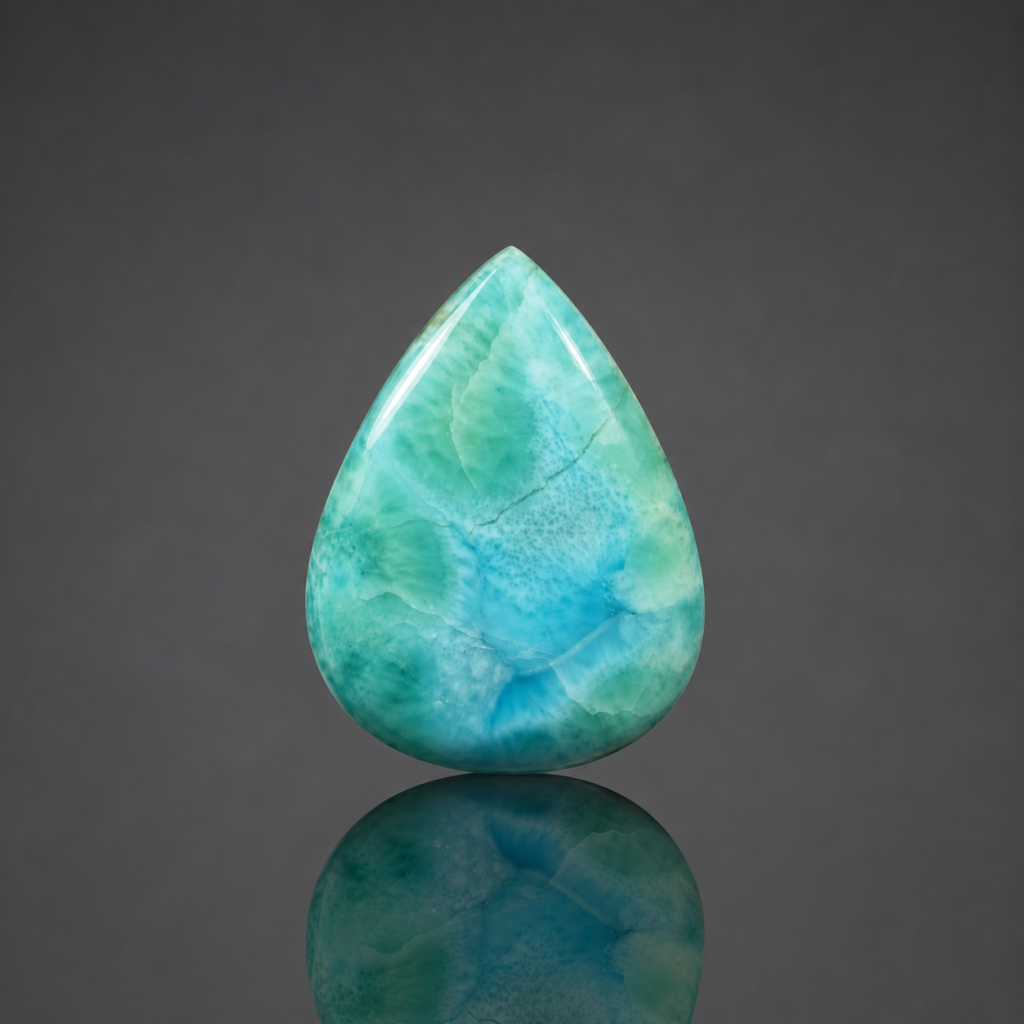
Larimar is a rare blue colored gem of the mineral pectolite, found in Dominican Republic in the Caribbean Island. Pectolite is an acid silicate hydrate of calcium and sodium. The blue color of Larimar is due to the deposit of copper substitution for calcium. The composition of this blue stone often contains calcite and hematite. Its color can vary from white to light blue, and from medium sky to volcanic blue. It is also called as “Stefilia’s” stone.
Larimar is particularly admired for its distinctive ocean-like blue and white patterns, which give every gemstone a naturally unique appearance. Because of its rarity and limited geographical source, it has become a popular gemstone among collectors and jewelry enthusiasts.
The history of Larimar is based on many legends and stories. The most important outcrop of blue pectolite is found at Los Chupaderos, about 10 kilometers southwest of the city Barahona, of the Dominican Republic. It was originally discovered in 1916 by a Spanish priest. But, it was mined in the year 1974 by the American Peace Corps volunteer, Norman Rilling. It was rediscovered by a Dominican, Miguel Mendez.
Larimar Origin and Gemstone Source
The only source of this gem is the Filipinas mines in Los Checheses, located in the Dominican Republic. Its deposit is on the surface where hot gases push crystallized minerals up through volcanic chimneys or tubes. In some cases, it may be found as sediment on the shore of the Caribbean Island, washed up as an alluvial deposit.
The limited natural occurrence of Larimar makes its origin an important factor when evaluating this gemstone. Its attractive blue shades and naturally occurring patterns are among the key characteristics that make Larimar distinctive.
Color: Blue, Blue-Green, Gray, or Red with White
Appearance: Translucent, smooth, with whorls of color or white veins showing through the base color. Often small to medium, tumbled.
Rarity: Easily obtained
Source: Dominican Republic, Bahamas
Category: Triclinic, pinacoidal
Luster: Silky
Mohs Scale Hardness: 4.5 to 5
Formula: NaCa2Si3O8 (OH)
Benefits and Metaphysical Properties of Larimar
Larimar is one of the “spiritual stones” that opens to new dimensions, stimulating evolution of the earth. It radiates love and peace and promotes tranquility. It effortlessly induces a deep meditative state. It naturally raises consciousness and harmonizes body and soul to new vibrations.
Spiritually, it empowers the spiritual self. It facilitates angelic contact and communication with other realms according to traditional metaphysical beliefs. It is considered an excellent stone for seeking a soulmate and is traditionally associated with healing past-life relationship and heart trauma.
Mentally, Larimar brings serenity and clarity and constructive thought. It stimulates and encourages self-confidence and self-esteem. Emotionally, it brings calmness and equilibrium. It is considered an antidote to emotional extremes. It heals trauma of the heart and reconnects to natural playfulness and joyful childlike energy.
Larimar is also popularly associated with peace, emotional balance, communication, inner calm, and spiritual awareness, making it a preferred stone for people interested in meditation and metaphysical practices.
Larimar in Gem Therapy
Larimar stimulates the third eye, heart, crown, and throat chakras, and promotes self-healing according to traditional gem therapy practices. It is particularly helpful for cartilage and throat conditions, dissolving energy blockages in the chest, head, and neck.
It can also be laid on constricted joints or blocked arteries. If placed on a painful point, it draws out pain. It is also used as a reflexology tool.
These therapeutic and healing properties are based on traditional metaphysical beliefs and should not replace professional medical diagnosis or treatment.
Larimar Jewelry
It is an extremely rare gem. This is soft, so it is rarely used in jewelry. Most Larimar is studded in silver, while higher-quality gems can be studded along with white and gold gemstones.
Pendants, bangles, and bracelets are most popular, followed by earrings and various beads of necklaces and hair pins. Because Larimar has a relatively low hardness, it should be handled carefully and protected from scratches, harsh chemicals, and hard impacts.
The Six Key Steps in Examining a Larimar Gemstone
Whenever possible, examine stones unmounted.
- Make sure the gem is clean.
- Hold the unmounted stone so that your fingers touch only the girdle.
- View the gem under proper lighting.
- Rotate the stone in order to view it from different angles.
- Examine the color distribution and natural patterns carefully.
- Check the gemstone for visible inclusions, surface damage, and overall clarity.
Larimar Gemstone Care
Larimar should be handled with care because of its relatively soft nature. Avoid exposing the gemstone to harsh chemicals, abrasive materials, and rough surfaces. When not being worn, store it separately in a soft pouch or jewelry box to reduce the possibility of scratches.
For jewelry pieces, gentle cleaning with a soft cloth is generally preferred to preserve the gemstone’s natural polish and attractive blue-white appearance.
Frequently Asked Questions
What is Larimar gemstone?
Larimar is a rare blue variety of pectolite that is primarily associated with the Dominican Republic. It is recognized for its beautiful blue, blue-green, and white patterns and is also popularly known as the Dolphin Stone.
What are the benefits of Larimar gemstone?
According to traditional metaphysical beliefs, Larimar is associated with peace, tranquility, emotional balance, self-confidence, spiritual awareness, and meditation. It is also traditionally connected with several chakras, including the throat, heart, crown, and third eye chakras.
Which country is Larimar found in?
Larimar is primarily sourced from the Dominican Republic, particularly the region around Barahona. Its limited geographical occurrence contributes to its rarity and appeal among gemstone collectors.
Can Larimar be worn as jewelry?
Yes, Larimar is commonly used in pendants, bracelets, bangles, earrings, necklaces, and beads. Since it has a Mohs hardness of approximately 4.5 to 5, it should be protected from scratches, hard impacts, and harsh chemicals.
Which chakras are associated with Larimar?
Larimar is traditionally associated with the throat, heart, crown, and third eye chakras. In metaphysical practices, it is used for meditation, communication, emotional balance, and spiritual awareness.
