
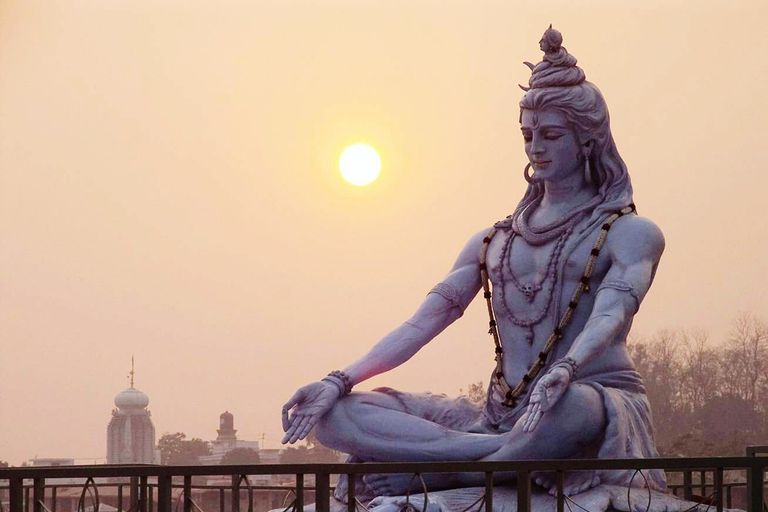
Shiva Yajur Mantra (Karpura Gauram Karunavtaram) beautiful sanskrit mantra for Lord Shiva.
The Karpura Gauram Mantra is one of the beautiful and powerful Sanskrit prayers dedicated to Lord Shiva. It describes the divine qualities of Lord Shiva and Goddess Parvati while expressing devotion, surrender, purity, and compassion. Regular chanting or listening to this sacred mantra is traditionally associated with inner peace, spiritual awareness, and devotion to Lord Shiva.
Karpur Gauram – The one who is pure and white as camphor.
Karunaavatarm – The epitome of compassion.
Sansara Saaram – The one who is the essence of the world.
Bhujagendra Saaram – The one with the serpent king as his garland.
Sadaa Vasantam – Always residing.
Hridayaaravinde – Heart like lotus.
Bhavam Bhavani – Parvati, Lord Shiva’s consort.
Sahitam Namami – I bow to you both.
The mantra beautifully represents the divine presence of Lord Shiva and Goddess Parvati and is traditionally recited as an expression of devotion. Understanding the meaning of each phrase can make mantra meditation more meaningful and help devotees develop a deeper spiritual connection.
Monday Worship of Lord Shiva
Monday is ruled by the Moon and the deity for Monday is Lord Shiva.
Nakshatras are the daughter of Daksha and they are all married to the Moon. The moon journeys through each of the 27 nakshatras. But it was more attached to the Rohini nakshatra and spent more time with her. The other nakshatra felt very isolated and complained to their father Daksha who cursed the moon.
According to traditional Hindu mythology, the Moon’s connection with the 27 Nakshatras is an important part of its story. The association of Monday with the Moon makes Monday worship of Lord Shiva particularly significant in many spiritual traditions.
Devotees commonly observe Monday by offering prayers to Lord Shiva, visiting a Shiva temple, chanting mantras, performing meditation, or offering water to the Shiva Lingam as part of their spiritual practice.
Importance of the Moon in Astrology
Mythologically Moon is also referred as “Mind”, and it has a strong influence on our thoughts, feelings, and emotions. The other planets are away from us and Moon is the closest to us. So if we have a strong Moon, we have the power to control our emotions and we have a strong mind that also helps us to withstand any negative planetary influences. Therefore strengthening the Moon (mind) is extremely crucial for a peaceful life. One of the most effective ways to strengthen our Moon is to worship Lord Shiva, especially on Monday. Meditate and try to listen to the most powerful Rudram chant for gaining prosperity and abundance from Lord Shiva.
In Vedic astrology, the Moon is traditionally associated with the mind, emotions, mental peace, sensitivity, and emotional responses. Therefore, a well-supported Moon is considered important for maintaining emotional stability and a balanced state of mind.
Worshipping Lord Shiva on Monday is traditionally believed to be a spiritual practice for seeking calmness and strengthening one’s connection with divine consciousness. Meditation and devotional chanting can also help create a peaceful environment for spiritual reflection.
Lord Shiva and Planetary Influences
Lord Shiva is also known as the Guru of Lord Shani and Lord Shiva presides over time. He is often referred as “Maha Kaal”, The Great Time. Therefore worshipping Lord Shiva can help to get relief of negative influence of the planets.
Lord Shiva’s form as Maha Kaal represents the eternal nature of time and the transcendence of worldly limitations. In traditional spiritual beliefs, devotion to Lord Shiva is considered a powerful way of seeking protection, inner strength, peace, and guidance during challenging planetary periods.
Benefits of Chanting Shiva Mantras
Regular mantra practice is traditionally undertaken with devotion and consistency. The spiritual benefits associated with Shiva mantra chanting may include:
- Promoting mental peace and emotional calmness
- Supporting concentration and meditation
- Encouraging spiritual awareness and devotion
- Helping reduce negative thoughts and emotional disturbances
- Creating a peaceful and positive spiritual environment
- Strengthening one’s connection with Lord Shiva
- Encouraging patience, discipline, and inner stability
Mantra chanting should be approached as a spiritual practice rather than as a substitute for professional medical, psychological, or financial advice.
How to Worship Lord Shiva on Monday
Devotees can follow a simple and peaceful Monday worship routine according to their individual traditions. This may include taking a bath, maintaining a clean prayer space, offering water to Lord Shiva, chanting the Karpura Gauram Mantra, and spending a few minutes in meditation.
The most important aspect of worship is faith, sincerity, consistency, and devotion rather than complexity of the ritual.
Frequently Asked Questions
What is the Karpura Gauram Mantra?
Karpura Gauram is a Sanskrit prayer dedicated to Lord Shiva and Goddess Parvati. It describes Lord Shiva’s purity, compassion, divine presence, and spiritual significance.
Why is Monday considered important for Lord Shiva worship?
Monday is traditionally associated with the Moon, and Lord Shiva is worshipped on this day by many devotees. Monday prayers are commonly performed to seek peace, emotional balance, and divine blessings.
How does the Karpura Gauram Mantra help spiritually?
The mantra is traditionally recited as an expression of devotion and surrender. Regular chanting or meditation with the mantra may support inner peace, concentration, spiritual awareness, and emotional calmness.
Why is the Moon important in Vedic astrology?
The Moon is traditionally associated with the mind, emotions, feelings, sensitivity, and mental peace. Its placement and condition in a birth chart are therefore given considerable importance in Vedic astrology.
Can I chant the Shiva Mantra on days other than Monday?
Yes. While Monday is traditionally considered especially auspicious for Lord Shiva worship, devotees can chant Shiva mantras on other days as well according to their spiritual practice and personal beliefs.
