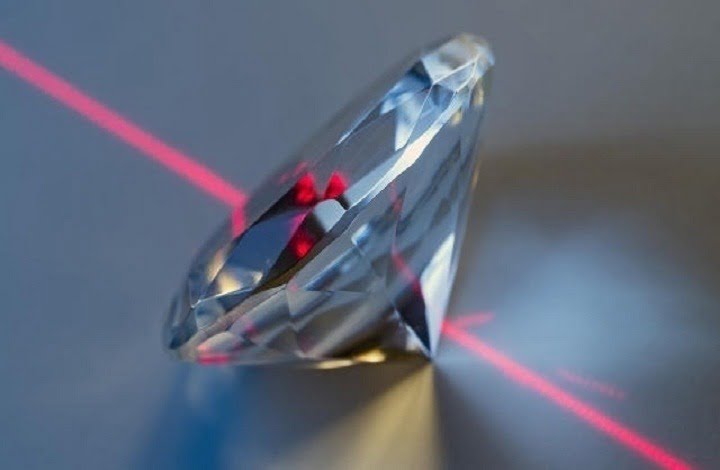
Part of what makes gemstones so captivating is the extraordinary way they interact with light. Beyond simple colour, many gems display striking Optical Phenomena Gemstones showcase — stars that glide across the surface, a slit of light like a cat’s eye, rainbows shifting with every angle, or a stone that changes colour entirely between daylight and lamplight. These effects are not only beautiful but also help identify and value gemstones. Understanding the main Optical Phenomena Gemstones display deepens your appreciation of why certain gems are so treasured.
Adularescence: The Glow of Moonstone
Adularescence is the soft, billowy blue-white glow that seems to float just beneath the surface of a moonstone. It is caused by light scattering between microscopic layers within the stone — and the thinner those layers, the finer the blue flash. This dreamy shimmer is central to moonstone’s gentle, nurturing reputation, described further in our guide to the astrological benefits of moonstone.
Asterism: The Star Effect
Asterism is the appearance of a shining star — usually with four or six rays — across the dome of a polished gem. It occurs when light reflects off tiny needle-like inclusions arranged within the stone, and is most famous in star rubies and star sapphires. The rays appear to glide as the stone is moved, giving these gems an almost living quality.
Chatoyancy: The Cat’s Eye
Chatoyancy — from the French for “cat’s eye” — is a single bright band of light that opens and closes across a gem as it turns, exactly like a cat’s slit pupil. It appears in stones cut as smooth cabochons, most famously in chrysoberyl cat’s eye, an important gemstone in Vedic astrology as the stone of Ketu, covered in our guide to the benefits of cat’s eye.
Iridescence, Play of Colour and Labradorescence
Several phenomena involve shifting rainbow colours:
- Iridescence (goniochromism) — multiple colours appear and change with the viewing angle, like a soap bubble or butterfly wing.
- Play of colour — the dramatic, dancing rainbow flashes seen in opal, its most famous optical trait, explained in our opal gemstone guide.
- Labradorescence — the directional metallic flash of blue, green and gold seen in labradorite, caused by light bouncing off internal twinning.
Pleochroism and Colour Change
Two further effects depend on direction and light:
- Pleochroism — a gem shows different colours when viewed from different directions; iolite, for example, shifts from violet-blue to grey.
- Colour change — the whole stone appears one colour in daylight and another under artificial light. Alexandrite is the classic example, green by day and red by lamplight.
These remarkable Optical Phenomena Gemstones display are a reminder of how deeply beauty and structure are linked in the gem world — the same natural order that gives each of the nine planetary gemstones its unique character.
Frequently Asked Questions
What are Optical Phenomena Gemstones display?
Optical phenomena are special ways gemstones interact with light — such as stars, cat’s-eye bands, rainbow flashes and colour change — created by their internal structure and inclusions.
What causes the star effect in a gemstone?
The star effect, called asterism, is caused by light reflecting off tiny needle-like inclusions arranged inside the stone. It is most famous in star rubies and star sapphires.
What is the cat’s eye effect?
The cat’s eye effect, called chatoyancy, is a single bright band of light that opens and closes across a smooth-cut gem as it turns, like a cat’s pupil. Chrysoberyl cat’s eye is the classic example.
Which gemstone shows play of colour?
Opal is famous for its play of colour — dancing rainbow flashes that move across the surface. It is one of the most celebrated optical effects in the gem world.
What gemstone changes colour?
Alexandrite is the classic colour-change gem, appearing green in daylight and red under incandescent light. This effect is caused by the way the stone absorbs different wavelengths.
