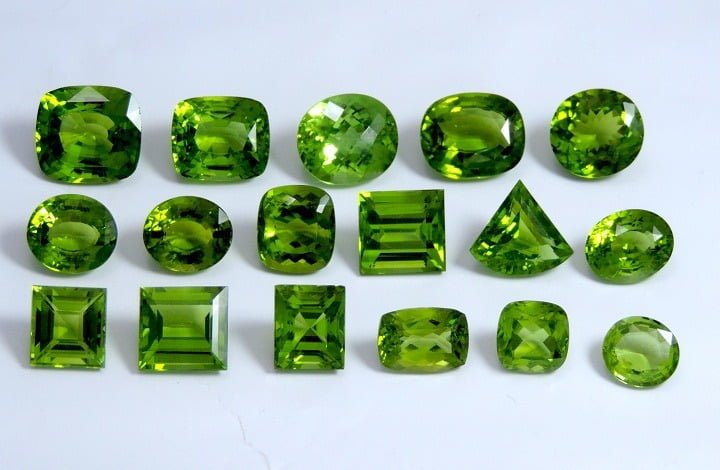
Peridot is a beautiful transparent green gemstone with a fresh, sunny glow that has charmed jewellery lovers since ancient times. Famous as the birthstone of August, peridot is unusual in that it occurs in essentially one colour — green — with shades ranging from bright yellow-green to olive and, occasionally, a brownish tint, depending on its iron content. Valued both for its beauty and for its gentle metaphysical reputation, peridot is a stone associated with lightness, success and peace.
The Meaning and Origin of Peridot
The name “peridot” is thought to come either from the Arabic word faridat, meaning gem, or from an old French word — its exact origin is uncertain. What is certain is peridot’s long history: it has been treasured for thousands of years, sometimes mistaken for emerald in antiquity because of its rich green colour. That resemblance is why peridot is affectionately nicknamed the “poor man’s emerald“ — a more affordable green stone that echoes the beauty of its costlier cousin. This link is more than skin-deep, as peridot is also associated with the same planet, Mercury.
The Properties of Peridot
Peridot’s fresh green colour reflects its gentle, uplifting character. Its traditional properties include:
- A sense of lightness and positivity — dispelling heaviness and gloom.
- Success and prosperity — long associated with good fortune.
- Peace and calm — a soothing, balancing influence on the emotions.
- Clarity of mind — supporting focus and fresh thinking.
Because of these qualities, peridot has been worn as a stone of renewal and optimism, a bright companion for new beginnings.
Peridot and the Planet Mercury
In astrology, peridot is linked to Mercury, the planet of intellect and communication — the same planet represented by emerald. This is why peridot is so often recommended as an emerald substitute: it carries a gentler version of Mercury’s energy, supporting intellect, expression and adaptability at a far more accessible price. For those who cannot wear a full emerald, peridot offers a softer route to similar qualities, much like the substitute stones described in our guide to the power of upratna.
Traditional Health Associations
In traditional lore, peridot has been linked to relief from nervous complaints, headaches, and certain bronchial and skin conditions. These associations come from historical belief rather than medical evidence.
Choosing Peridot
Because peridot is relatively affordable and available worldwide, it is an easy stone to acquire, but quality still varies with colour, clarity and cut. A clean, richly coloured stone is the most prized. Whether you are drawn to peridot as the August birthstone, as an emerald substitute, or simply for its cheerful green beauty, it remains one of the most approachable and uplifting gemstones. To explore its specific benefits and uses, see our guide to the peridot gemstone benefits, and for its protective side, peridot as a stone for the aura.
Peridot Stone Price
The peridot stone price varies depending on carat weight, clarity, colour saturation and origin — this peridot gemstone price typically ranges from affordable to moderate compared to other coloured gemstones, making it accessible for most buyers. The peridot value is generally higher for stones with a rich, saturated green colour and minimal inclusions, while lighter or included stones command a lower peridot cost. Because it is one of the more budget-friendly green gemstones, peridot price remains attractive for those seeking the beauty of green without the expense of emerald. To know the exact peridot stone price for a certified, natural stone suited to your chart, contact Astrokapoor for current rates and availability.
Frequently Asked Questions
What is peridot?
Peridot is a transparent green gemstone and the birthstone of August. It occurs in one colour range — from yellow-green to olive — and is associated with lightness, success, peace and the planet Mercury.
Why is peridot called the poor man’s emerald?
Because of its rich green colour, peridot has historically been compared to emerald. Being far more affordable, it is nicknamed the “poor man’s emerald” and is often worn as an emerald substitute.
What does peridot symbolise?
Peridot symbolises lightness, positivity, success and peace. Its fresh green colour reflects renewal and optimism, which is why it is associated with new beginnings and good fortune.
Which planet is peridot linked to?
Peridot is linked to Mercury, the planet of intellect and communication — the same planet as emerald — which is why it is recommended as a gentler, more affordable Mercury stone.
Who can wear peridot?
As the August birthstone and an emerald substitute, peridot is widely worn. For astrological use as a Mercury stone, it is best chosen according to your birth chart.
What is the peridot stone price?
The peridot stone price depends on carat weight, colour depth and clarity — richer green, eye-clean stones carry a higher peridot value, while included or paler stones are more affordable.
Is peridot gemstone price higher or lower than emerald?
Peridot price is generally much lower than emerald, which is why it is popularly called the “poor man’s emerald” — offering similar Mercury-linked benefits at a more accessible cost.
