
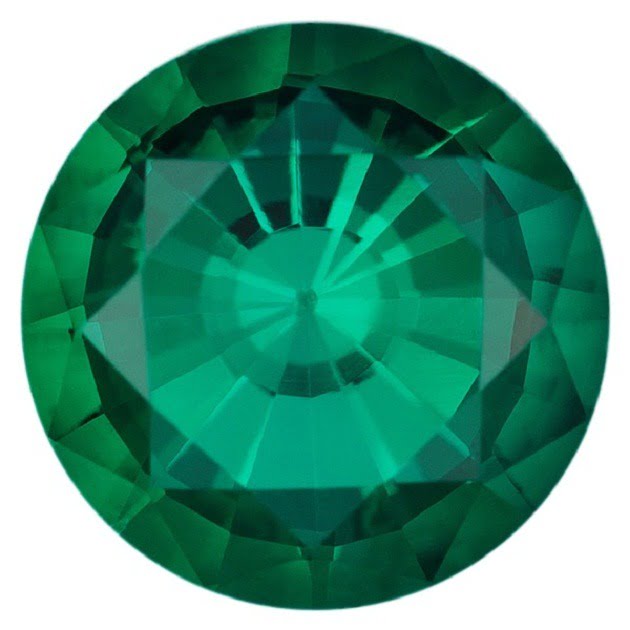
The synthetic emerald — also known as a lab-created emerald — is one of the most convincing man-made gemstones in the world. In fact, the emerald-green variety is the only gem manufactured synthetically on an industrial scale, and its resemblance to the real thing is so close that even experienced buyers can be fooled. For anyone considering an emerald, understanding the difference between a natural and synthetic stone is essential — especially since emeralds hold deep astrological value as the gemstone of Mercury. Before buying, it always helps to read our detailed emerald gemstone information guide.
What Is a Synthetic Emerald?
A synthetic emerald has the same chemical composition, crystal structure, and physical properties as a natural emerald — the key difference is that it is grown in a laboratory rather than formed over millions of years inside the earth. Because it is chemically identical to the natural stone, a synthetic emerald displays the same rich green colour and brilliance, which is exactly why it can be so hard to tell apart from a genuine mined emerald.
What Does a Synthetic Emerald Look Like?
Synthetic emeralds are typically a strong emerald green with a slight bluish tinge. In terms of cutting, they are most often given a step or trap cut, while mixed oval or pear shapes are rare. To the naked eye, their outward appearance is remarkably similar to natural emeralds — the differences only become clear under close inspection.
How to Identify a Synthetic Emerald
The secret to identifying a synthetic emerald lies in its inclusions — the tiny internal features inside the stone. The two main types of lab-grown emeralds each leave their own clues:
| Type | Tell-Tale Sign |
|---|---|
| Hydrothermal synthetic | Inclusions resemble natural ones but are oddly arranged, often positioned like mirror images along the growth lines |
| Flux-melt synthetic | Contains a whitish residue of flux material trapped in cracks formed during growth |
| General appearance | Synthetic stones often look “too clean” and shiny, almost mirror-like, with fewer natural flaws |
One of the biggest giveaways is that a synthetic emerald is often too perfect. Natural emeralds almost always contain a “jardin” (garden) of inclusions, so a flawless, glassy-clean stone should immediately raise suspicion.
Can You Identify a Synthetic Emerald Without Tools?
Realistically, no — it is very difficult to distinguish a synthetic emerald from a natural one with the naked eye alone. Reliable identification usually requires a good microscope, a jeweller’s loupe, and proper laboratory testing. This is why buying only from trusted, certified sources is so important, and why a personalised Vedic gemstone recommendation always pairs the right stone with proper verification.
How Much Does a Synthetic Emerald Cost?
Synthetic emeralds cost significantly less than natural emeralds. A lab-created stone with minimal inclusions is priced comparably to a secondary gemstone, far below what a natural emerald of similar appearance would command. While this makes synthetic emeralds attractive for affordable jewellery, it’s important to understand that in Vedic astrology, only a natural emerald is believed to carry the true planetary energy of Mercury — a synthetic stone is valued for beauty, not astrological benefit.
Synthetic vs Natural Emerald: Which Should You Choose?
For jewellery lovers, a synthetic emerald offers dazzling colour at a fraction of the price — a perfectly good choice when beauty is the goal. But for those wearing an emerald for its astrological benefits, only a genuine, natural stone will do. Knowing whether Mercury needs strengthening in your chart depends on your running time period of planets, so always confirm both your need and the stone’s authenticity before buying.
Explore More at AstroKapoor
- Emerald Gemstone Information
- Time Period of Planets
- Vedic Gemstone Recommendation
- The Significance of Mantra
- Astrology Consultancy
Frequently Asked Questions
What is a synthetic emerald?
A synthetic emerald, also called a lab-created emerald, is an emerald grown in a laboratory rather than formed naturally in the earth. It has the same chemical composition, crystal structure, and physical properties as a natural emerald, which is why it looks almost identical to the real thing.
How can you tell a synthetic emerald from a natural one?
The main difference lies in the inclusions. Hydrothermal synthetic emeralds have inclusions that are oddly arranged like mirror images along the growth lines, while flux-melt types show whitish flux residue in cracks. Synthetic emeralds also often look “too clean” and glassy. Reliable identification usually needs a microscope, loupe, and lab test.
Is a synthetic emerald real?
A synthetic emerald is a real emerald in terms of chemistry and structure, but it is man-made rather than natural. It is genuine as a gemstone for jewellery, but it is not a natural mined emerald and, in Vedic astrology, is not believed to carry the planetary energy of Mercury.
Does a synthetic emerald work for astrology?
No. In Vedic astrology, only a natural emerald is believed to carry the true energy of the planet Mercury. A synthetic emerald is valued for its beauty and affordability but is not considered effective for astrological benefits, so those seeking planetary results should always choose a genuine natural stone.
How much cheaper is a synthetic emerald than a natural one?
Synthetic emeralds are significantly cheaper than natural emeralds. A lab-created stone with minimal inclusions is priced similarly to a secondary gemstone and costs far less than a natural emerald of comparable colour and clarity, making it a budget-friendly option for jewellery.
