
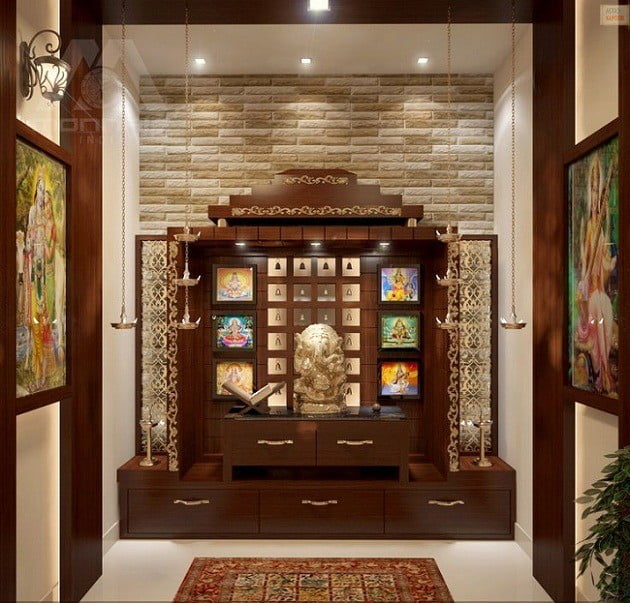
The pooja room is the spiritual heart of a home — the space where the family prays, meditates and seeks blessings. According to Vastu Shastra, placing and designing this room correctly invites peace, positivity and divine grace into the household. This guide covers the best direction for your mandir, where to place the idols, which way to face while praying, and what to include or avoid for a truly sacred space.
Best Direction for the Pooja Room
The ideal location for a pooja room is the north-east (Ishaan) corner of the house. This direction receives ample morning sunlight, is considered the most spiritually charged zone, and stays naturally fresh and positive. In larger homes the pooja room may also be placed near the centre (Brahmasthan). It should always be on the ground floor — never in a basement — and must not be built under a staircase, inside a bedroom, or directly facing the main entrance.
Idol Placement and Prayer Direction
Getting the idols and your prayer direction right is essential for a Vastu-compliant mandir.
Where to Place the Idols
Idols should be kept along the north wall so that, while praying, you face east or north. Lord Hanuman is an exception and should face south. Avoid keeping multiple idols of the same deity, as this is believed to create discord, and never keep broken idols or torn pictures in the mandir.
Idol & Facing Quick Guide
| Element | Vastu Recommendation |
|---|---|
| Pooja room location | North-East (Ishaan) corner |
| Idol placement | Along the north wall |
| Devotee faces | East or North while praying |
| Lord Hanuman | Should face South |
| Lamp / diya | Placed in front of the idols |
Design, Colours and Materials
A pooja room should feel calm and pure. Use soothing colours such as white, light blue or light yellow, and marble work is considered ideal for a serene, clean look. The room is best kept with a low ceiling (a false ceiling is acceptable), and a wooden temple mounted on the wall is preferred over heavy built-in structures. The pooja room door ideally has two shutters.
What to Avoid in the Pooja Room
To preserve the sanctity of the space, never place a toilet or washroom next to, above or below the pooja room. Keep the area spotlessly clean, avoid storing clutter or non-worship items there, and never keep broken idols, dead flowers or torn religious pictures. A clean, well-lit and peaceful mandir is itself the greatest invitation to positive energy.
Explore More Vastu Guidance at AstroKapoor
Extend this positive energy through the rest of your home with our Vastu Shastra Tips for Home, invite luck at your gate with Main Entrance Vastu, and for complete guidance visit our Vastu Hub Page.
Frequently Asked Questions
Which direction is best for a pooja room as per Vastu?
The north-east (Ishaan) corner is the best direction for a pooja room, as it receives morning sunlight and is considered the most spiritually positive zone. It should be on the ground floor and never built under a staircase, inside a bedroom, or facing the main entrance.
In which direction should idols face in the pooja room?
Idols should be placed along the north wall so that the devotee faces east or north while praying. Lord Hanuman is an exception and should face south. Multiple idols of the same deity should be avoided.
Which direction should you face while praying?
You should face east or north while praying, which is achieved by placing the idols along the north wall of the pooja room. These directions are considered the most auspicious for worship and meditation.
What colours are best for a pooja room?
Soothing colours such as white, light blue and light yellow are best for a pooja room, as they create a calm and pure atmosphere. Marble work is also recommended for a clean, serene look.
What should be avoided in a pooja room as per Vastu?
Avoid placing a toilet or washroom next to, above or below the pooja room, and never keep broken idols, torn pictures or dead flowers there. The room should not be in a basement, under a staircase, or inside a bedroom, and should always be kept clean and clutter-free.
