In Vedic astrology, the Ruby — known as Manik — is one of the most prized and powerful gemstones of all, because it carries the energy of the Sun, the king of the planets. When the Sun is well placed but needs strengthening, a Ruby can transform a person’s confidence, vitality and success. In this Astrokapoor guide to ruby astrology, you will learn how the stone works, its benefits, who should wear it, and how to judge its quality.
The Sun and the Ruby
According to Hindu astrological tradition, the Sun (Surya) governs the Ruby, making it the primary stone of solar energy. The Sun represents the soul, confidence, authority, the father, health and vitality, so the Ruby is worn to amplify these very qualities. A strong, well-supported Sun gives leadership, recognition and a commanding personality — and a suitable Ruby channels that solar power directly to the wearer. This solar rulership is the foundation of all ruby astrology, and it is what places Manik at the head of the nine vedic astrological gemstones.
To understand the Sun’s fuller symbolism, see our companion guide on Ruby meaning and mystical power.
Astrological Benefits of Ruby
Ruby is believed to improve concentration and mental focus, strengthen willpower, and build the confidence needed to lead and succeed. It supports the skeletal system and general vitality, and is often recommended for those whose Sun-related weakness shows up as low energy or a lack of self-assurance. By strengthening the Sun, Ruby also enhances one’s standing with authority figures and in public life, which is why it is a classic stone for leaders, administrators and politicians, as covered in the Ruby (Manik) gemstone guide.
That association with public life is not only traditional. Ruby appears repeatedly among the stones worn by well-known public figures in India, a pattern our piece on Bollywood gemstone astrology traces in more detail. The reasoning is consistent: the Sun governs visibility, and Manik is the Sun’s stone.
Who Should Wear a Ruby Gemstone for Astrology — and Who Shouldn’t
Ruby is especially favourable for Leo ascendants, and for those with the Sun placed in beneficial houses of the chart. However, if the Sun is unfavourably placed — for instance in the 6th, 8th or 12th house — or already extremely strong, wearing a Ruby can create an “overdose” of solar energy and bring adverse effects.
This is why knowing your ascendant and moon sign is essential before choosing a ruby gemstone for astrology, as explained in our guide to the side effects of wearing Ruby. Our breakdown of gemstones for ascendants sets out where the Sun is functionally benefic and where it is best left alone — Vrishabh, Tula, Makar and Kumbh lagnas in particular should approach Manik with caution.
Those for whom Ruby is unsuitable can consider a Garnet as a substitute. Sunstone and red spinel serve the same purpose and are the other recognised upratna options for the Sun — gentler in effect, and considerably more affordable.
The Four Quality Factors
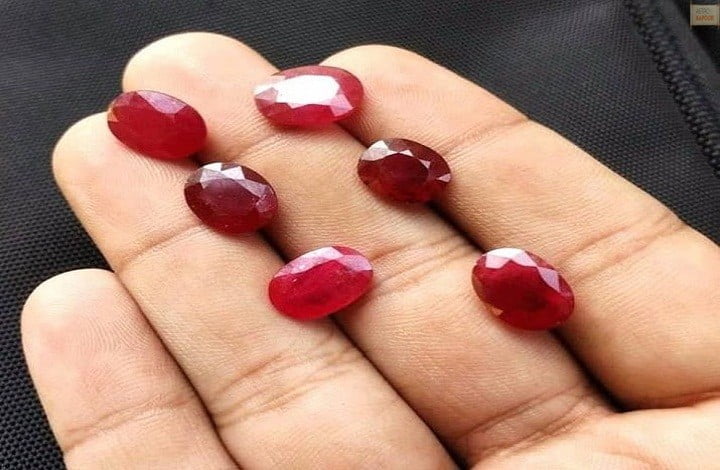
A ruby’s astrological power is strongest when the stone itself is of good quality, judged by four factors: Colour, Cut, Clarity and Crystal. The most prized stones show a “pigeon blood” red colour with a smooth surface and only minor natural inclusions — the standard set by Burmese Manik from the Mogok valley. Ruby ranges from deep red to light pink and is widely used in engagement rings and fine jewellery.
Those inclusions are worth understanding rather than fearing. They form during the stone’s growth deep in the earth, and our guide to the formation of gemstones explains why a completely flawless natural ruby is far rarer than most buyers assume. In one case the inclusions become the feature: aligned rutile needles produce the six-rayed asterism of the star ruby, considered especially auspicious in Vedic practice.
Prices vary with quality, and any ruby gemstone for astrology should always come with certification from a reputable gem laboratory — exactly the standard Astrokapoor follows. Our guidance on the right choice of gemstones covers what to verify before you pay, particularly around glass filling, which is widespread in the ruby market and destroys a stone’s remedial value.
Health and Wellbeing Associations
Traditionally, Ruby is linked to the Sun’s rule over vitality, and is associated with supporting energy, circulation and general strength. Some also connect it with conditions tied to a weak Sun, such as low vitality and confidence. The wider framework behind these associations is set out in our introduction to medical astrology in Vedic jyotish.
These are traditional astrological beliefs and should be treated as spiritual support alongside — never instead of — proper medical care.
How to Wear a Ruby for Best Results
For full effect, a Ruby is worn on the ring finger in gold or copper, on a Sunday morning, after being energised with the Sun’s mantra “Om Hram Hreem Hraum Sah Suryaya Namah.” The complete method for energising a gemstone ring applies to Manik as it does to every planetary stone.
The right weight and metal depend on your chart, so a proper Vedic gemstone recommendation from Astrokapoor ensures the stone truly suits you before you wear it permanently.
Frequently Asked Questions
Which planet does the Ruby represent in astrology?
Ruby (Manik) represents the Sun (Surya), the king of the planets, and is worn to strengthen confidence, authority, vitality and success.
What are the astrological benefits of Ruby?
It boosts confidence, concentration and willpower, strengthens the Sun, supports vitality, and enhances leadership and standing in public life.
Who should not wear a Ruby?
Those with the Sun in the 6th, 8th or 12th house, or with an already very strong Sun, should avoid Ruby unless an astrologer advises otherwise. Vrishabh, Tula, Makar and Kumbh ascendants should also be cautious, since the Sun is inimical to their ruling planets.
How should a Ruby be worn?
Ruby is worn on the ring finger in gold or copper, on a Sunday morning after energisation, and only after confirming it suits your chart.
Is a ruby gemstone for astrology different from a jewellery ruby?
The mineral is the same, but the standard is stricter. A ruby gemstone for astrology must be natural and untreated, of the prescribed weight for your chart, and set in an open-backed mount so it touches the skin — requirements a jewellery ruby is not held to.
What makes ruby astrology different from Western birthstone advice?
Ruby astrology assigns the stone by the Sun’s position and strength in your birth chart, not by your birth month. Two people born in the same month can have very different Sun placements, so one may benefit from Ruby while the other should avoid it entirely.
What is a good substitute if Ruby is too expensive?
Red garnet, red spinel and sunstone are the recognised upratna substitutes for the Sun. A good-quality substitute of the correct weight works better than a small or glass-filled ruby bought to stay within budget.
Get your personalised astrology consultancy report »
Not sure whether Ruby is right for you? Begin with a free astrology consultation.
